PRODUCTS SEARCH
Centrifugal pumps are widely used in industrial water supply, building services, cooling systems, irrigation, and fluid transfer applications. During continuous operation, components such as bearings, mechanical seals, impellers, and couplings can gradually wear. Without proper maintenance, a pump may experience reduced flow, lower pressure, higher energy consumption, or unexpected downtime.
A well-planned centrifugal pump maintenance schedule helps identify problems early and keeps the pump operating safely and efficiently. Instead of waiting for a failure, maintenance should combine routine inspections, annual servicing, and condition-based monitoring.
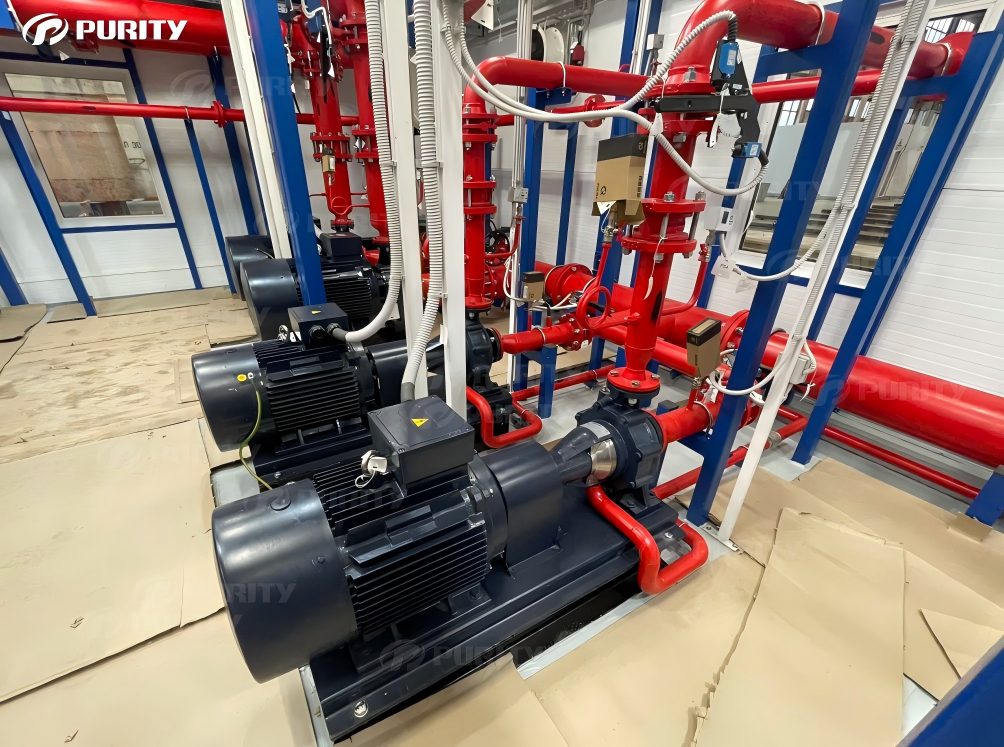
Picture|Purity Centrifugal Pump PSM Project Diagram
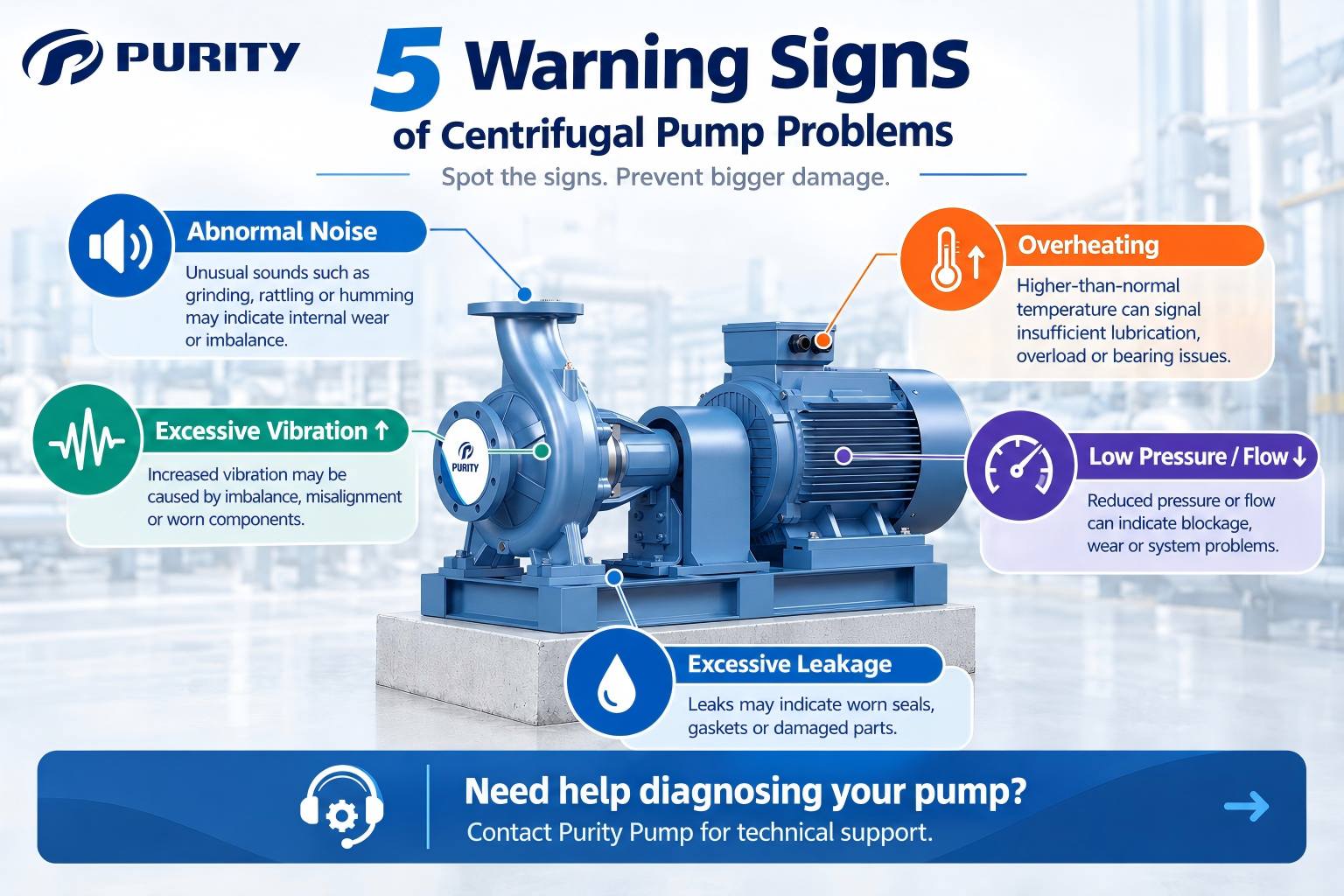
A centrifugal pump can often show early warning signs before a major failure occurs. Increasing vibration, abnormal noise, rising bearing temperature, seal leakage, or declining flow may indicate developing mechanical or hydraulic problems.
Regular maintenance can help:
1. Reduce unplanned downtime
2. Extend pump and component service life
3. Maintain stable flow and pressure
4. Improve operating efficiency
5. Reduce emergency repair costs
For industrial applications, maintenance should also consider the pump's actual operating conditions. Flow rate, head, fluid characteristics, operating hours, and system requirements all affect maintenance needs.
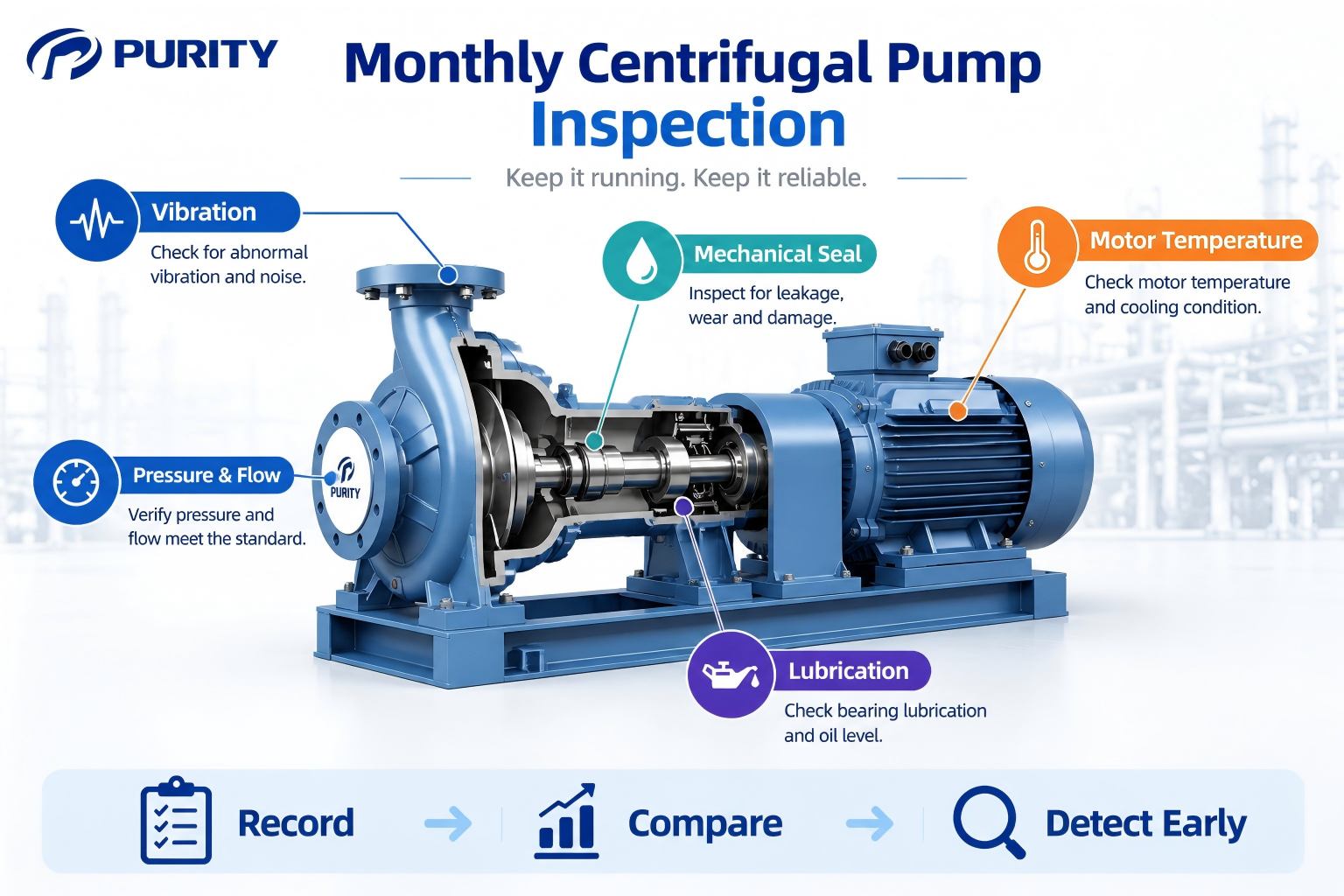
Monthly centrifugal pump maintenance focuses on observing operating conditions and identifying changes from the normal baseline.
Inspect bearing oil or grease according to the pump manufacturer's recommendations. Insufficient or excessive lubrication can contribute to overheating, noise, and premature bearing wear.
Check the shaft area for unusual leakage. A sudden increase in leakage may indicate mechanical seal wear or installation problems and should be investigated promptly.
Listen for abnormal sounds and check for increased vibration. Unusual vibration may be associated with bearing wear, shaft misalignment, imbalance, loose components, or cavitation.
Record inlet and discharge pressure and compare the readings with normal operating data. A gradual reduction in flow or pressure may indicate blockage, impeller wear, air entering the system, or changes in suction conditions.
Monitor motor and bearing temperatures during operation. Abnormal temperature increases may be related to lubrication, overload, alignment, electrical issues, or insufficient cooling.
Keeping these measurements in a maintenance record makes it easier to identify long-term trends.
While monthly inspections focus on operating conditions, annual centrifugal pump maintenance provides a deeper inspection of critical components.
The exact maintenance interval should depend on operating hours, pump design, fluid conditions, and the manufacturer's recommendations.
Key tasks may include:
Bearing inspection: Check for wear, excessive clearance, noise, and overheating. Replace bearings when necessary.
Impeller inspection: Check for corrosion, erosion, cracks, blockage, or deformation. Impeller condition directly affects pump flow, head, and efficiency.
Mechanical seal inspection: Inspect sealing surfaces and related components and replace worn parts when required.
Coupling and alignment: Check coupling condition and shaft alignment. Misalignment can increase vibration and mechanical loads and shorten bearing and seal life.
Performance testing: After maintenance, compare actual flow, pressure, power, and efficiency with the pump's performance curve to confirm that the equipment is operating as expected.
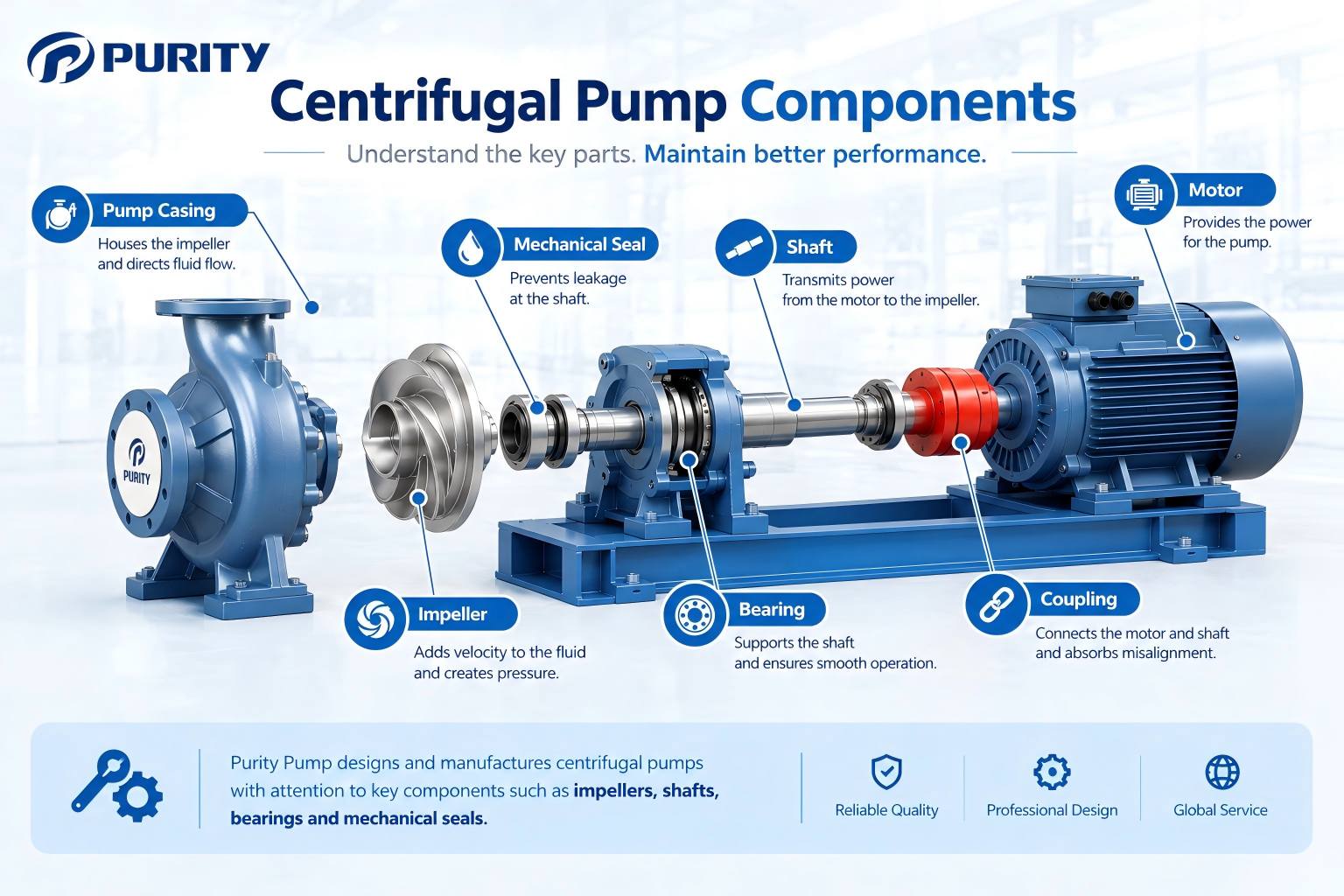
Picture|Centrifugal Pump Components
Traditional maintenance is often based on a fixed calendar. Centrifugal pump predictive maintenance takes a different approach by using operating data to identify developing problems before they cause a major failure.
Common monitoring methods include:
Vibration Monitoring
Vibration trends can help identify bearing defects, imbalance, misalignment, and mechanical looseness.
Pressure and Flow Monitoring
Continuous monitoring can reveal changes in hydraulic performance and help detect blockage, cavitation, air entrainment, or abnormal system resistance.
Performance Curve Analysis
A centrifugal pump should operate within an appropriate range of its performance curve. Long-term operation far from the Best Efficiency Point (BEP) can increase energy consumption, vibration, and component wear.
Predictive maintenance is particularly valuable for critical pumps that operate continuously or support important production processes.
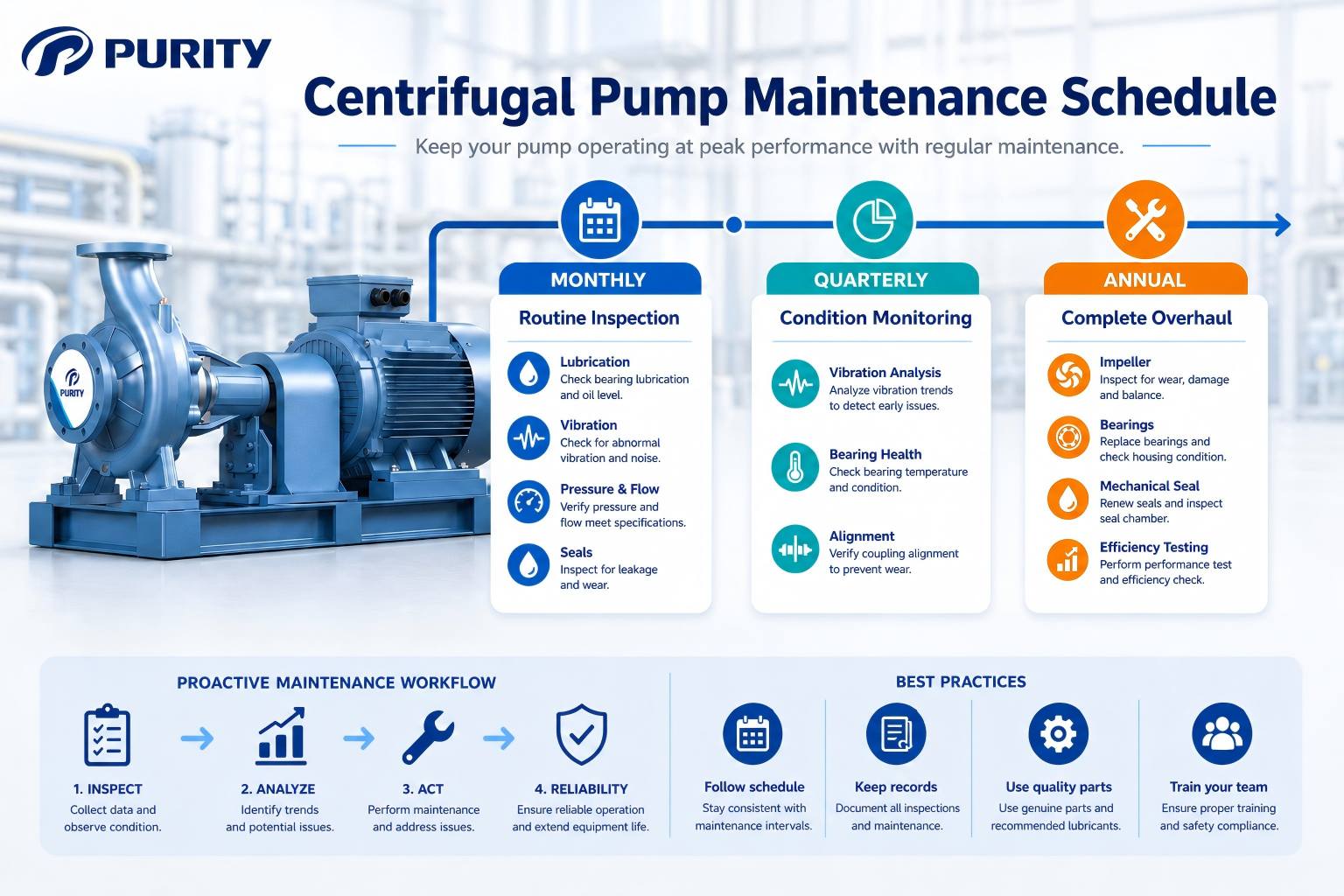
A practical centrifugal pump maintenance schedule can be structured as follows:
Monthly: Check lubrication, seals, vibration, noise, pressure, flow, and motor temperature.
Quarterly: Review operating trends, energy consumption, vibration data, and pump operating conditions.
Annually: Inspect bearings, impellers, mechanical seals, couplings, alignment, corrosion, and overall pump performance.
For high-load or continuously operating systems, the maintenance frequency should be adjusted according to actual operating conditions rather than relying only on a fixed calendar.
Maintenance is only one part of pump lifecycle performance. Selecting a pump that matches the required flow, head, fluid, and operating conditions is equally important.
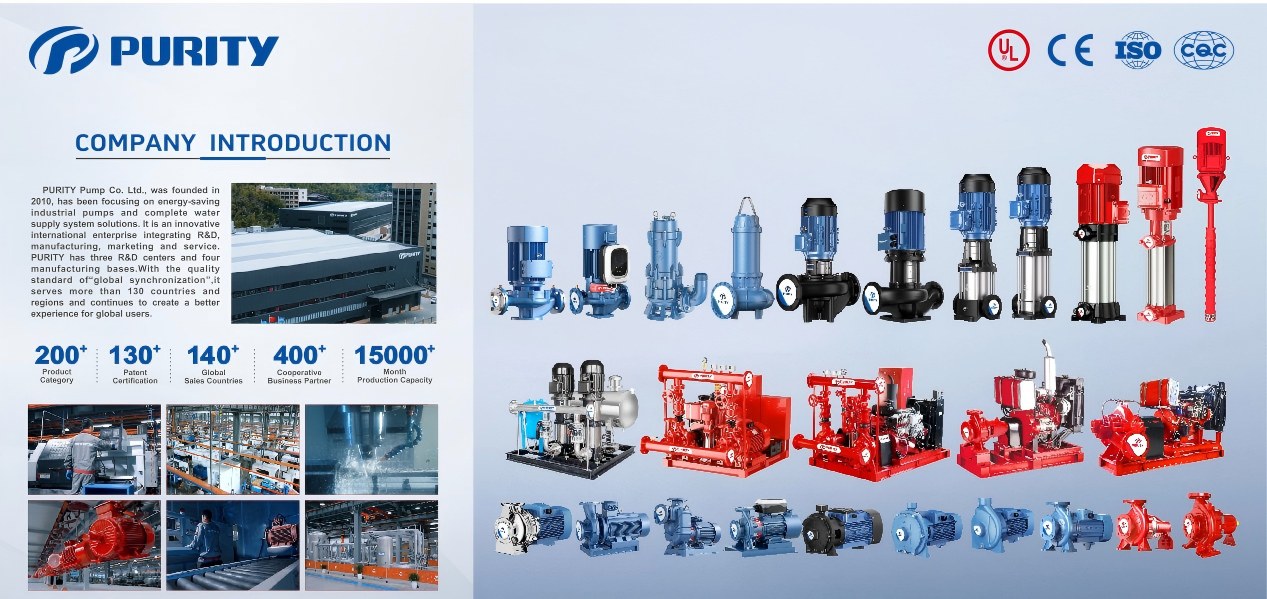
Purity Pump provides centrifugal pump solutions including end suction centrifugal pumps, vertical multistage pumps, and stainless steel pump options for different industrial and commercial applications. With OEM/ODM capabilities and technical support, Purity Pump can assist customers in selecting suitable pump solutions based on project requirements.
Basic operating conditions should generally be checked regularly, with monthly inspections providing a useful starting point. More detailed servicing should be based on operating hours, application conditions, and manufacturer recommendations.
Common checks include lubrication, mechanical seals, vibration, noise, pressure, flow, motor temperature, bearings, impeller condition, coupling alignment, and overall pump performance.
It is a maintenance approach that uses condition and performance data, such as vibration, temperature, pressure, flow, and efficiency, to identify potential problems before equipment failure.
An effective centrifugal pump maintenance strategy combines monthly inspection, annual servicing, and predictive monitoring. Regular checks help identify early warning signs, while deeper annual inspections address component wear. Predictive maintenance adds another layer by using operating data to identify developing problems before they lead to unexpected downtime.
By following an appropriate centrifugal pump maintenance schedule and selecting equipment that matches the application, industrial users can improve reliability, control energy consumption, and extend pump service life.