PRODUCTS SEARCH
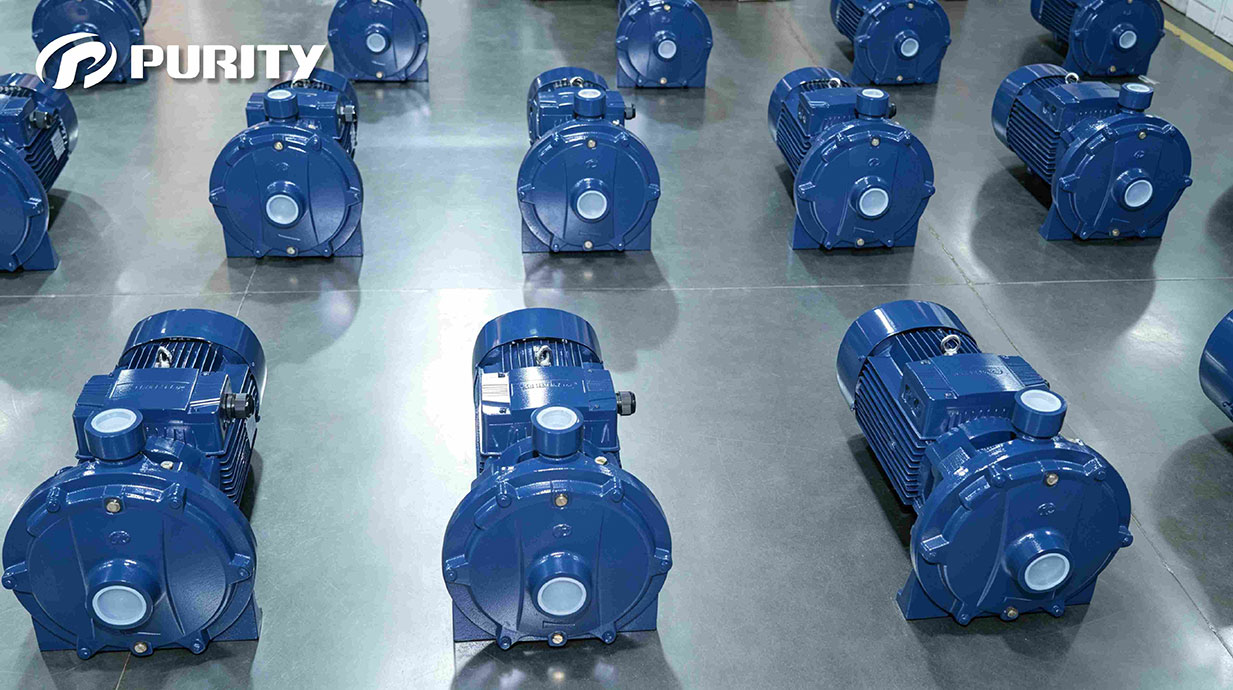
Picture| Purity Double Impeller Centrifugal Pump P2C
Centrifugal pumps are widely used in industrial water supply, HVAC, irrigation, and manufacturing. Choosing the right model requires more than matching pipe size or motor power. You need to consider flow rate, total head, fluid properties, and actual operating conditions. Understanding the centrifugal pump operating principle and performance curve can help you select a pump that delivers reliable, efficient performance.
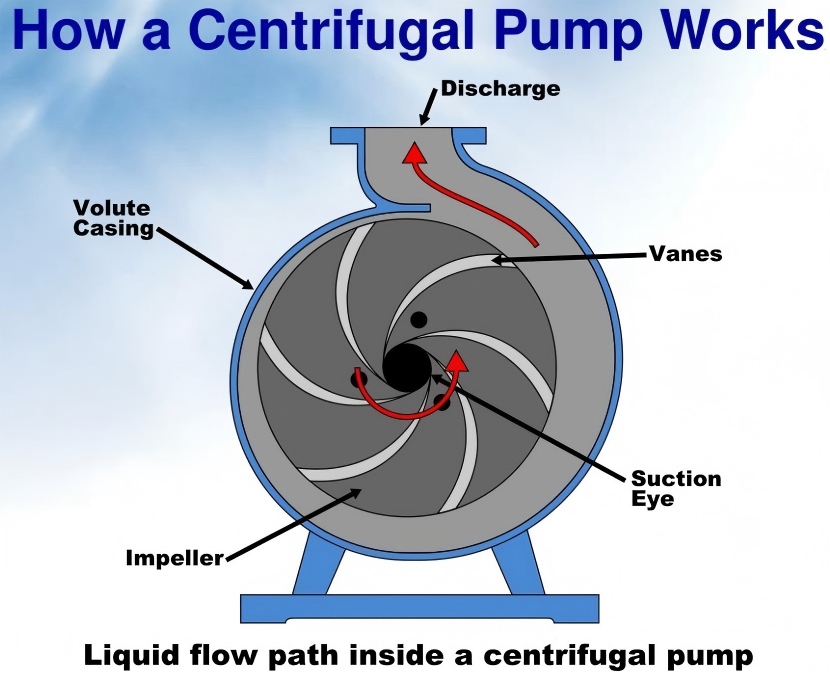
This versatile design makes centrifugal pumps suitable for many water transfer and circulation applications. However, actual performance depends on both the pump and the connected piping system. Proper suction conditions are also essential. Insufficient available net positive suction head (NPSHa) can cause cavitation, noise, vibration, and damage.
Flow rate and total head are the two primary parameters for pump selection.
Flow rate is the volume of liquid delivered over a period, commonly measured in m³/h, L/s, or GPM. Total head represents the energy added to the liquid per unit weight. It accounts for elevation differences, required pressure, and friction losses in pipes, valves, and fittings.
Before selecting a centrifugal pump, calculate the system's required flow and total head. Choosing a pump based only on its maximum flow or maximum head may lead to poor performance. The selected model must meet the required conditions at its actual operating point.
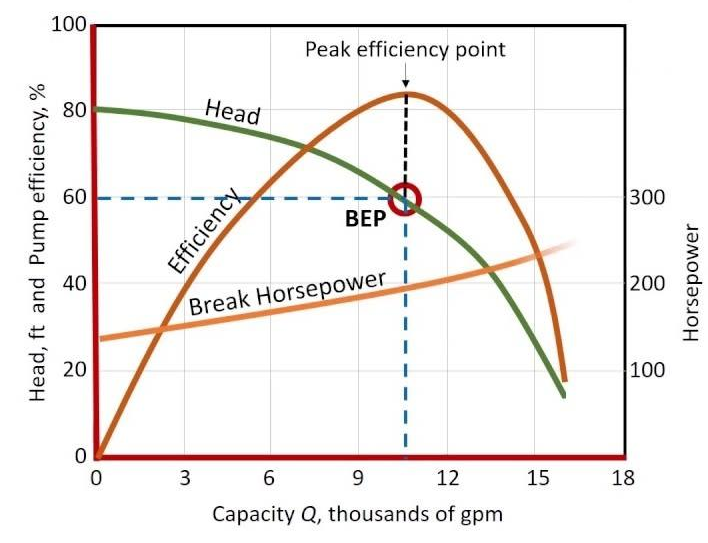
A centrifugal pump performance curve shows how flow rate relates to head. It may also include efficiency, input power, and required NPSH.
The piping system has its own system curve, which reflects the head needed to overcome static requirements and flow resistance. The intersection of the pump curve and system curve determines the operating point.
Select a pump whose curve matches your required operating conditions. An oversized pump may consume unnecessary energy or require excessive throttling, while an undersized pump may fail to deliver the required flow or pressure.
The best efficiency point (BEP) is where a pump achieves its highest efficiency under specified conditions. Operating near the BEP, within the manufacturer's recommended range, can help reduce energy waste, vibration, and mechanical stress.
Different applications require different centrifugal pump designs:
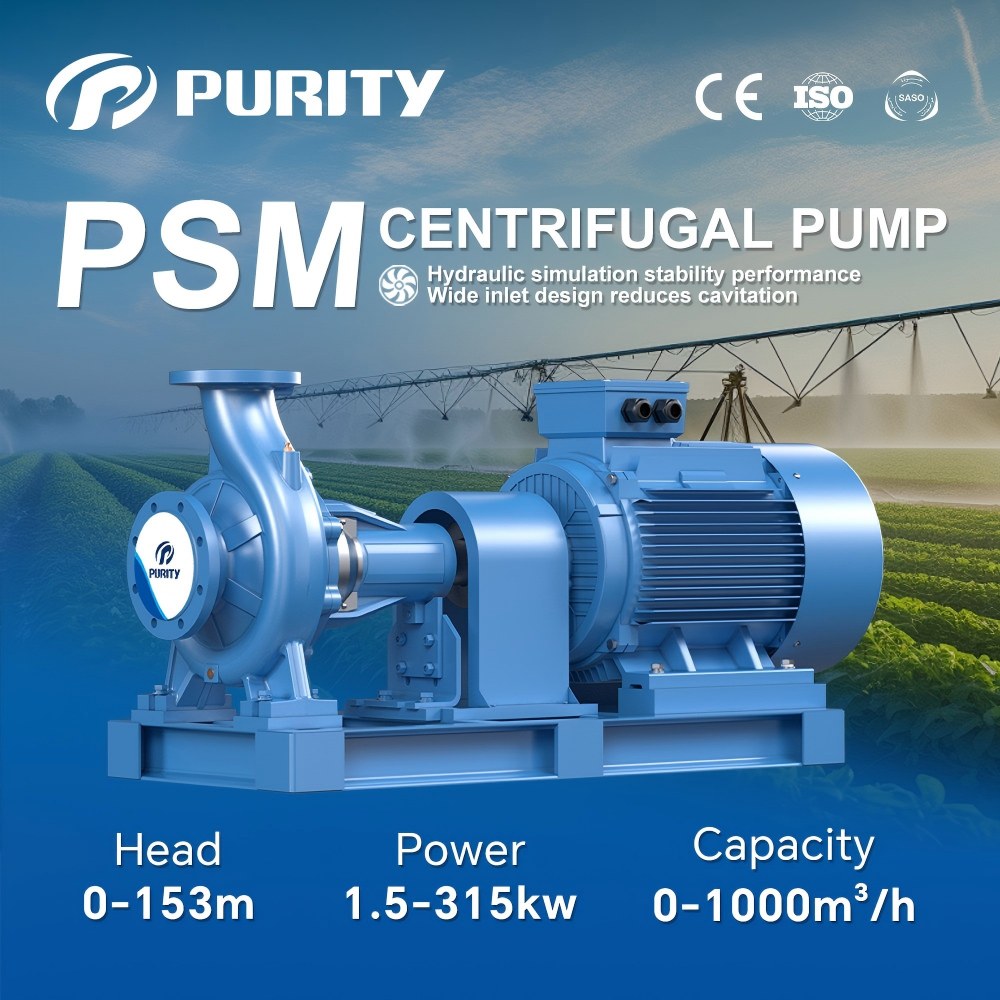
End Suction Centrifugal Pumps
Suitable for general water transfer and industrial circulation.
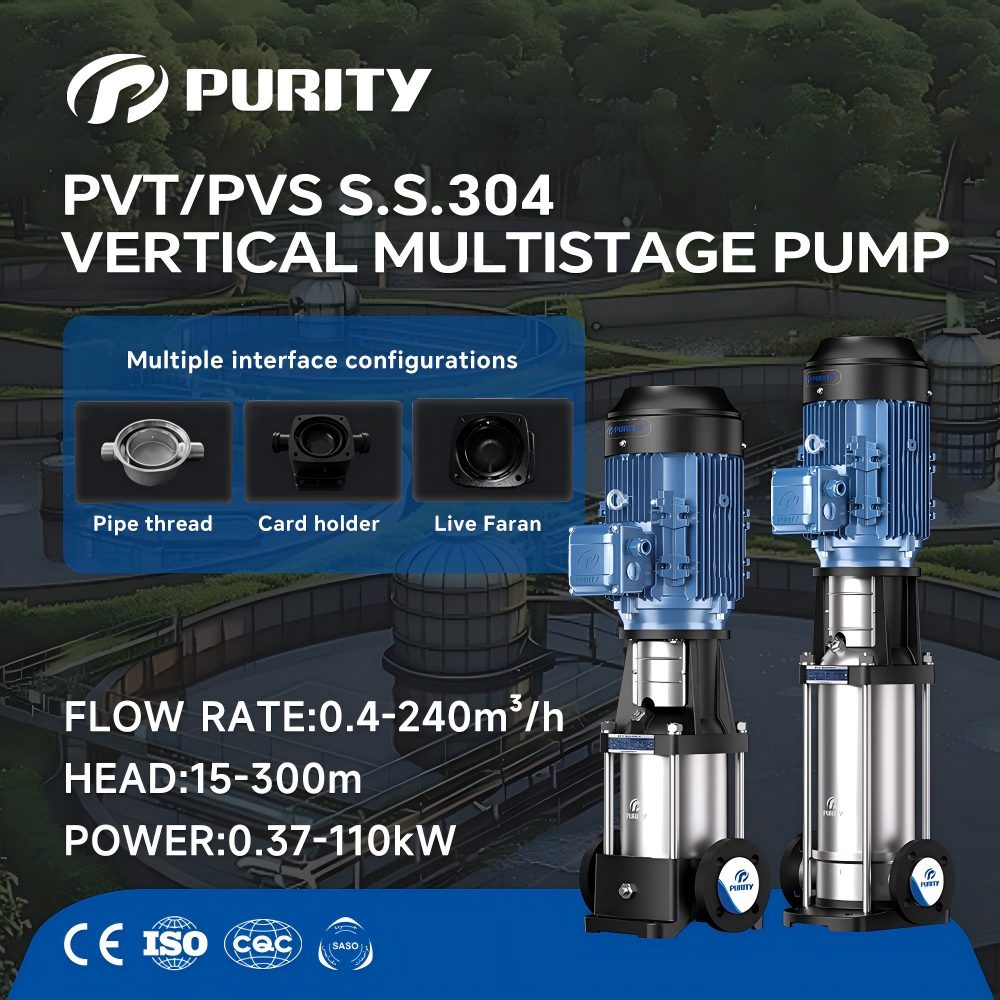
Vertical Multistage Pumps
Used when higher pressure is required, such as in water boosting.
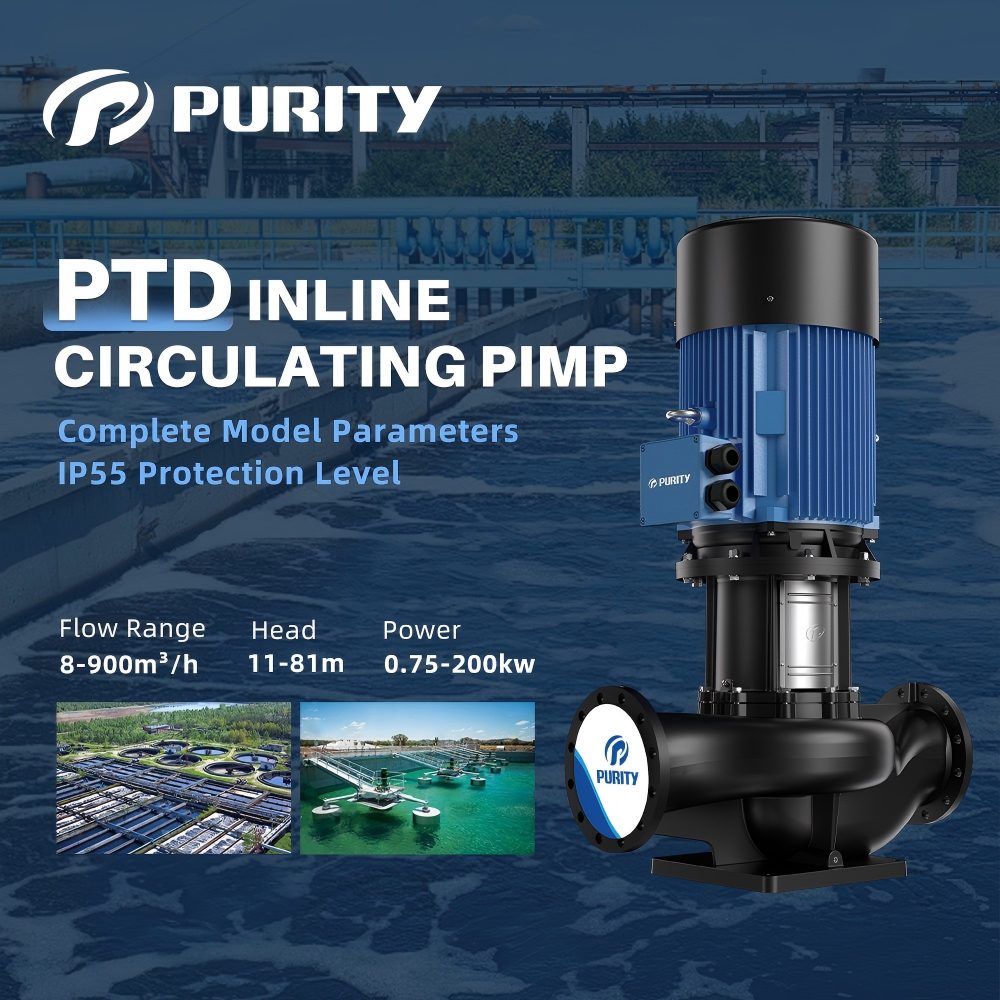
Inline Pumps
Common in HVAC and pipeline circulation systems.
Self-priming or submersible designs may suit specific installation and fluid-handling needs. Consider the liquid's temperature, viscosity, corrosiveness, and solids content, as these factors affect pump materials, sealing, and construction.
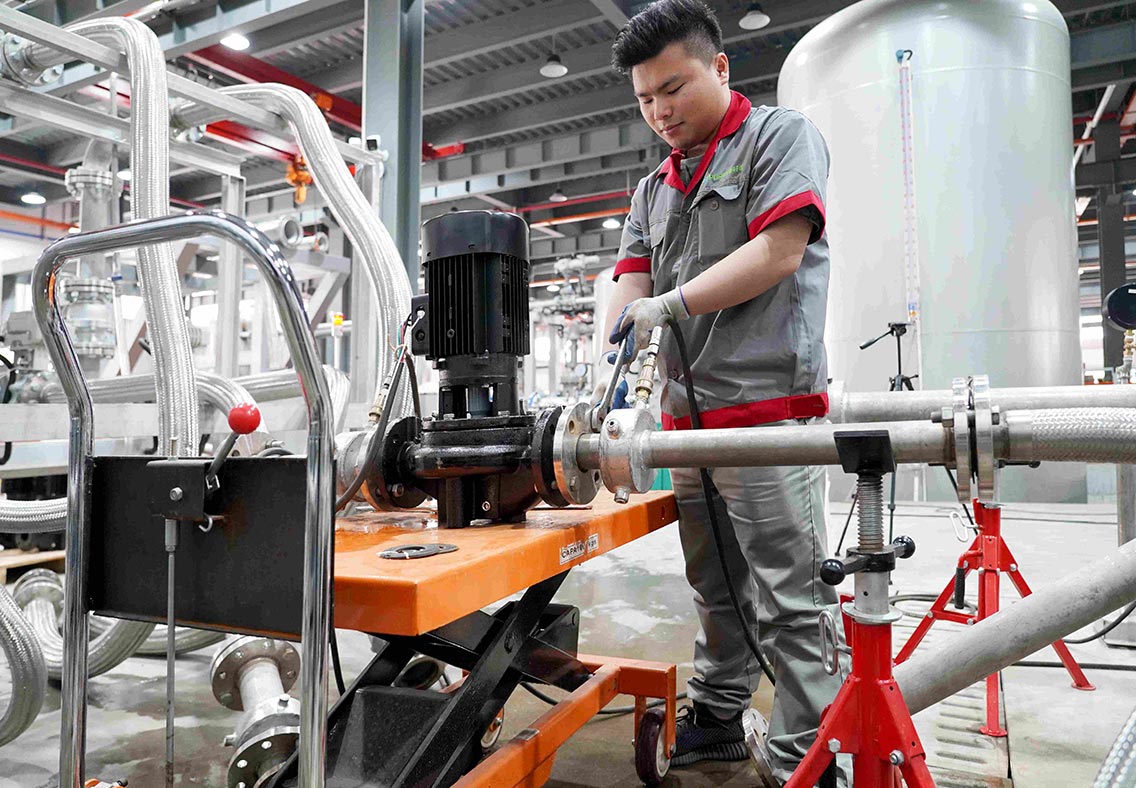
Purity Pump manufactures industrial pump products and water supply solutions, including end suction centrifugal pumps and vertical multistage pumps. Matching the pump to the application's flow, head, fluid, and installation conditions is essential for reliable operation.
For centrifugal pumps in industry, the right selection can support stable water supply, efficient circulation, and dependable process operation. Consider not only the initial purchase price but also energy consumption, maintenance, and expected service life.
Selecting the right centrifugal pump starts with understanding your system requirements. Calculate flow rate and total head, review the pump and system curves, check the operating point and BEP, and confirm that the pump materials and design suit the application.
By evaluating these factors together, industrial users can improve reliability and avoid unnecessary operating costs.
Need help selecting a centrifugal pump? Contact Purity Pump to discuss your flow rate, head, and application requirements.
Centrifugal pumps are used for industrial water supply, HVAC circulation, irrigation, cooling, manufacturing processes, and other liquid transfer applications.
Determine the required flow rate and total head, compare the pump curve with the system curve, and check fluid properties, suction conditions, efficiency, and installation requirements.
The BEP is the point of highest pump efficiency. Operating within the manufacturer's recommended range can help improve efficiency and reduce mechanical stress.