PRODUCTS SEARCH
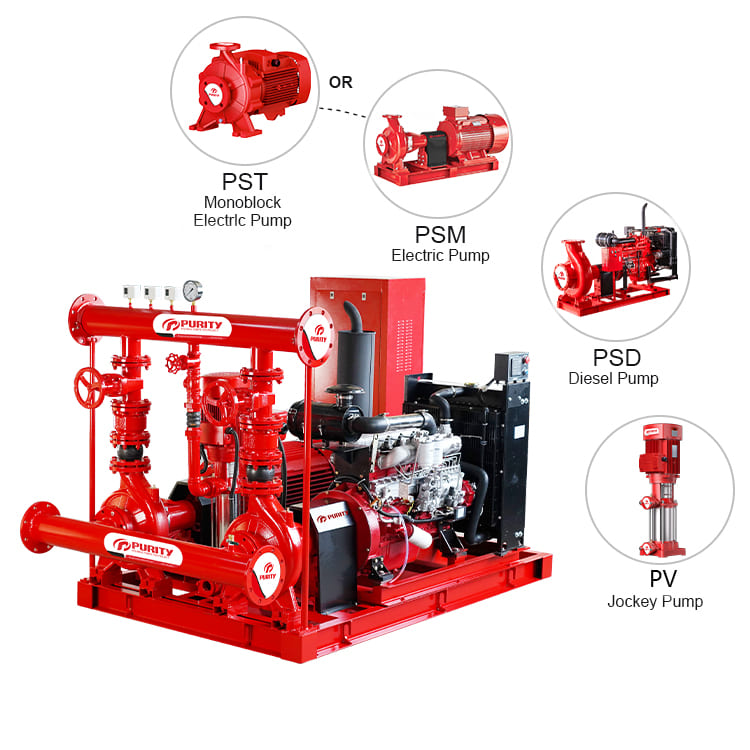
Picture|Purity Fire Pump System
A reliable fire pump system is essential for providing sufficient water pressure and flow when a fire protection system is activated. However, choosing the right fire pump is not simply a matter of selecting the most powerful pump. Different pumps perform different functions, and the right solution depends on the building, water source, flow requirements, power supply, and system design.
Among the most commonly discussed options are the electric fire pump, diesel fire pump, and fire pump jockey. Although these terms are often grouped together as different “types” of fire pumps, they actually describe different aspects of a fire protection system. Electric and diesel refer primarily to the driving method of a main fire pump, while a jockey pump is designed to maintain system pressure.
Understanding this difference is the first step toward selecting the right fire pump system.
A fire pump is designed to increase water pressure and provide the required flow for fire protection systems when the available water supply cannot meet the system demand.
A typical fire pump system may include a main fire pump, jockey pump, controller, valves, pressure-sensing equipment, and associated piping.
The main fire pump provides the high flow and pressure required during a fire emergency. The jockey pump has a different job: it maintains normal system pressure and compensates for small pressure losses or minor leakage.
This means a fire protection system may use both a main fire pump and a jockey pump rather than choosing one instead of the other.
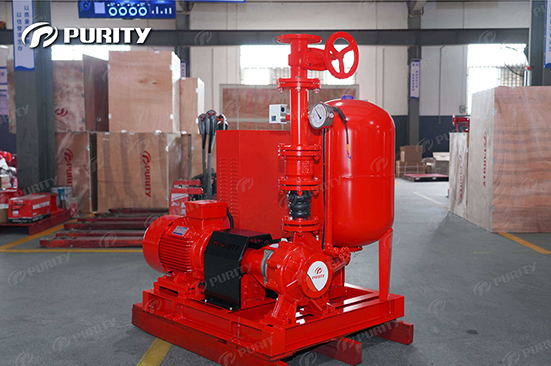
Picture|Purity Electric Fire Pump System
An electric fire pump uses an electric motor to drive the pump. When a reliable electrical supply is available, it offers stable operation, relatively simple maintenance, and lower operating complexity than an engine-driven system.
Key advantages of electric fire pumps include:
· Stable operation with a reliable power supply
· Lower noise during operation
· No diesel fuel storage
· No engine exhaust system
· Relatively simple routine maintenance
· Suitable for many commercial and industrial applications
However, the main consideration is power reliability. If the building is vulnerable to power interruptions, the fire protection design may require an alternative or backup power arrangement according to applicable codes and project requirements.
For this reason, electric fire pumps are often a practical choice for buildings with a reliable electrical infrastructure.
Purity provides multiple electric fire pump configurations for different flow, pressure, and installation requirements. Its product range includes end-suction fire pumps, horizontal split-case fire pumps, vertical inline fire pumps, and other electric-driven solutions.
This allows the pump configuration to be selected according to the actual application rather than using a one-size-fits-all approach.
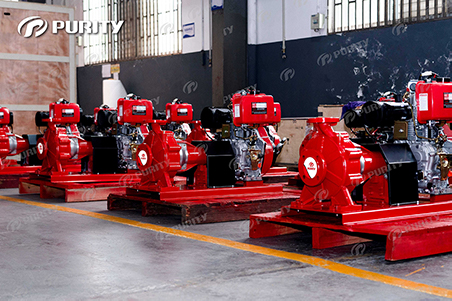
Picture|Purity Diesel Fire Pump System
A diesel fire pump uses a diesel engine as its driver. Unlike an electric fire pump, the main driving power does not directly depend on the building's normal electrical supply.
This makes diesel fire pumps particularly useful for applications where power reliability is a major concern, including industrial facilities, critical infrastructure, remote locations, and other demanding fire protection projects.
The major advantage of a diesel fire pump is its independent driving capability.
However, diesel systems also require additional equipment and maintenance, including:
· Fuel tanks and fuel supply
· Starting batteries
· Engine ventilation
· Exhaust systems
· Cooling arrangements
· Regular engine inspection and maintenance
Therefore, a diesel fire pump should not simply be considered “better” than an electric pump. The appropriate choice depends on the project's power conditions, fire protection requirements, installation environment, and applicable standards.
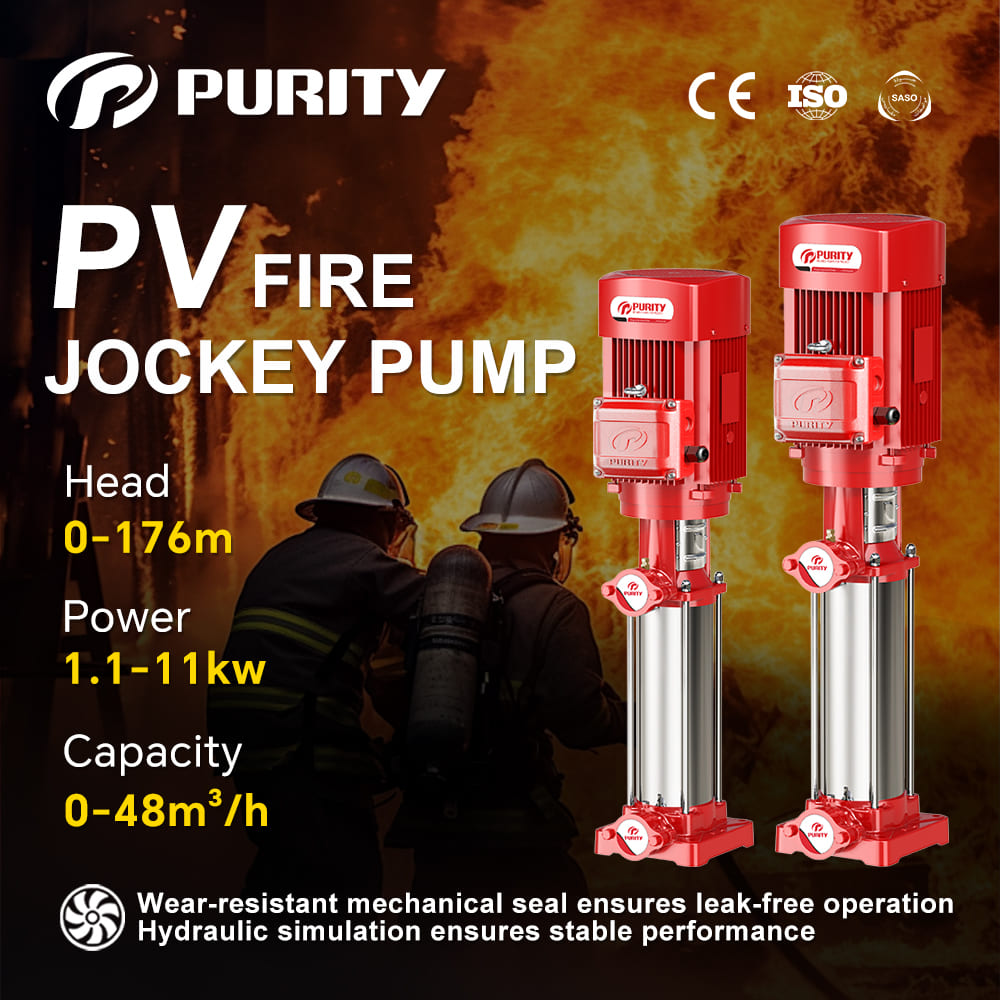
Picture|Purity Jockey Pump PV
For projects requiring engine-driven fire protection, Purity offers diesel fire pump packages, including diesel-driven end-suction and horizontal split-case configurations.
Purity's fire pump solutions are designed for different flow and pressure requirements, helping customers select suitable equipment based on project conditions. Selected Purity fire pump models have also obtained international certifications, supporting applications in different global markets.
A fire pump jockey, commonly called a jockey pump, serves a different purpose from the main fire pump.
Its primary function is to maintain the normal pressure of the fire protection piping system and compensate for small pressure losses caused by minor leakage or normal pressure fluctuations.
For example:
Minor pressure drop → Jockey pump starts → System pressure is restored
During an actual fire, however, water demand can increase rapidly as sprinklers or other firefighting equipment operate:
Large pressure drop → Main fire pump starts → Required firefighting flow is supplied
The jockey pump therefore helps prevent unnecessary starting of the main fire pump caused by minor pressure fluctuations.
It is important to understand that a jockey pump is not intended to replace the main fire pump. Its purpose is pressure maintenance rather than providing the large firefighting flow required during an emergency.
Purity offers both stainless steel and cast-iron jockey pumps, with multiple specifications available for different pressure-maintenance requirements.
By providing different materials and configurations, Purity can offer jockey pump options for various fire protection system conditions and project requirements.
The three terms are often discussed together, but they do not represent three equivalent pump categories.
|
Pump Type |
Primary Function |
Key Consideration |
|
Electric Fire Pump |
Main firefighting flow and pressure |
Electrical power reliability |
|
Diesel Fire Pump |
Main firefighting flow and pressure |
Independent engine-driven power |
|
Jockey Pump |
Maintain system pressure |
Normal pressure fluctuations |
In simple terms:
Electric and diesel describe how the main fire pump is driven, while jockey describes the function of an auxiliary pressure-maintenance pump.
A complete fire pump system can therefore combine an electric or diesel main fire pump with a jockey pump.
Selecting a fire pump requires more than comparing pump models. The system should be evaluated according to several important factors.
Where does the firefighting water come from?
The system may use municipal water, an underground tank, a well, lake, or another water source. Different water sources can require different pump configurations.
The required flow rate and pressure are fundamental to pump selection.
Large fire protection systems with high flow requirements may benefit from horizontal split-case fire pumps, while end-suction or vertical inline configurations may be suitable for applications with different flow, pressure, or space requirements.
High-rise buildings require the fire pump to overcome greater static elevation and system losses. The required pump pressure must therefore be determined according to the complete hydraulic design.
Pump room space can also influence the choice.
Horizontal split-case pumps are widely used for applications where sufficient floor space and convenient maintenance access are available. Vertical inline configurations can provide a more compact solution where installation space is limited.
Power reliability is one of the most important considerations when choosing between electric and diesel-driven main fire pumps.
Reliable power supply → Electric fire pump may be suitable
Power reliability concerns or critical application → Diesel fire pump may be considered
The final decision should always follow the applicable fire protection design and local requirements.
If the fire protection system needs continuous pressure maintenance, a properly selected jockey pump can compensate for normal pressure losses and help reduce unnecessary main-pump starts.
There is no single fire pump configuration that is ideal for every project.
A commercial building with reliable power may require an electric fire pump. An industrial facility with critical fire protection requirements may need a diesel-driven solution. A system requiring continuous pressure maintenance may also need a jockey pump.
The pump configuration itself can also vary depending on flow, pressure, water source, and available space.
This is why selecting a fire pump system should start with the application requirements rather than the pump model.
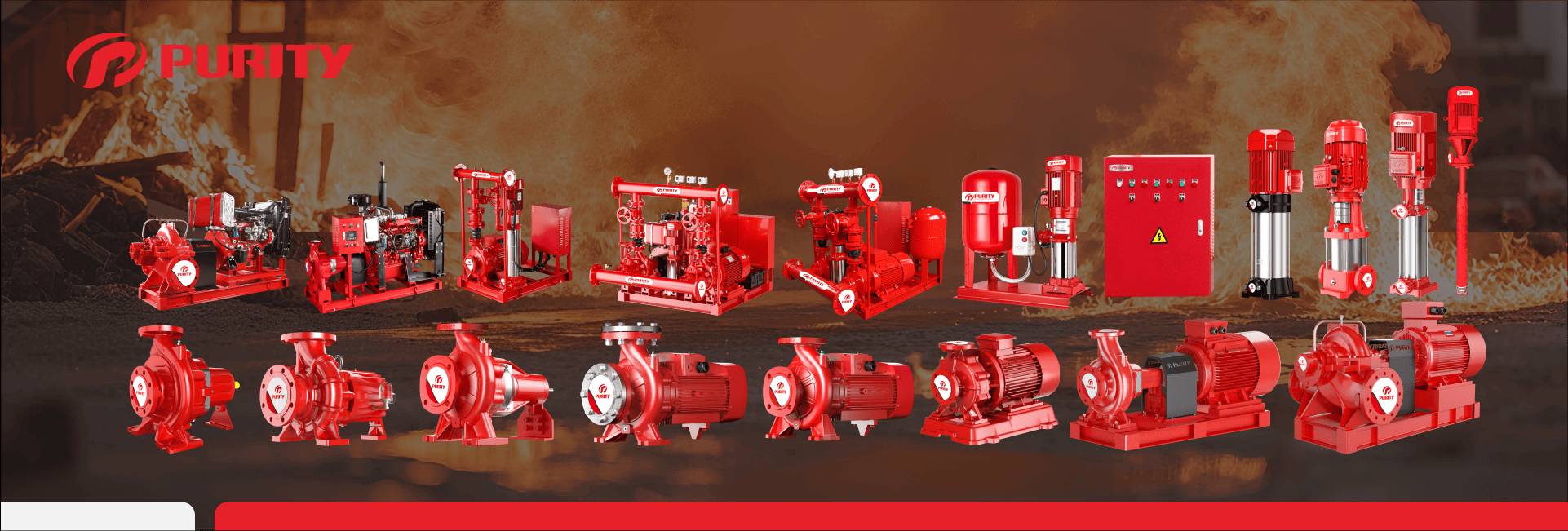
Picture|Purity Fire Pump Full Series
With more than 16 years of experience in fire pump manufacturing, Purity provides a broad range of fire protection solutions, including:
· Electric fire pumps
· Diesel fire pumps
· Jockey pumps
· End-suction fire pumps
· Horizontal split-case fire pumps
· Vertical inline fire pumps
· Complete fire pump systems
Founded in 2010, Purity operates a 60,000 m² manufacturing facility and supplies products to customers in 140+ countries. With a focus on product quality, international certifications, and application-specific solutions, Purity supports customers in selecting suitable fire pump equipment for commercial, industrial, and infrastructure projects.
Electric, diesel, and jockey pumps play different roles in a fire protection system.
An electric fire pump is a practical choice when a reliable electrical supply is available. A diesel fire pump provides an independent engine-driven power source and can be valuable for critical applications where power reliability is a major concern. A fire pump jockey maintains normal system pressure and helps prevent unnecessary operation of the main fire pump.
The right solution depends on more than the pump type. Water source, flow, pressure, building height, installation space, power reliability, maintenance requirements, and applicable fire protection standards should all be considered.
By understanding these factors and working with an experienced manufacturer, customers can build a more reliable and application-appropriate fire pump system.