PRODUCTS SEARCH
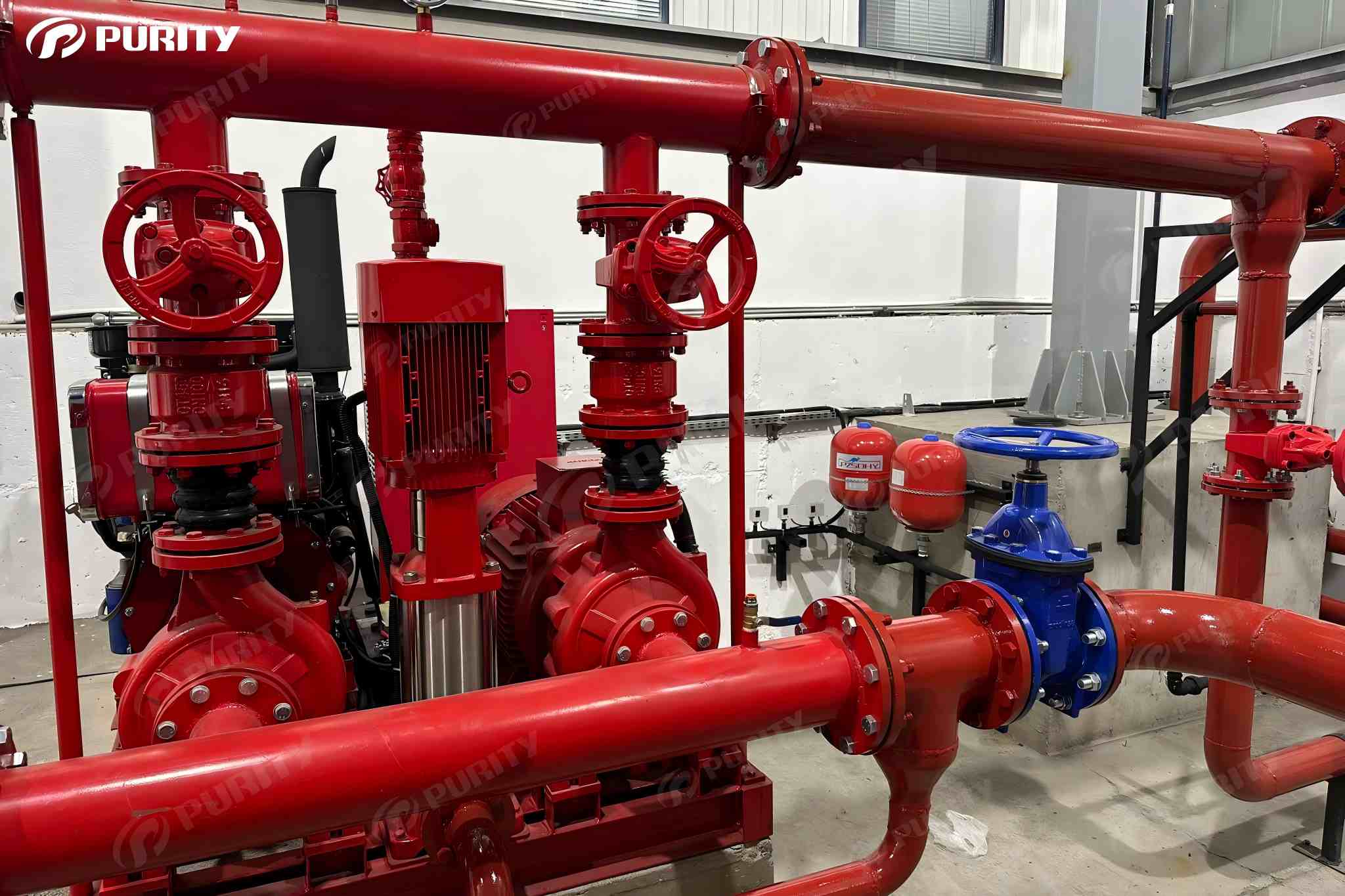
Whether you are designing a commercial building, industrial facility, warehouse, or high-rise project, this guide explains the key factors to consider when selecting a fire pump.
The first step is to determine what the building's fire protection system requires.
Consider:
· Building type and occupancy
· Building height and number of floors
· Fire hazard classification
· Sprinkler system
· Fire hydrants and standpipes
· Hose stream demand
Different buildings require different fire flow and pressure. A warehouse, for example, may have significantly different fire protection requirements from an office building.
For high-rise buildings, elevation becomes especially important because the pump must overcome the vertical distance between the water source and the highest required fire protection point.
Before selecting a fire pump, determine whether the existing water source can meet the system demand.
Common water sources include:
· Municipal water supply
· Fire water tanks
· Storage reservoirs
· Water ponds
· Wells
You should identify the available flow, static pressure, water level, and elevation difference.
The basic question is:
Can the existing water supply provide enough flow and pressure for the fire protection system?
If not, a properly sized fire pump may be required to provide the additional pressure and flow.
Two of the most important parameters are flow and head.
Fire pump flow is commonly measured in GPM or m³/h. The required flow should be determined from the hydraulic design of the sprinkler, standpipe, hydrant, and hose systems rather than simply based on building size.
Pump head represents the pressure needed to move water through the system.
A simplified calculation is:
Required Head ≈ Elevation Loss + Friction Loss + Required Residual Pressure
Elevation, pipe friction, fittings, valves, and the pressure required at the most demanding outlet should all be considered.
For high-rise projects, accurate head calculations are particularly important. Selecting a pump based only on flow may result in insufficient pressure at the upper floors.
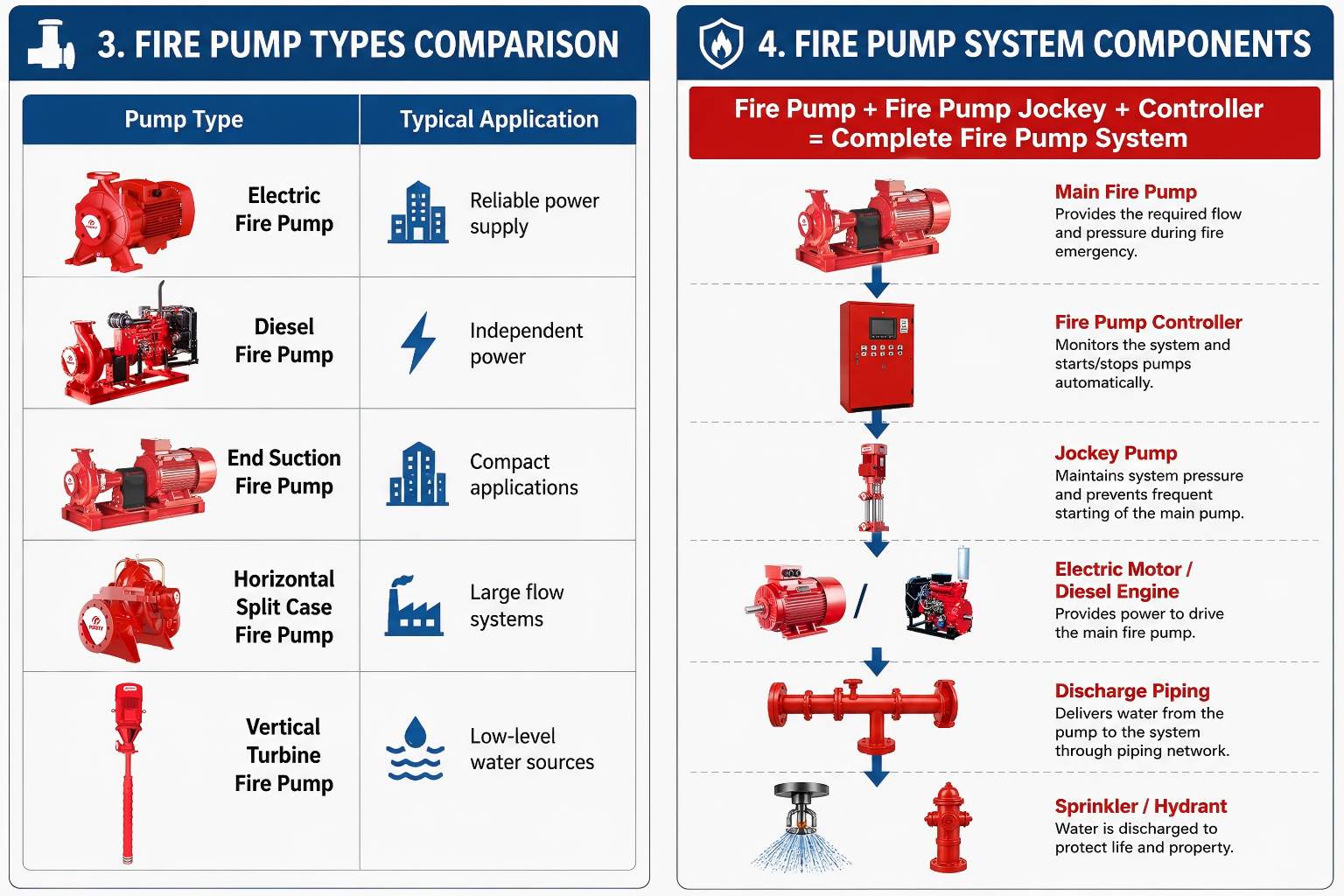
Electric Fire Pump
An electric fire pump is suitable for buildings with a reliable electrical supply. It offers a relatively simple configuration and convenient operation and maintenance.
A diesel fire pump is commonly considered when an independent driver is required or when electrical reliability is a concern. Diesel systems also require appropriate fuel storage, ventilation, exhaust, and starting arrangements.
End suction pumps can provide a compact solution for applications where the required flow, head, and installation conditions are suitable.
Horizontal split case pumps are widely used for larger commercial and industrial fire protection systems, particularly where higher flow capacity and convenient maintenance are required.
A vertical turbine pump can be suitable when the water source is below the pump suction level, such as certain tanks, reservoirs, or deep water sources.
The final selection should consider:
Water Source + Flow + Head + Space + Power Supply
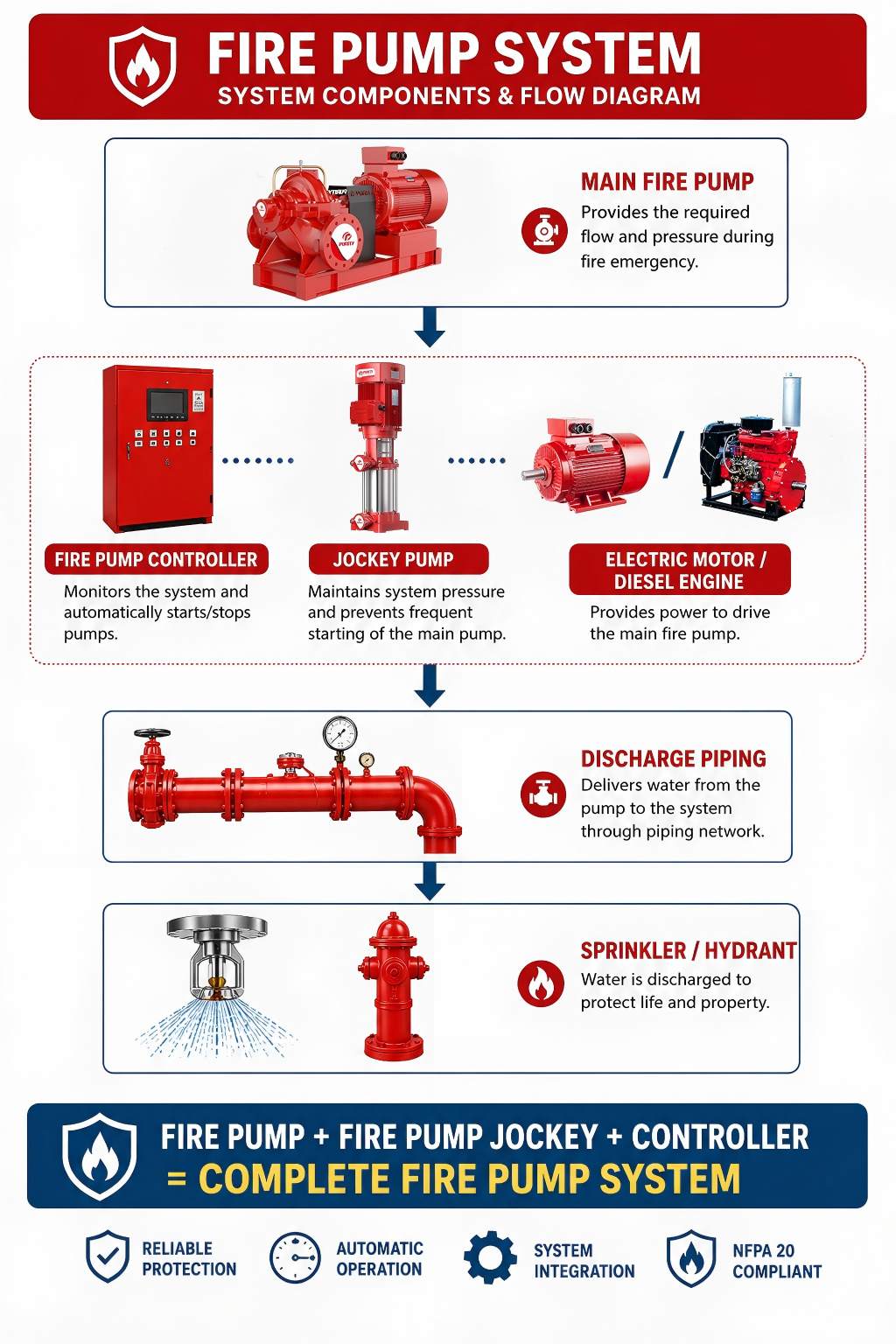
· Main fire pump
· Fire pump jockey
· Electric motor or diesel engine
· Fire pump controller
· Suction and discharge piping
· Valves
· Pressure gauges
A fire pump jockey, also known as a jockey pump, helps maintain system pressure during normal conditions and can reduce unnecessary starting of the main fire pump caused by minor pressure losses.
For reliable fire protection, all components should be correctly matched and installed according to the project requirements.
Performance alone is not enough when selecting a fire pump.
Depending on the project location and specifications, requirements may include NFPA 20, NFPA 25, UL, FM, and local fire and building codes.
Before purchasing, confirm that the selected pump and associated equipment meet the required standards and certifications for the project.
The fire pump manufacturer you choose can directly affect product quality, technical support, certification compliance, and long-term reliability.
Look for a manufacturer with:
· Proven fire pump manufacturing experience
· Complete product ranges
· Relevant international certifications
· Testing and quality-control capabilities
· Technical support and project selection assistance
· Global service or distribution capabilities
Selecting the right fire pump requires more than choosing a pump with a high flow rate or motor power.
A reliable solution should match the required flow, head, water source, building conditions, pump type, power supply, and applicable fire protection standards.
For a fire pump project, prepare your required flow, head, water source, building type, voltage, and certification requirements before selecting equipment. These parameters allow the manufacturer or supplier to recommend a more suitable fire pump system for your application.