PRODUCTS SEARCH
Selecting the right fire pump starts with two critical parameters: flow rate (GPM) and head or pressure (PSI). A properly sized fire pump must deliver enough water to the most demanding point of a fire protection system while maintaining the pressure required by applicable codes.
However, fire pump sizing is more than matching a flow and pressure from a catalog. Engineers need to consider sprinkler and standpipe demand, building height, friction loss, available suction pressure, NFPA requirements, and the manufacturer's pump performance curve.
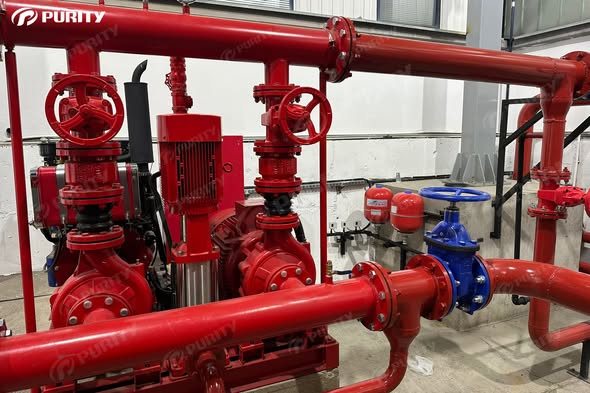
The first step is to calculate the maximum water demand of the fire protection system.
Depending on the project, this may include:
· Sprinkler demand
· Standpipe demand
· Hose stream demand
· Special hazard demand
For combined systems, the governing hydraulic demand should be identified through hydraulic calculations.
Standpipe systems can represent a significant portion of the required flow. For example, applicable NFPA requirements may require 500 GPM for the most remote standpipe, with additional flow for additional standpipes. Exact requirements depend on the system design, applicable NFPA edition, and local authority having jurisdiction (AHJ).
The key principle is:
The fire pump flow rating should be selected based on the calculated system demand, not simply the building size.
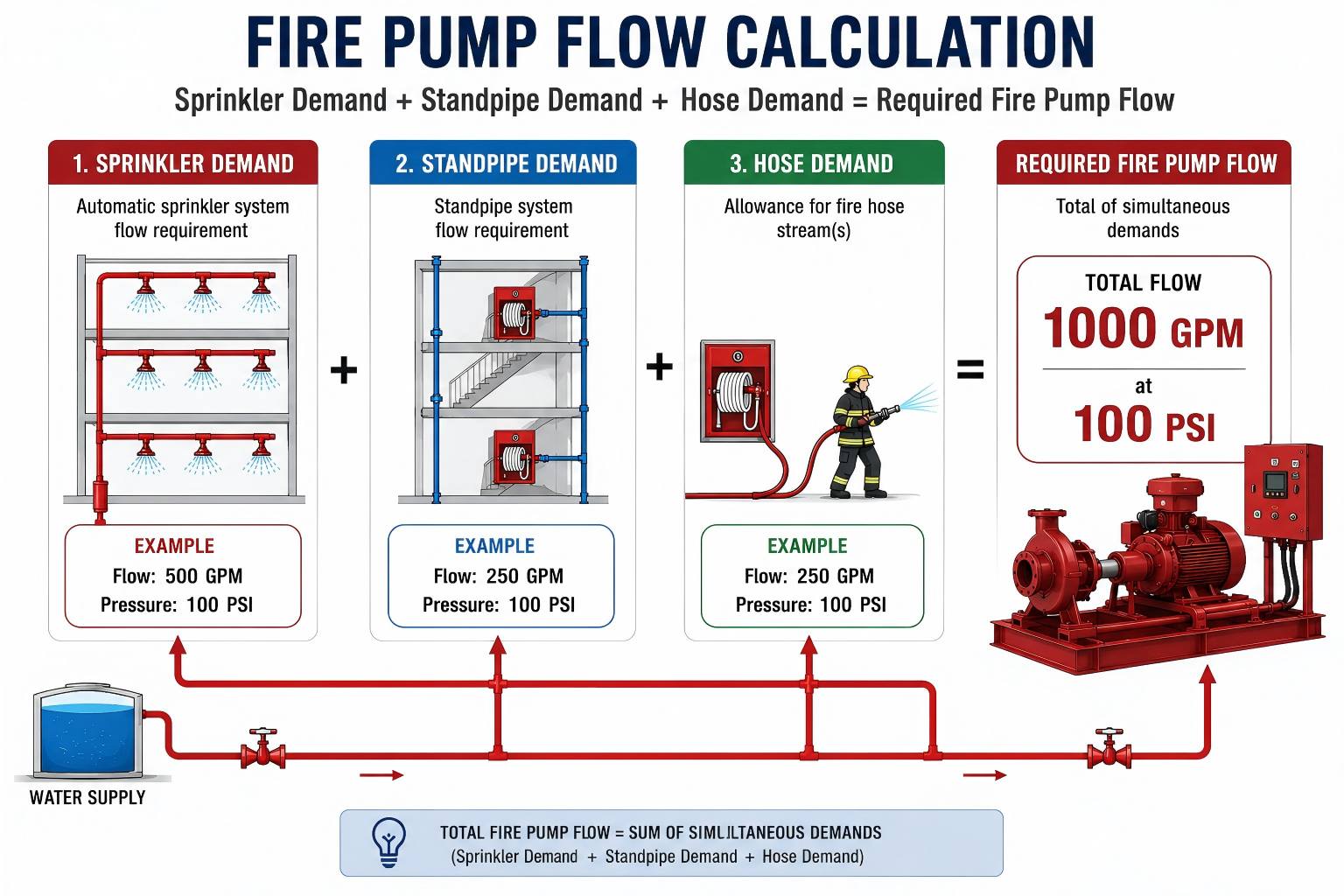
Picture | Fire Pump Flow Calculation
Once the required flow has been calculated, the next step is to compare it with available fire pump ratings.
For example, if a project requires approximately 1,400 GPM, a Purity fire pump should not be selected simply because its nameplate is close to 1,400 GPM. The engineer should evaluate the available standard rating and then verify the pump's actual performance curve at the required system flow.
This makes the pump curve an essential part of the selection process.
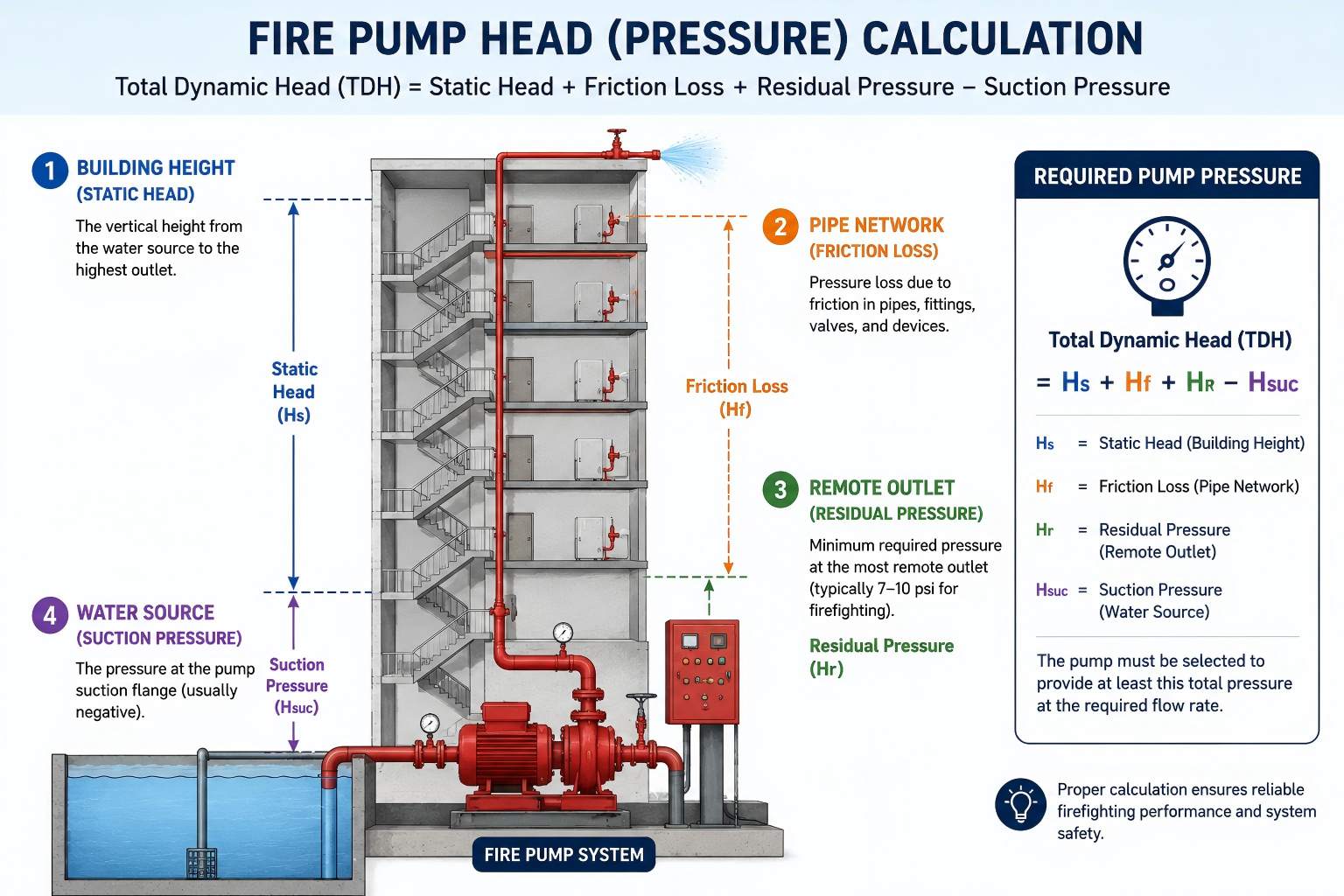
After determining flow, calculate the pressure required to deliver water to the most remote point.
A practical relationship is:
Required Pump Pressure = Static Head + Residual Pressure + Friction Loss − Available Suction Pressure
Static head is the pressure required to overcome elevation.
For water:
1 ft of water ≈ 0.433 PSI
For example, a 200-ft elevation difference produces approximately:
200 × 0.433 = 86.6 PSI
Residual pressure is the pressure that must remain at the most remote sprinkler or hose connection while water is flowing. The required value depends on the applicable fire protection standard and project design.
Pressure is lost as water travels through pipes, fittings, valves, backflow preventers, and other components. These losses must be included in the hydraulic calculation.
Available pressure at the pump suction can reduce the pressure that the fire pump needs to provide, provided that the water supply is reliable and accepted by the project hydraulic design.
NFPA 20 provides important requirements for stationary fire pumps used in fire protection systems.
A fire pump must perform across a range of operating conditions, not just at its rated point.
Engineers should verify:
Rated Flow — The pump's specified flow and pressure.
150% Rated Flow — The pump must maintain the pressure required by the applicable NFPA performance criteria at 150% of rated flow.
Shutoff / Churn Pressure — The pressure at zero flow must remain within the applicable NFPA limit.
For example, a pump rated at:
1,000 GPM @ 125 PSI
must also be checked at higher flow and at shutoff.
The manufacturer's certified pump curve is the final verification tool.
Suppose the hydraulic calculation requires:
1400GPM @ 90 PSI
The engineer should locate this operating point on the manufacturer's pump curve and verify that the pump can provide the required pressure.
When evaluating a Purity fire pump, the engineer can compare the project demand against:
· Rated flow
· Rated pressure
· 140% flow point
· 150% rated flow
· Shutoff / churn pressure
The objective is to confirm that the selected pump satisfies the actual hydraulic demand and applicable fire protection requirements.
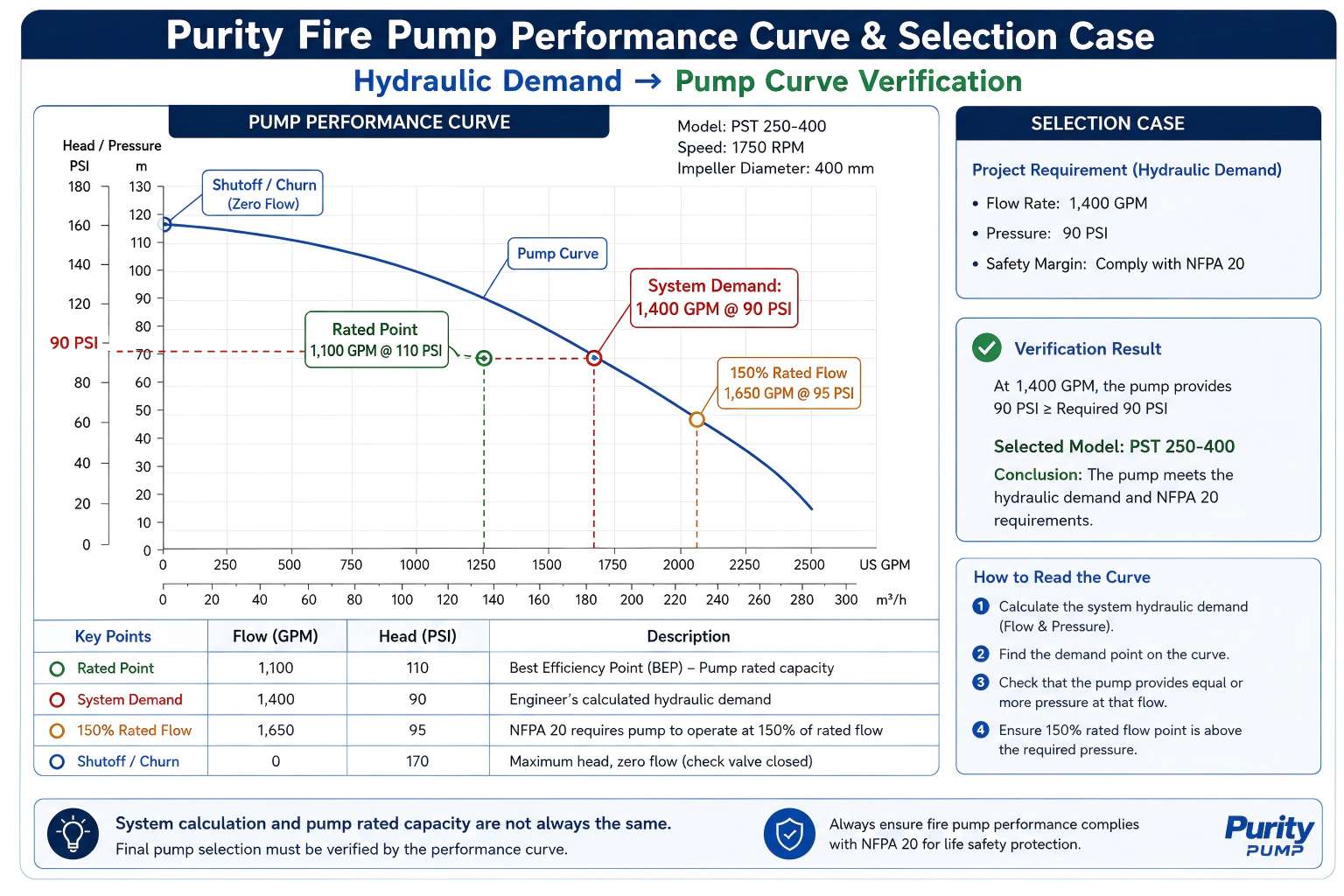
This is an important distinction:
Calculated system demand and pump rated capacity do not always have to be identical. The pump curve determines whether the selected pump can actually meet the system requirement.
Purity Selection Software Link:https://purity.xpump.net/web/#/EN/Index
Building height directly affects fire pump pressure because elevation increases static head.
Building Height ↑ → Static Head ↑ → Required Pump Pressure ↑
For high-rise buildings, engineers may need to divide the fire protection system into pressure zones rather than simply selecting a higher-pressure pump.
Proper zoning can help maintain sufficient pressure at upper floors while preventing excessive pressure in lower sections.
Once flow and head have been determined, the appropriate pump configuration can be selected.
Electric Fire Pump: Suitable where reliable electrical power is available.
Diesel Fire Pump: Used when independent or backup power is required by the project.
Jockey Pump: Maintains system pressure and compensates for minor pressure losses rather than supplying the main fire-flow demand.
Purity provides electric fire pumps, diesel fire pumps, and jockey pumps for different fire protection system configurations. The final selection can be matched to the required flow, pressure, power source, certification, and project conditions.
Before finalizing a fire pump, verify:
· Required flow is correctly calculated
· Required head/pressure is determined
· Static head is included
· Friction losses are calculated
· Required residual pressure is maintained
· Available suction pressure is considered
· Applicable NFPA requirements are satisfied
· The pump curve confirms the required operating point
· Shutoff/churn pressure is within the applicable limit
· Required certifications and local codes are satisfied

Picture |Purity Selection Software
Fire pump sizing begins with the hydraulic requirements of the fire protection system.
The complete process can be summarized as:
Calculate Flow → Calculate Head → Check NFPA Requirements → Verify Pump Curve → Select the Fire Pump
The most important principle is:
Select a fire pump based on the complete hydraulic system—not simply its rated flow or pressure.
For projects requiring specific flow, head, electric or diesel configuration, or fire pump certification, Purity can help engineers evaluate the hydraulic requirements and match them with an appropriate fire pump solution and performance curve.
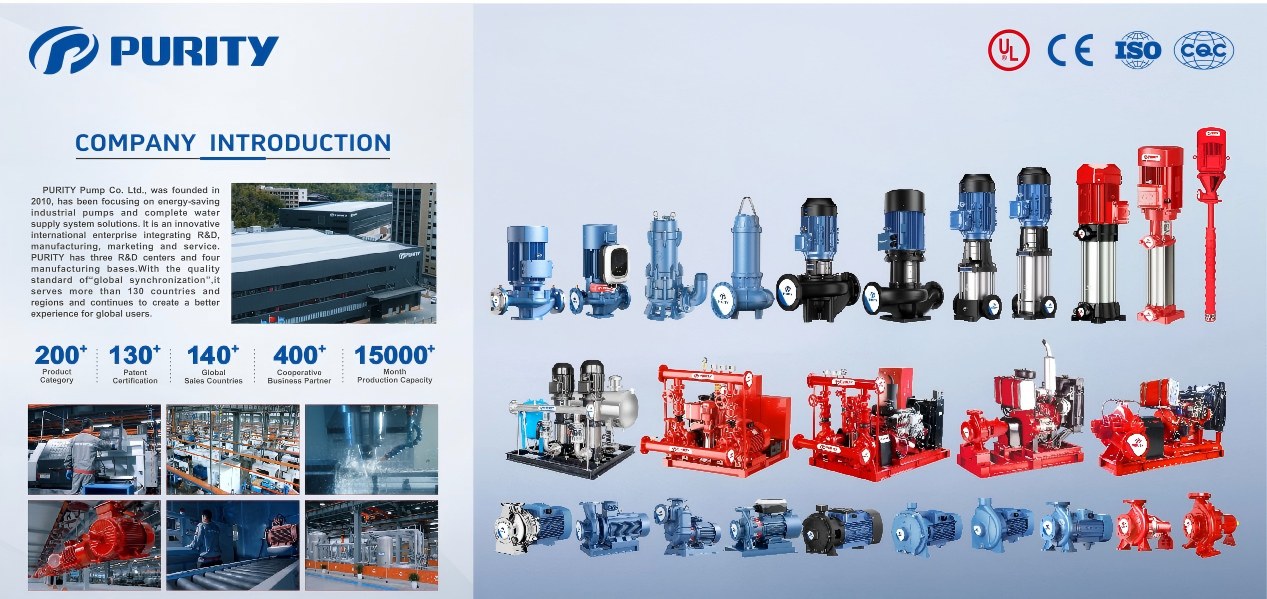
Picture |Purity Company Profile