PRODUCTS SEARCH
A centrifugal pump may fail to deliver water for many reasons, and pump damage is not always the cause. Air entering the suction system, excessive suction lift, blocked pipes, incorrect valve settings, impeller wear, insufficient motor speed, and improper installation can all result in no water delivery or reduced flow.
The key to troubleshooting a centrifugal water pump is to check the entire pumping system—not just the pump itself.
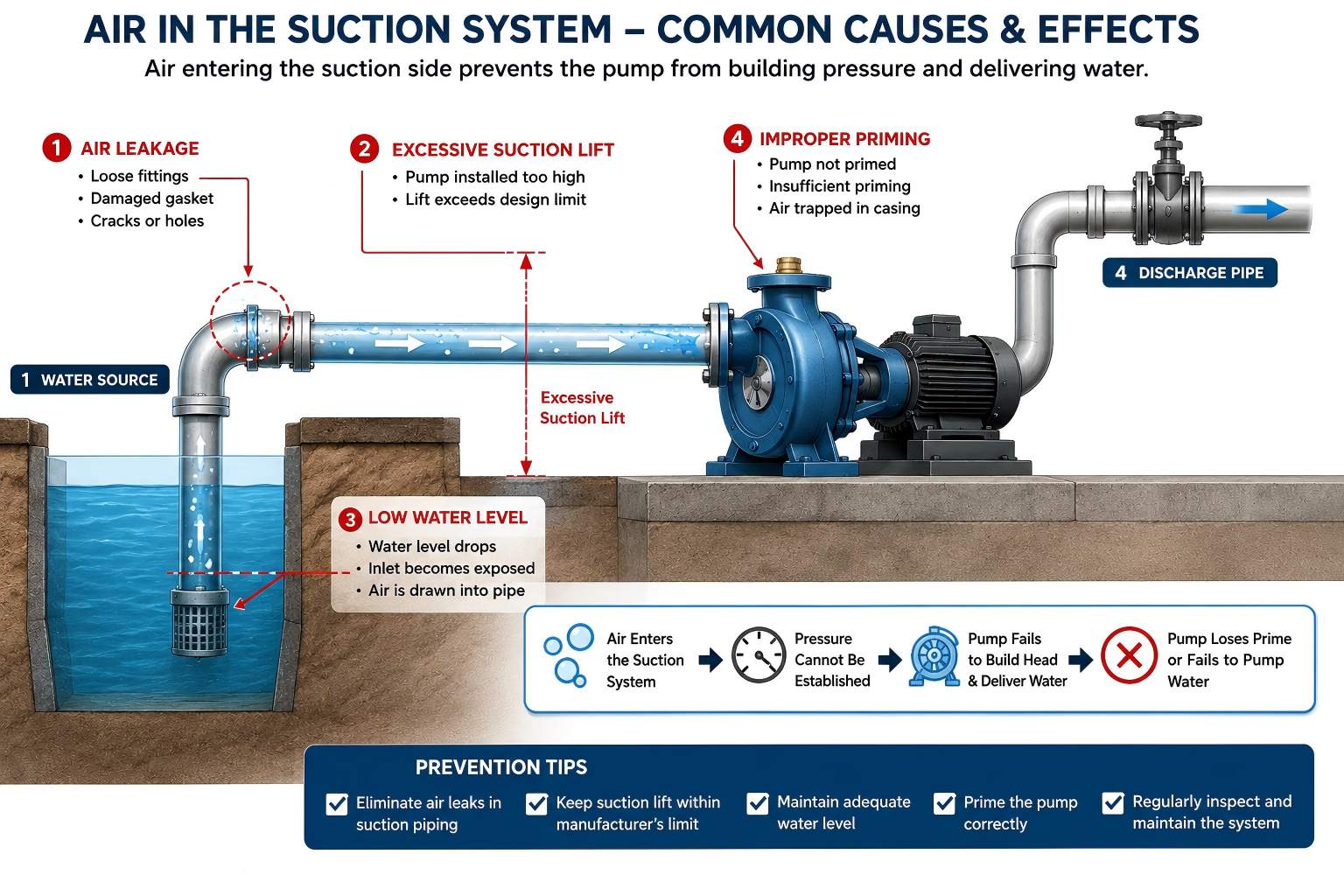
Before starting, the pump should be properly primed and the air inside the pump and suction pipe should be removed. If air remains in the pump casing, the pump may not be able to establish the pressure difference required to draw and transport water.
Common causes include:
· Insufficient priming before startup
· Air leakage from the suction pipe
· Loose flange connections
· Damaged gaskets or seals
· Poor suction pipe installation
· Excessive suction lift
· Low water level at the source
If air continuously enters the suction line, the pump may experience unstable flow, low capacity, or complete loss of water delivery.
For applications with demanding suction conditions, selecting an appropriate pump design is important. A double suction centrifugal pump can provide favorable suction performance and is commonly used in high-flow water transfer applications.
A centrifugal pump does not operate independently from the piping system. Even a properly functioning pump may fail to deliver the expected flow if the suction or discharge system creates excessive resistance.
Possible problems include:
· Blocked suction pipes
· Clogged strainers or filters
· Blocked foot valves
· Valves that are not fully open
· Undersized pipes
· Excessively long pipelines
· Too many elbows
· Incorrect bypass or branch-pipe configuration
· Leakage in the discharge pipeline
When pipeline resistance increases, the pump's actual operating point moves away from its intended performance range. As a result, flow may decrease significantly.
This is why troubleshooting should always include both the centrifugal pump and the connected piping system.
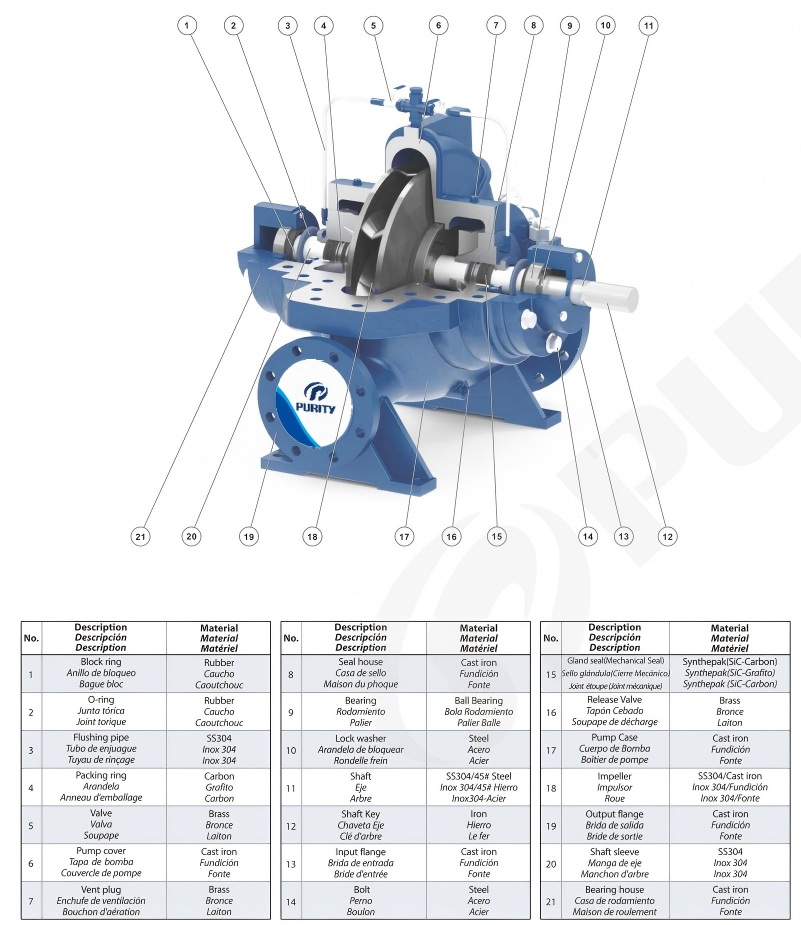
The impeller converts mechanical energy from the motor into hydraulic energy. If the impeller is worn, damaged, or blocked by debris, the pump may not generate sufficient head and flow.
Typical problems include:
· Worn impeller
· Blocked impeller inlet
· Damaged impeller blades
· Excessive internal clearance
· Worn wear rings or wear plates
· Mechanical seal failure
· Damaged shaft or bearings
As internal components wear, internal recirculation can increase and hydraulic efficiency can decrease. This can gradually lead to lower flow and pressure.
Regular inspection and timely replacement of wear components can help maintain stable pump performance.
A centrifugal pump must operate at the correct rotational speed to achieve its designed hydraulic performance.
If the motor is incorrectly selected, underpowered, rotating in the wrong direction, or unable to reach its rated speed, the pump may deliver less water than expected.
For belt-driven pumps, loose or worn belts can cause slipping and reduce pump speed. For direct-coupled pumps, coupling misalignment or shaft problems can also affect operation.
When troubleshooting, check:
· Motor power and voltage
· Motor rotation direction
· Actual operating speed
· Belt condition and tension
· Coupling alignment
· Shaft and bearing condition
A reduction in pump speed generally results in lower head and flow.
Valve settings and installation conditions are another group of factors that can easily be overlooked.
A partially closed suction valve restricts the water entering the pump. A faulty check valve can interfere with normal water movement, while an incorrectly adjusted bypass valve can divert part of the flow away from the intended destination.
Installation problems can also include:
· Excessive pump installation height
· Poorly supported piping
· Incorrect pipe alignment
· Improper pump foundation
· Incorrect suction pipe configuration
For large-flow applications, a split case centrifugal pump can offer additional maintenance advantages. Its split casing allows technicians to access the internal components more conveniently for inspection and servicing.
Even a high-quality centrifugal water pump can experience performance problems if it is not operated and maintained correctly.
Before startup, operators should confirm that the pump is properly primed and that air has been removed from the suction system. During operation, filters, valves, seals, bearings, and other critical components should be inspected regularly.
Without proper maintenance, relatively small problems can develop into serious failures, such as:
· Clogged suction components
· Stuck valves
· Seal deterioration
· Impeller wear
· Bearing damage
· Reduced efficiency
· Unexpected shutdowns
Preventive maintenance helps identify these problems early and reduces the risk of unexpected downtime.
When a centrifugal pump cannot deliver water, a systematic inspection is more effective than immediately replacing the pump.
A practical troubleshooting sequence is:
Check the water source → Check priming and air leakage → Inspect suction piping → Check valves and filters → Inspect the impeller and internal components → Check motor speed and rotation → Verify the pump operating point.
This process helps determine whether the problem comes from the pump, motor, piping system, installation, or operating conditions.
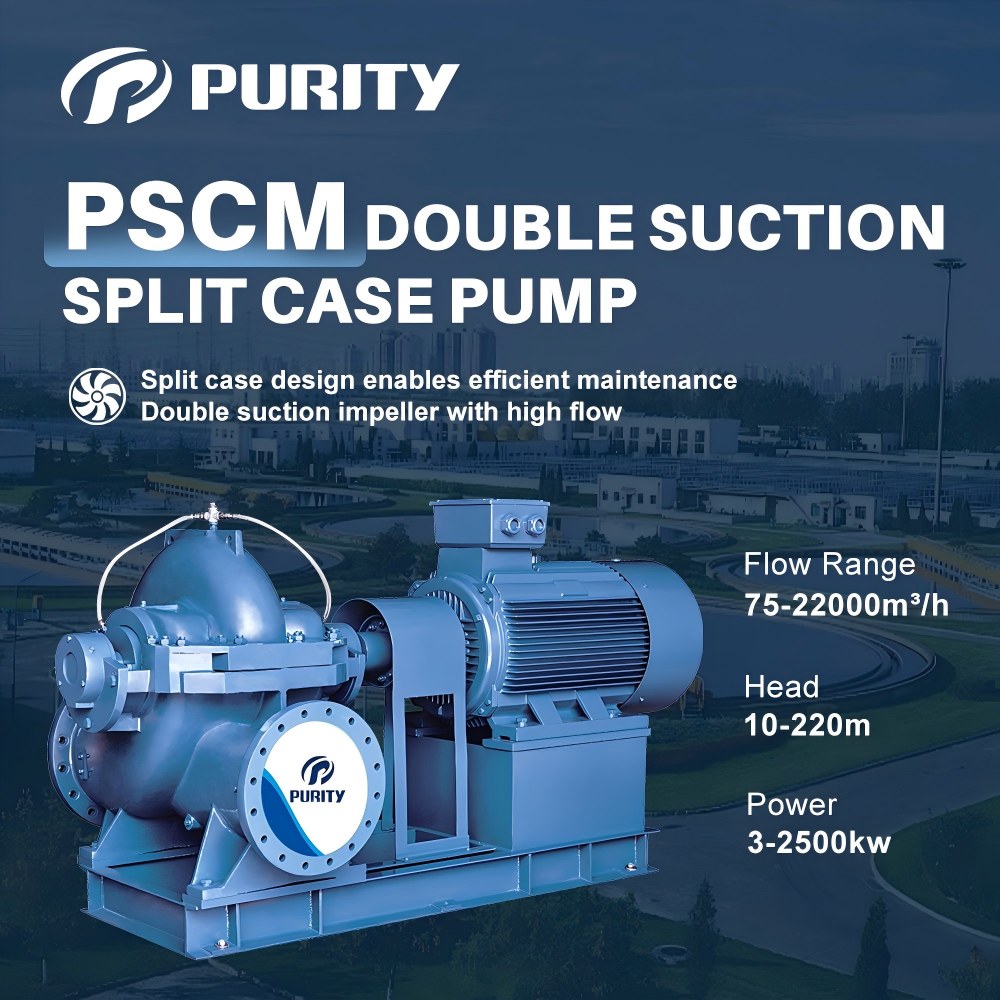
For large-flow water transfer applications, a double suction centrifugal pump can be a suitable option because its hydraulic design provides favorable suction performance and balanced operation.
A split case centrifugal pump also offers practical maintenance benefits. Its split casing allows the pump to be opened for inspection and component replacement without completely dismantling the connected piping in many installations.
Purity's PSCM series combines these two design characteristics. Its double-suction hydraulic design is intended for high-flow applications, while the split-case construction makes inspection and maintenance more convenient. Multiple models and specifications are available to accommodate different flow and head requirements.
Pump reliability, however, depends on more than hydraulic design. Manufacturing quality, component selection, quality control, and production experience also play an important role.
As an experienced centrifugal pump manufacturer, Purity has more than 16 years of manufacturing and sales experience and operates a 60,000 m² production facility. Its products are supported by certifications including CE, ISO, and SASO and are supplied to customers in more than 140 countries and regions.
Therefore, when a centrifugal pump is not delivering water, replacing the pump should not always be the first step. Identifying the actual cause—from suction conditions and piping to pump components, motor performance, installation, and maintenance—is the foundation for finding the right solution.
With the correct diagnosis and properly selected pump, water delivery can be made more stable, efficient, and reliable.