PRODUCTS SEARCH
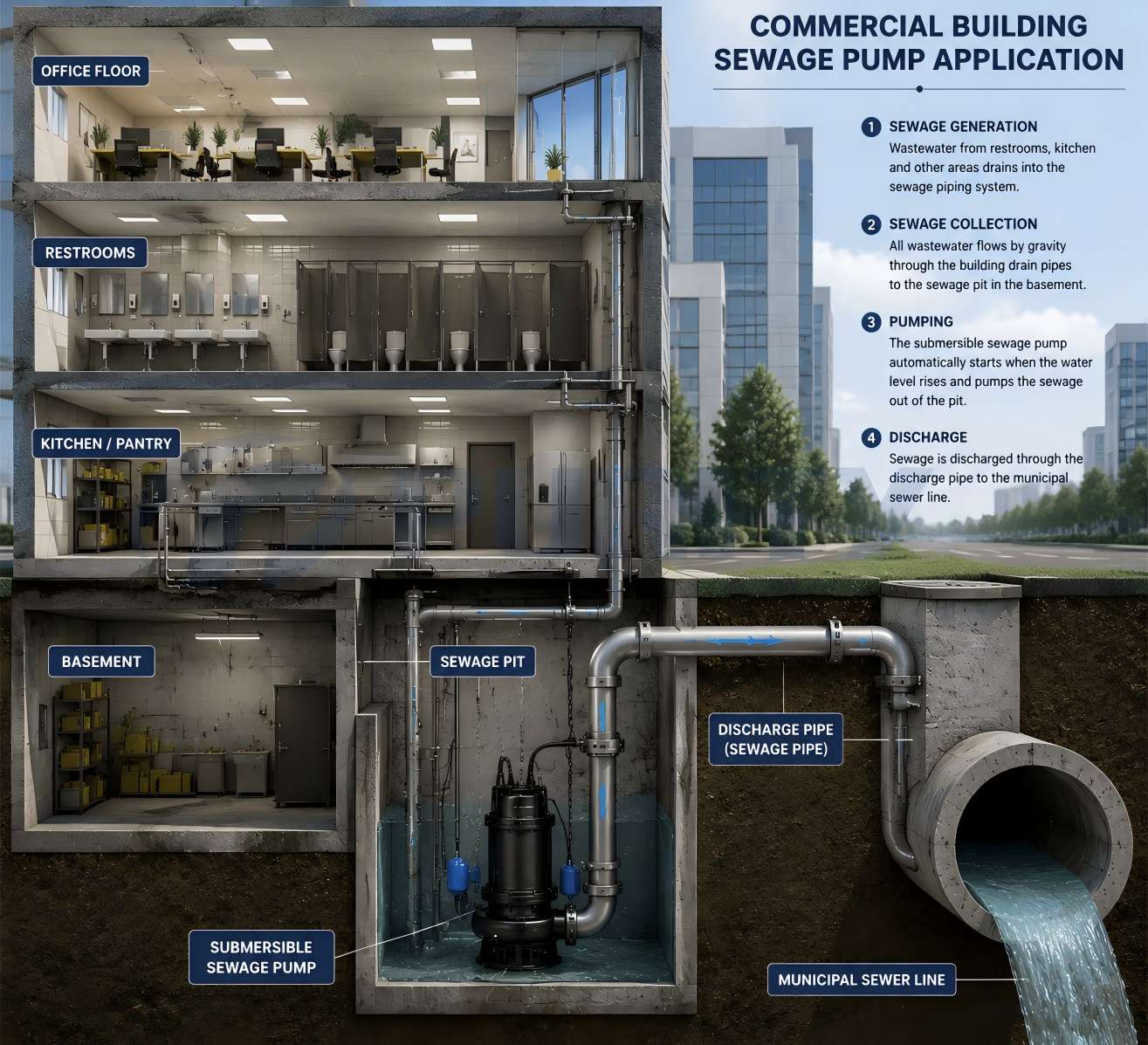
Commercial buildings such as hotels, hospitals, restaurants, office buildings, and industrial facilities usually generate larger amounts of wastewater compared with residential applications. They may also contain solid waste, grease, and other contaminants that can affect drainage performance. Therefore, selecting a suitable Sewage Pump System is essential for maintaining safe and efficient wastewater management.
· Basement areas below public sewer levels;
· Buildings with insufficient drainage slope;
· Industrial facilities with complex wastewater discharge requirements.
In these cases, a Commercial Sewage Pump is required to collect wastewater from a sump pit or sewage basin and lift it to a higher discharge point.
A reliable sewage pump provides several important benefits:
· Efficient transportation of wastewater;
· Prevention of pipeline blockage;
· Reduction of sewage overflow risks;
· Protection against wastewater backflow;
· Improved hygiene and environmental safety.
Therefore, a sewage pump is not only a drainage device but also a critical component that supports the safe operation of commercial buildings.
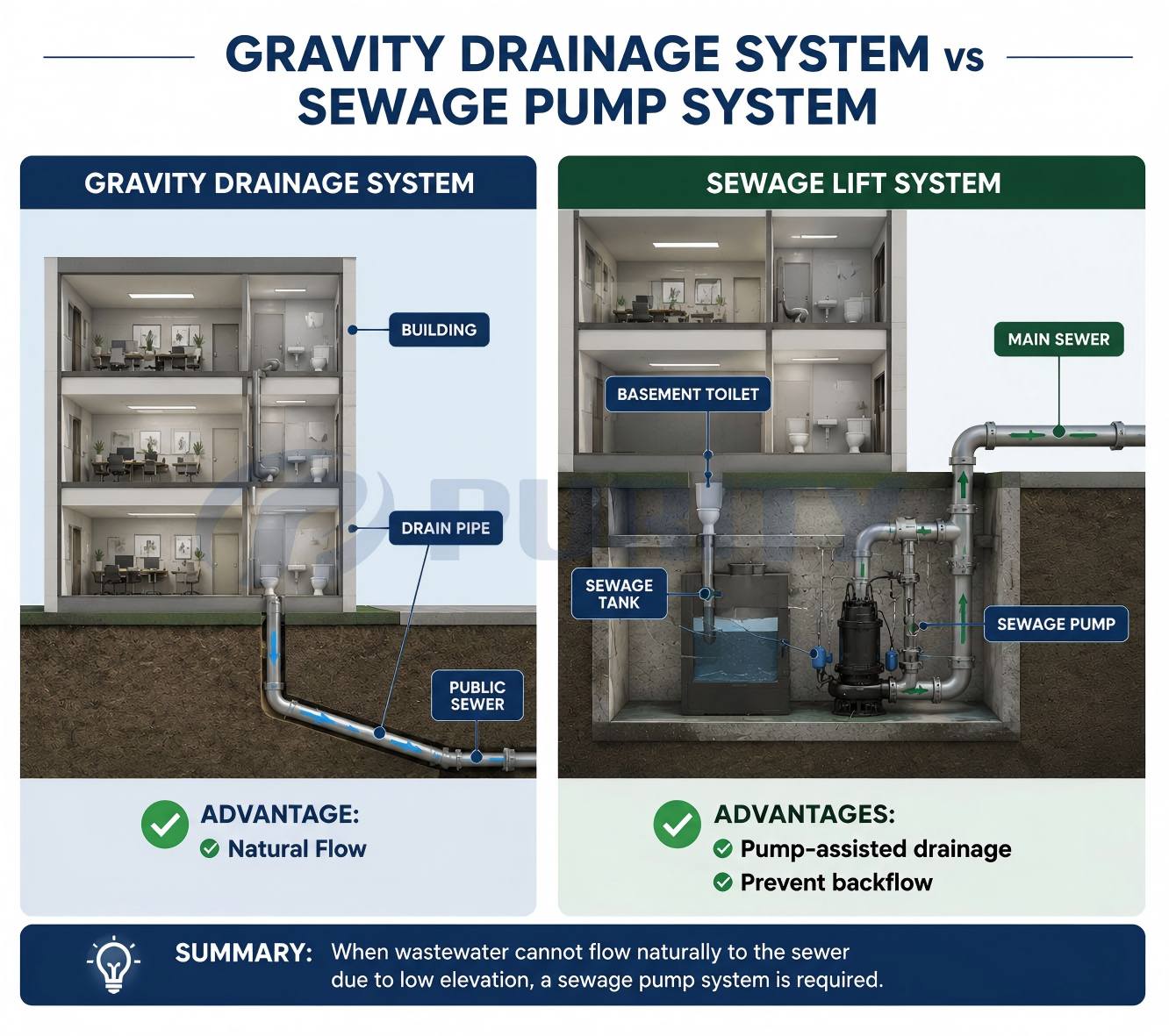
Before selecting a sewage pump, it is important to understand the building’s drainage structure.
A gravity drainage system uses natural elevation differences to transport wastewater.
Its advantages include:
· Simple structure;
· Low maintenance requirements;
· No additional lifting equipment required.
However, this system only works when the building drainage pipes are positioned correctly and have enough slope to discharge wastewater naturally.
When wastewater fixtures are located below the main drainage line, a sewage lift system is required.
A Sewage Pump System collects wastewater inside a sealed tank and automatically pumps it upward into the main sewer line.
This solution is commonly used in:
· Commercial basements;
· Underground parking areas;
· Hotels and restaurants;
· Industrial facilities.
By lifting wastewater above the discharge level, sewage pumps help reduce the possibility of sewage backup and protect buildings from costly water damage.
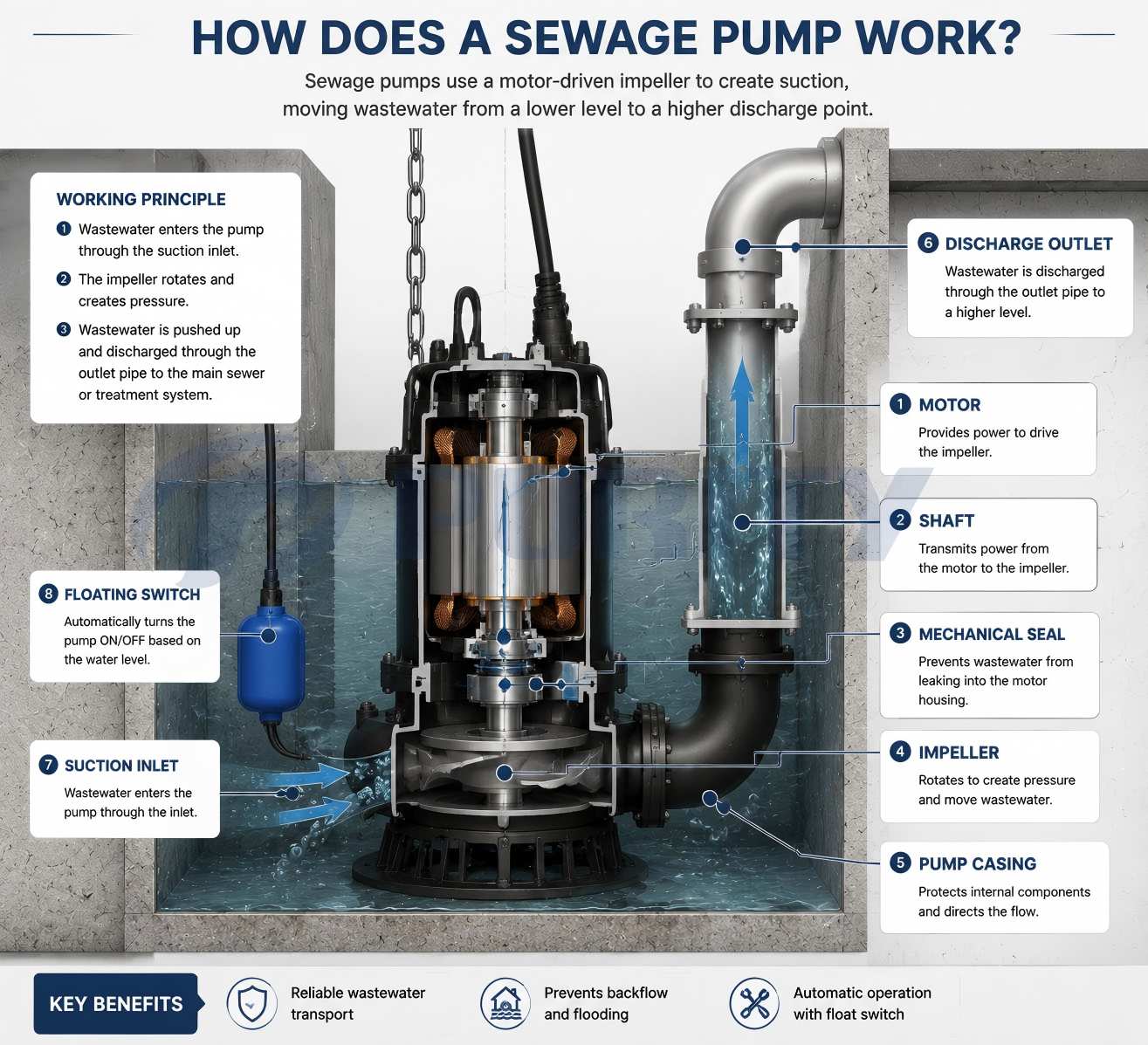
The working process includes:
1. Wastewater enters the sewage basin;
2. The liquid level rises to the preset starting point;
3. The motor activates the impeller;
4. The rotating impeller generates centrifugal force;
5. Pressure is created to move wastewater through the discharge pipeline.
Because sewage often contains solid particles, a high-quality sewage pump requires special hydraulic designs, including:
· Large flow passages;
· Anti-clogging impellers;
· Optional cutting or grinding systems.
These designs allow the pump to handle wastewater containing solid materials while maintaining stable performance.
Choosing the correct sewage pump depends mainly on the type of wastewater being transported.
Gray water pumps are designed for wastewater without large solid particles, such as:
· Sink drainage;
· Floor drains;
· Shower wastewater.
They mainly handle liquid waste and require standard wastewater transfer capability.
For applications involving toilets, restaurants, and commercial sanitation systems, a solid waste sewage pump is required.
These pumps usually feature:
· Larger flow channels;
· Stronger materials;
· Cutting or grinding devices.
A proper Industrial Sewage Pump design can effectively process solid waste and reduce the risk of clogging in demanding applications.
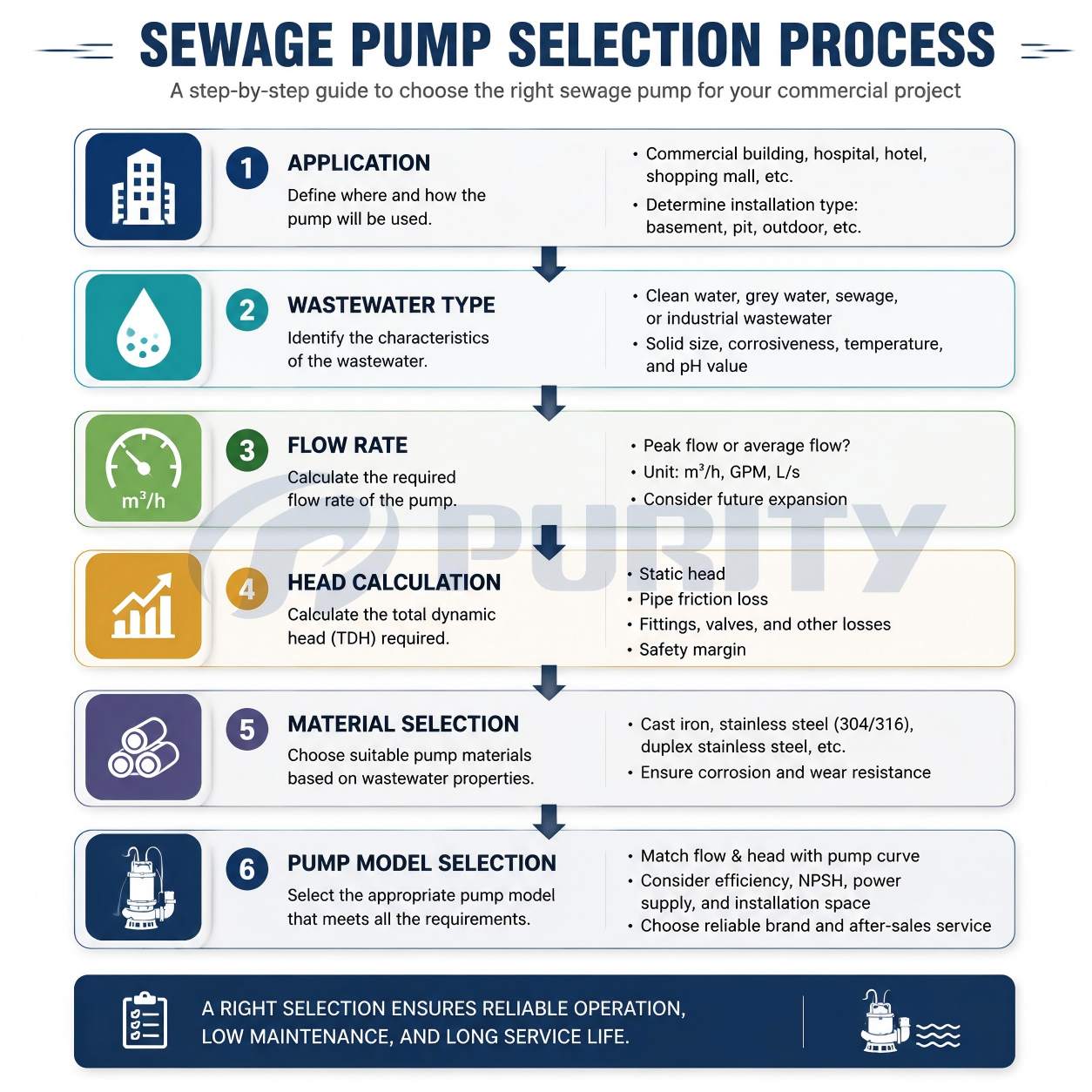
Flow rate determines how much wastewater the pump can transfer within a specific time.
Consider:
· Average wastewater production;
· Peak discharge periods;
· Building usage conditions.
An undersized pump may cause slow drainage or overflow problems.
Head refers to the height and resistance that the pump must overcome.
A higher head requirement is common in:
· High-rise buildings;
· Basement applications;
· Long discharge pipelines.
Correct head calculation ensures the pump operates efficiently without overload.
Motor power directly affects pumping capability and continuous operation performance.
Commercial applications generally require stronger motors compared with residential pumps because they handle larger wastewater volumes and longer operating hours.
Wastewater environments can be highly corrosive. Therefore, material selection plays an important role.
Common materials include:
Cast Iron
· High mechanical strength;
· Suitable for heavy-duty applications.
Stainless Steel
· Excellent corrosion resistance;
· Suitable for demanding wastewater environments.
A durable sewage pump can significantly extend service life and reduce maintenance costs.
A good sewage pump should be designed for easy inspection and maintenance.
Important considerations include:
· Accessible components;
· Reliable spare parts supply;
· Simple maintenance procedures;
· Long service life.
Choosing an experienced Sewage pump manufacturer can help ensure stable product quality and professional technical support.
As a professional Sewage pump manufacturer, Purity Pump has more than 16 years of experience in pump production and global distribution.
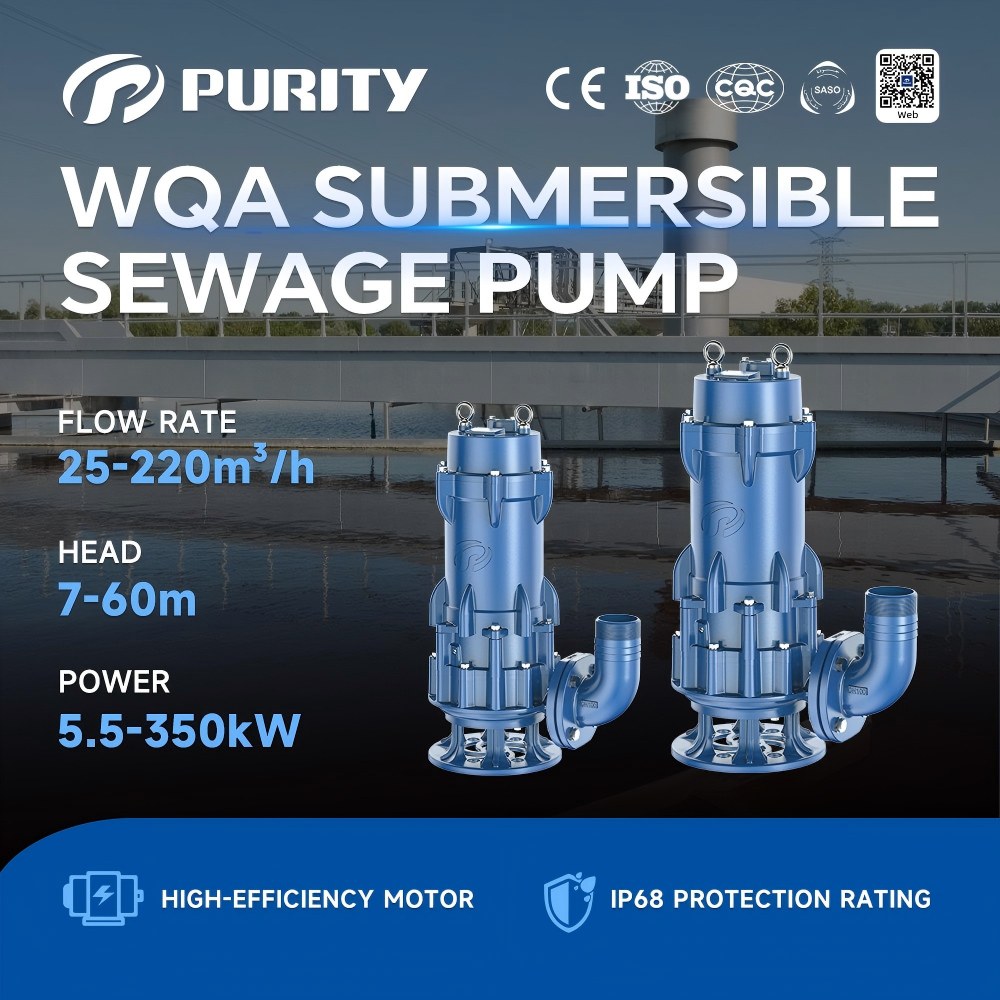
· CE-certified WQ sewage pump series;
· Complete models and specifications for different applications;
· Full-head design to improve actual operating performance;
· Optimized hydraulic structure to reduce motor failure caused by incorrect selection;
· Bearing pressure plate design to improve pump durability and service life.
With a 60,000㎡ independent manufacturing facility, 150,000+ pumps annual production capacity, and products serving customers in more than 140 countries, Purity Pump provides reliable wastewater solutions for commercial and industrial applications worldwide.
Choosing the right Commercial Sewage Pump requires a comprehensive evaluation of wastewater characteristics, flow requirements, head pressure, materials, and maintenance needs. Whether for commercial buildings, wastewater treatment facilities, or industrial projects, a properly selected Sewage Pump System can improve efficiency, reduce operating costs, and ensure long-term reliability.
As an experienced Sewage pump manufacturer, Purity Pump continues to provide high-quality sewage pumps and professional solutions for global customers. We are looking for worldwide distributors and partners to expand reliable wastewater solutions together.