PRODUCTS SEARCH
Choosing the right sewage pump is one of the most important steps in designing an efficient and reliable wastewater system. A properly selected pump can provide stable operation for more than 10 years, while incorrect sizing may lead to frequent starts, higher energy consumption, motor overheating, pipe blockage, and unexpected maintenance costs.
Whether you are designing a residential drainage system, commercial wastewater project, or municipal lift station, selecting the correct sewage pumps requires careful consideration of flow rate, total dynamic head (TDH), solids handling capability, impeller design, installation conditions, and operating costs.
This guide explains how to size a sewage pump and how to choose the right solution for different wastewater applications.
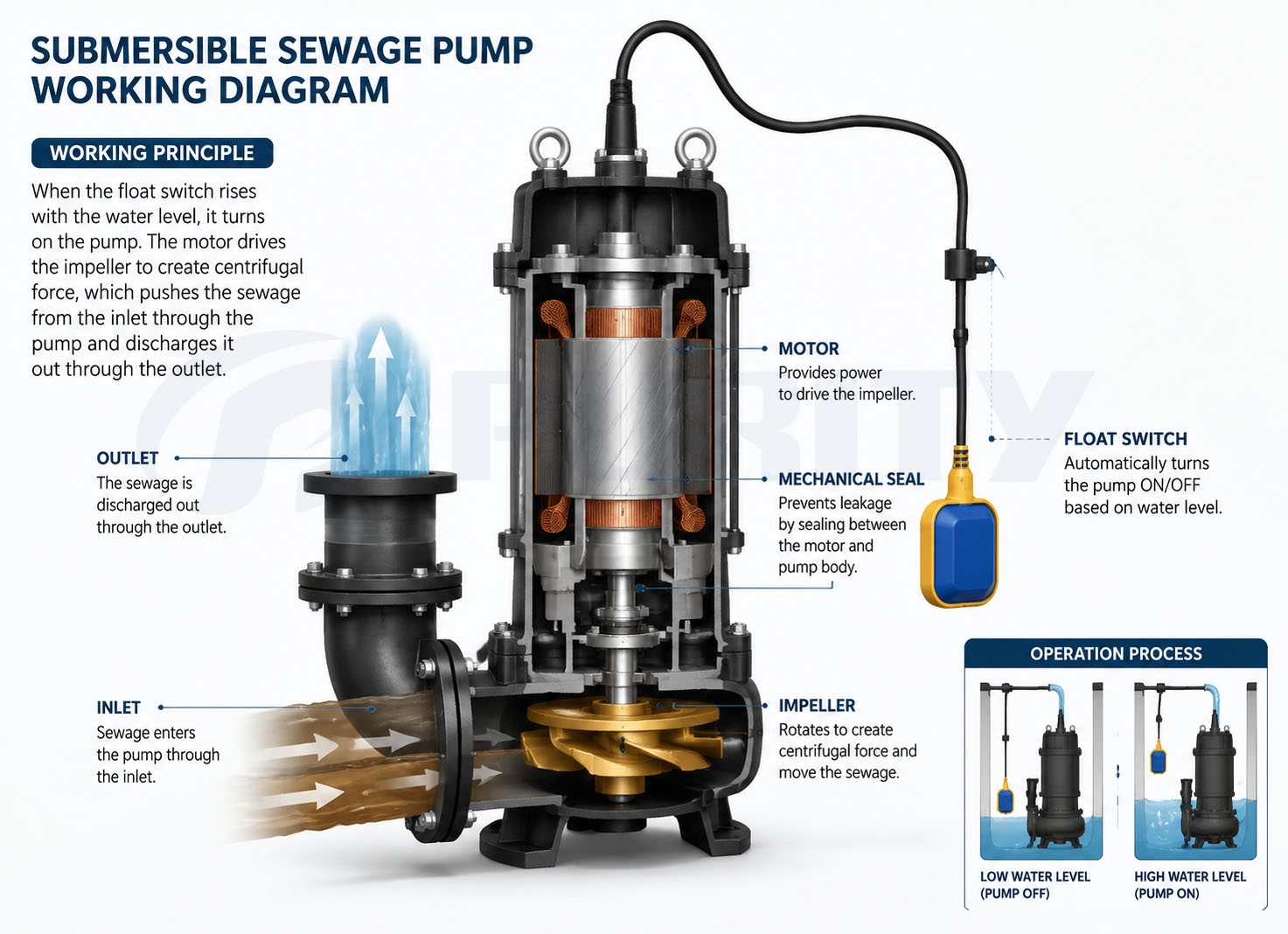
A typical submersible sewage pump operates completely submerged in a wastewater basin. The waterproof motor drives the impeller, generating centrifugal force to move sewage through the discharge pipeline.
A reliable sewage pump system usually includes:
· Submersible sewage pump
· Sewage basin or lift station
· Float switch or liquid level controller
· Discharge pipe
· Check valve
· Control panel
The pump automatically starts when the wastewater level rises and stops when the basin reaches the low-water level.
The first step in selecting a sewage pump is determining the required flow rate.
Flow rate refers to how much wastewater needs to be transferred within a specific time, usually measured in GPM (Gallons Per Minute).
The required flow depends on:
· Building size
· Number of users
· Peak wastewater demand
· Application type
A single-family home may require approximately:
20–80 GPM
depending on the number of bathrooms and wastewater usage.
Large buildings such as:
· Apartments
· Hotels
· Restaurants
· Office buildings
may require:
100+ GPM
For larger municipal applications, sewage pumps can reach thousands of GPM.
Common methods for calculating peak flow include:
This method uses plumbing fixture quantities, such as toilets, sinks, and showers, to estimate peak wastewater flow.
It is commonly used for:
· Residential projects
· Small commercial buildings
Used mainly in municipal wastewater engineering.
The calculation is based on:
Daily wastewater generation × peak factor
This method is suitable for large sewage pump systems connected to municipal networks.
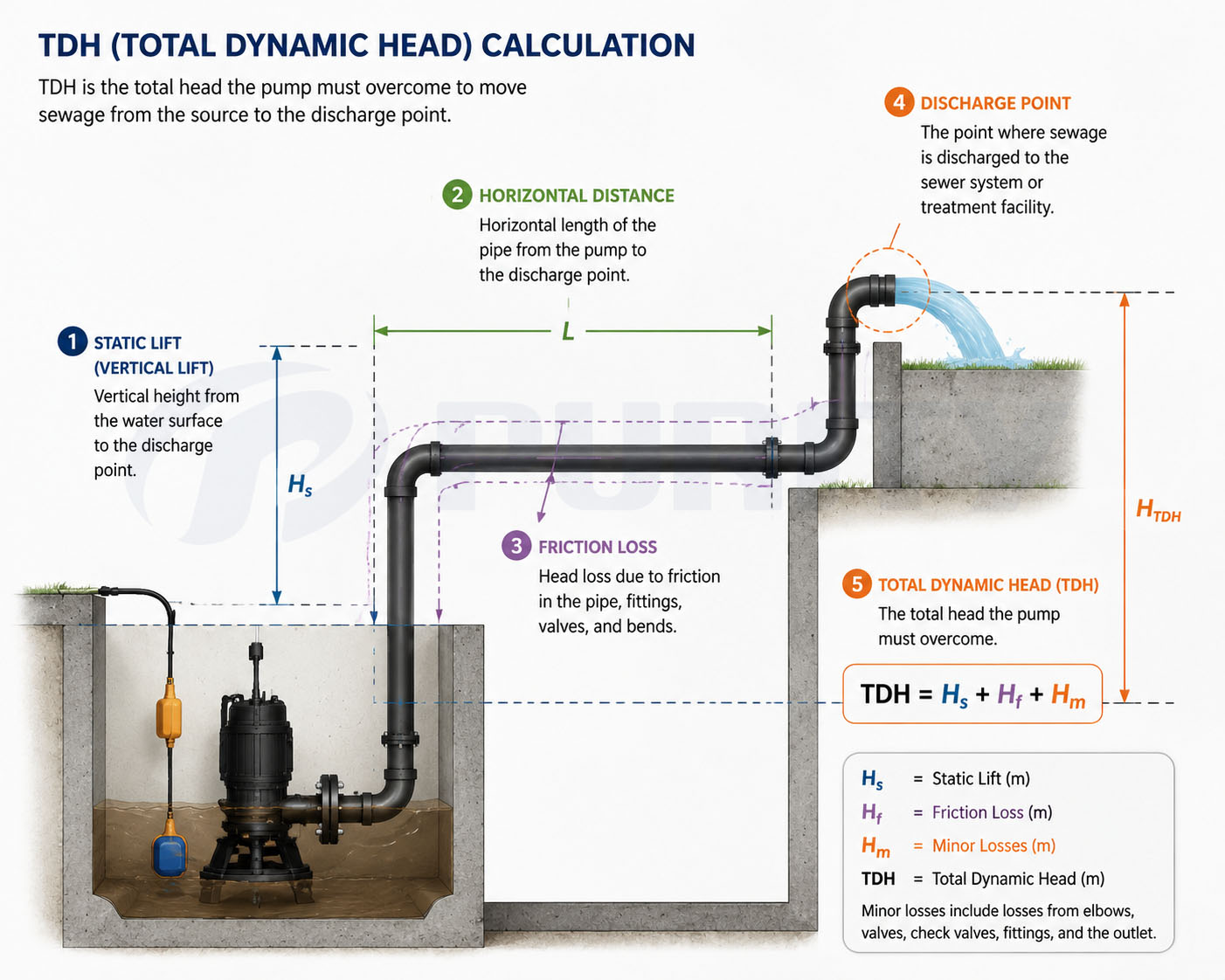
This is called:
TDH represents the total pressure required for the pump to move wastewater from the basin to the discharge point.
The basic formula is:
TDH = Static Head + Friction Loss
Static head refers to the vertical lifting height.
For example:
If wastewater needs to be lifted 15 meters from the pump basin to the discharge point:
Static Head = 15 meters
Friction loss is caused by resistance inside the pipeline.
Factors include:
· Pipe length
· Pipe diameter
· Elbows
· Valves
· Check valves
Longer pipes and smaller diameters create higher friction losses.
A correctly sized sewage pump should match the required:
Flow + TDH operating point
on the pump performance curve.
Every sewage pump has a performance curve showing the relationship between flow and head.
The ideal operating point is:
Operating near BEP provides:
· Higher efficiency
· Lower energy consumption
· Reduced mechanical wear
· Longer service life
A pump that is too large may cause:
❌ Frequent cycling
❌ Energy waste
❌ Increased cavitation risk
❌ Mechanical seal damage
A pump that is too small may cause:
❌ Insufficient flow
❌ Poor wastewater discharge
❌ Increased clogging risk
Proper sizing ensures the sewage pump system operates efficiently and reliably.
One of the biggest differences between a normal water pump and a sewage pump is solids handling capability.
Wastewater may contain:
· Toilet paper
· Fibers
· Wipes
· Organic waste
· Solid particles
For applications with heavy debris, selecting the correct impeller is critical.
Advantages:
· Excellent anti-clog performance
· Suitable for wastewater containing fibers
Common applications:
· Residential sewage systems
· Commercial wastewater
Features:
· Large flow passage design
· Strong solids handling capability
Applications:
· Municipal sewage systems
· Industrial wastewater
For wastewater containing difficult materials such as wipes and long fibers, a cutter pump sewage solution is often recommended.
A submersible sewage cutter pump uses a cutting mechanism to shred solids before discharge.
Benefits include:
· Reduced blockage risk
· Improved wastewater transportation
· Reliable operation in challenging environments
Even a high-quality sewage pump can fail if installed incorrectly.
Important installation considerations include:
A sewage basin should provide enough volume to prevent frequent starts.
Recommended:
· Minimum basin diameter: 18 inches
· Minimum basin depth: 24 inches
A check valve prevents wastewater from flowing backward into the basin after the pump stops.
Benefits:
· Prevents short cycling
· Protects the motor
· Improves system reliability
A vent hole or vent system prevents air lock and ensures stable pump performance.
Regular maintenance helps extend pump service life.
Check:
· Float switch operation
· Unusual noises
· Pump start and stop cycles
Inspect:
· Check valve performance
· Power cable condition
· Control panel connections
· Mechanical seal condition
Professional inspection should include:
· Bearing condition
· Impeller wear
· Mechanical seal replacement
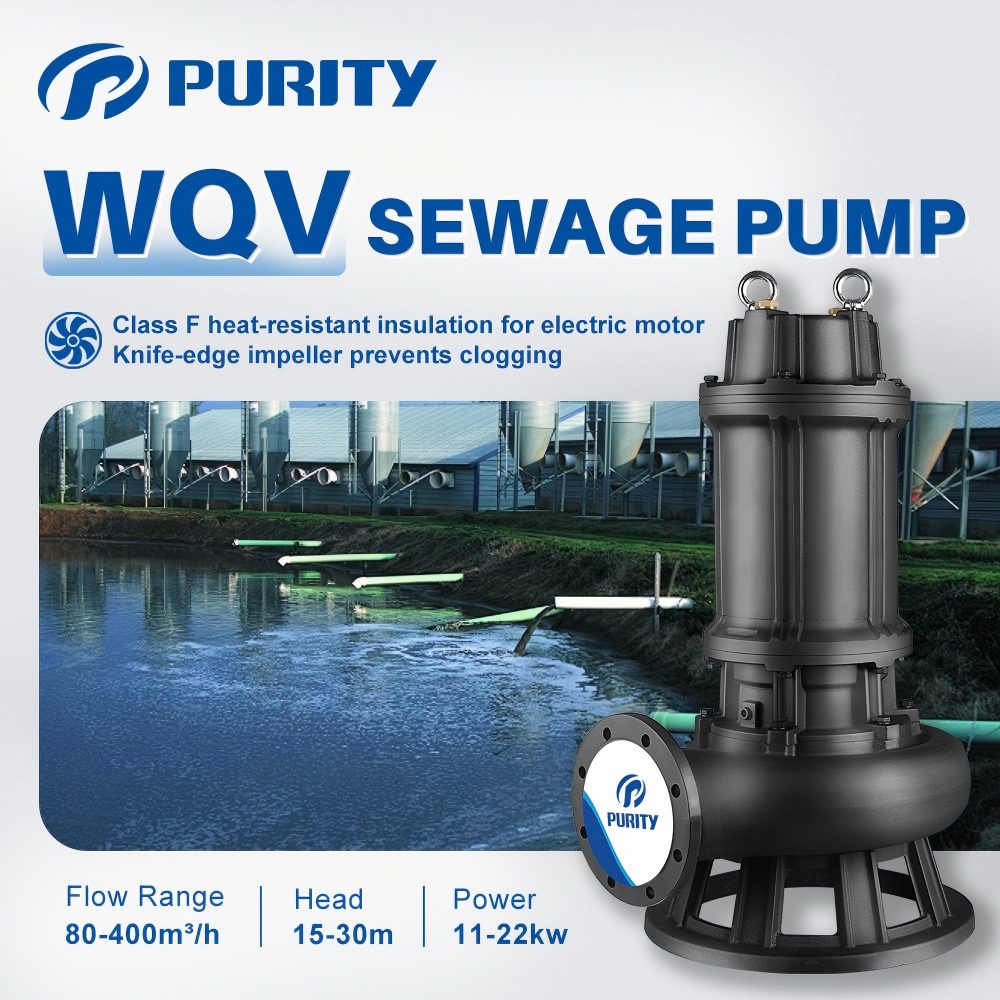
For wastewater applications requiring strong cutting performance, Purity’s WQV submersible sewage cutter pump provides an efficient and reliable solution.
The WQV series features:
✅ Spiral cutting structure with sharp cutting blades
✅ Cutter and impeller combination for efficient fiber cutting
✅ Back-swept impeller design to reduce blockage risk
✅ Compact structure with low noise operation
✅ Energy-saving performance and easy maintenance
✅ No need for a dedicated pump room — direct submersible installation reduces project costs
With more than 16 years of pump manufacturing experience, Purity provides reliable sewage pump solutions for global customers.
Purity products are certified with international standards including CE, ISO, and SASO, supported by 130+ product certifications and an annual production capacity of 1.5 million+ pumps.
From residential wastewater systems to commercial and industrial applications, Purity is committed to delivering efficient, durable, and dependable sewage pump solutions worldwide.
Selecting a sewage pump is not simply about choosing the highest power model. The key is matching the pump with actual system requirements.
A reliable sewage pump system requires:
✔ Accurate flow calculation
✔ Correct TDH selection
✔ Suitable solids handling capability
✔ Proper impeller design
✔ Professional installation
✔ Regular maintenance
By choosing the right sewage pump, sewage pumps, or submersible sewage cutter pump, engineers and contractors can reduce operating costs, minimize failures, and ensure long-term wastewater system performance.