PRODUCTS SEARCH
Choosing the correct size sewage pump is essential for maintaining a reliable wastewater system. Many customers ask:
“What size sewage pump do I need?”
The answer is not simply choosing a pump with higher horsepower or larger capacity. A properly sized sewage pump must match the actual requirements of the wastewater system, including flow rate, total dynamic head (TDH), pipeline conditions, and solids handling capability.
An oversized sewage pump may cause frequent starts and stops, higher energy consumption, and unnecessary wear on motors and control components. An undersized pump may result in insufficient drainage capacity, increased clogging risks, and possible sewage backflow.
Therefore, the best sewage pump is not the biggest one, but the one that delivers the right performance for the application.
When selecting sewage water pumps, motor power is only one consideration. The correct pump size is mainly determined by:
· Required flow rate
· Total dynamic head (TDH)
· Solids handling capability
· Pipe size and layout
· Operating environment
A reliable sewage pump should provide enough capacity while operating efficiently under actual working conditions.
Flow rate refers to how much wastewater the pump needs to transfer within a specific period.
The required flow depends on:
· Number of bathrooms
· Water-consuming equipment
· Building usage
· Peak wastewater discharge demand
For small residential applications, sewage ejector systems commonly operate around 35–60 GPM, but the actual requirement should always be calculated based on the specific project.
For example, a sewage pump used for a basement bathroom has completely different requirements compared with a pump installed in an apartment building, commercial facility, or industrial wastewater system.
Larger buildings and industrial applications usually require higher-capacity sewage water pumps because they handle greater wastewater volume and longer operating cycles.
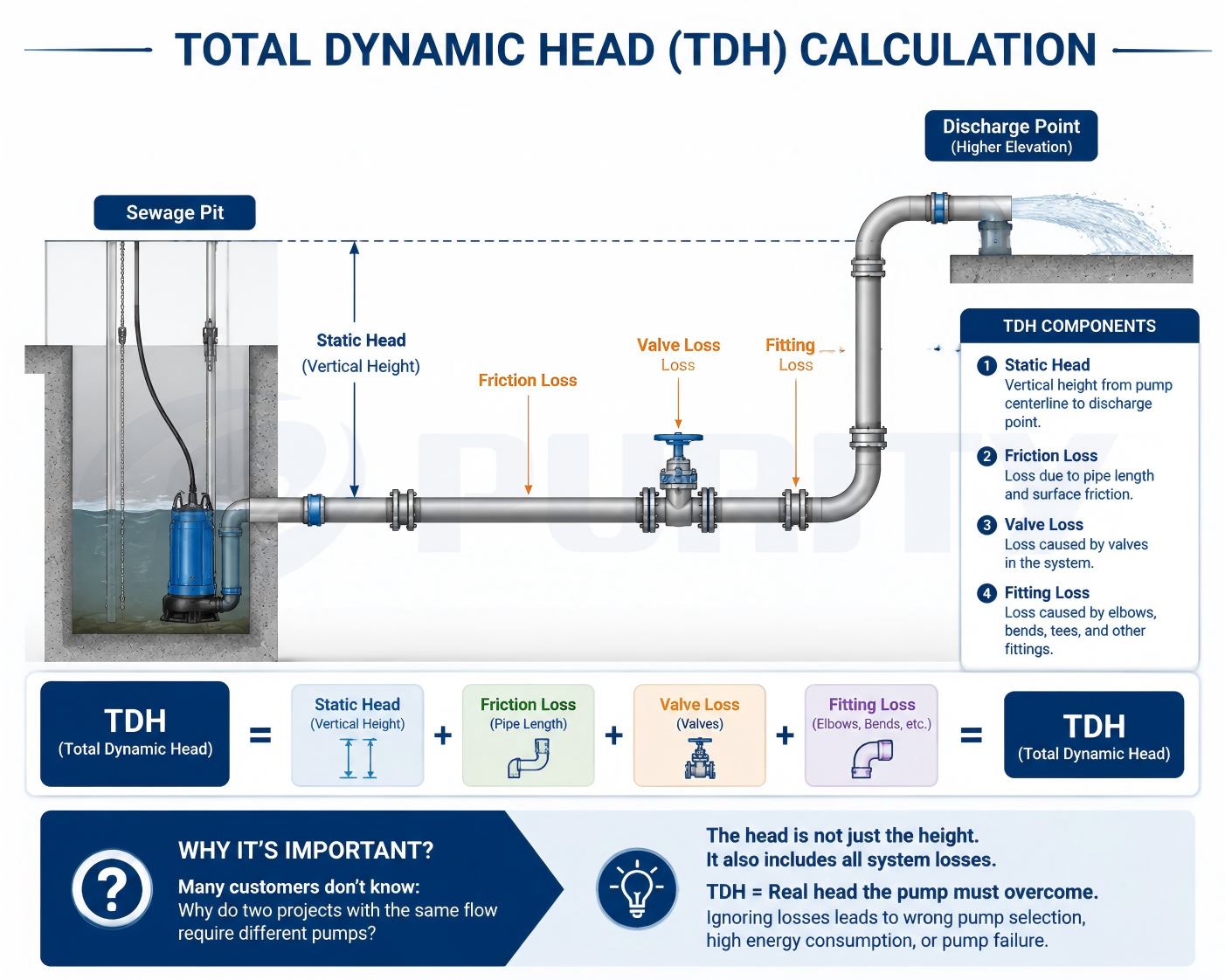
The pump must also overcome resistance throughout the discharge system, which is measured as Total Dynamic Head (TDH).
TDH includes three main factors:
Static head refers to the vertical height that wastewater must be lifted.
For example, the difference in elevation between the sewage pit outlet and the discharge connection point.
As wastewater flows through pipes, resistance reduces pump performance.
Friction loss is affected by:
· Pipe length
· Pipe diameter
· Number of elbows
· Valve resistance
Additional losses come from components such as:
· Check valves
· Pipe fittings
· Connections
Ignoring these factors may lead to selecting a sewage water pump that cannot achieve the required flow rate.
For example, a pump may perform well at 10 feet of head, but after considering pipe friction and fittings, the actual operating condition may reach 20 feet of head. In this case, the actual flow output can decrease significantly.
Every sewage pump has a performance curve showing the relationship between flow rate and head.
The ideal operating point should be close to the Best Efficiency Point (BEP).
Operating near BEP provides:
✔ Higher energy efficiency
✔ Lower vibration
✔ Longer service life
✔ More stable operation
Selecting an oversized sewage pump can cause the wastewater pit to empty too quickly, resulting in frequent cycling and increased wear on motors and float switches.
A smaller pump may operate continuously, increase motor load, and create a higher risk of blockage.
The goal of sewage pump selection is not maximum power, but the best efficiency under actual operating conditions.
Different wastewater applications require different pump designs.
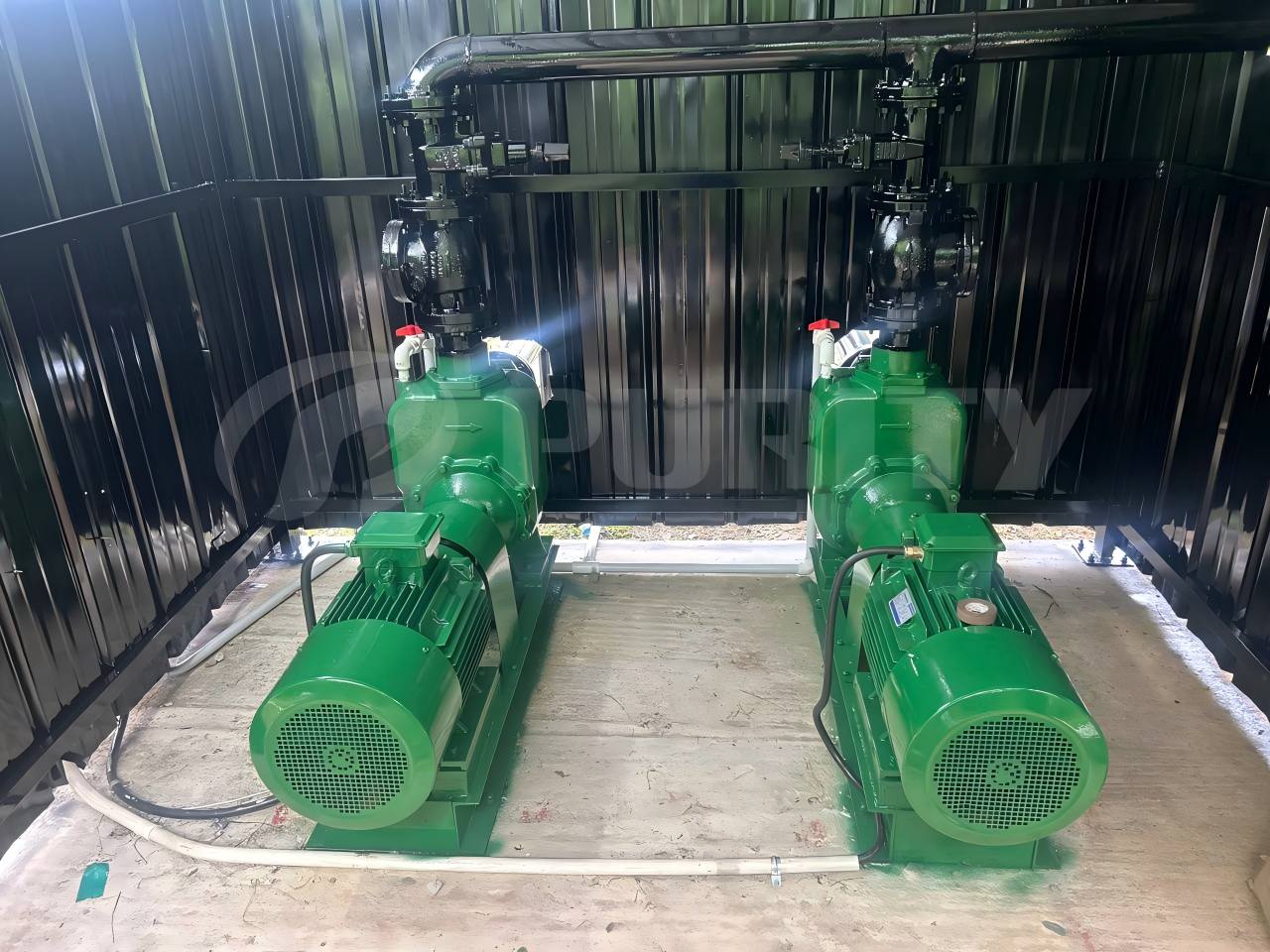
A self priming sewage pump is suitable for applications where automatic priming capability is required.
It is commonly used in wastewater transfer systems where the pump installation position is above the liquid level.
Advantages include:
· Flexible installation
· Reliable wastewater transfer
· Reduced maintenance requirements
Non-clog sewage pumps are widely used in:
· Commercial buildings
· Municipal wastewater systems
· High-flow applications
They feature larger flow passages and stronger solids handling capability, helping reduce blockage risks when handling wastewater containing solid particles and fibers.
Grinder pumps are designed for wastewater containing difficult materials such as wipes, fibers, and other solid waste.
By cutting solids into smaller particles, grinder pumps are suitable for:
· Long-distance discharge
· High-pressure wastewater systems
· Complex sewage environments
A sewage pump does not work independently. It must match the entire wastewater system.
Important factors include:
· Sewage pit capacity
· Float switch settings
· Discharge pipe diameter
· Pipeline length
· Valves and fittings
For example, if the sewage basin is too small but the pump capacity is too large, the system may experience short operating cycles and frequent starts, reducing equipment life.
The pipe size is also important. A pipe that is too small increases friction loss and reduces actual pump performance.
Experienced sewage pump manufacturers consider these details during product design.
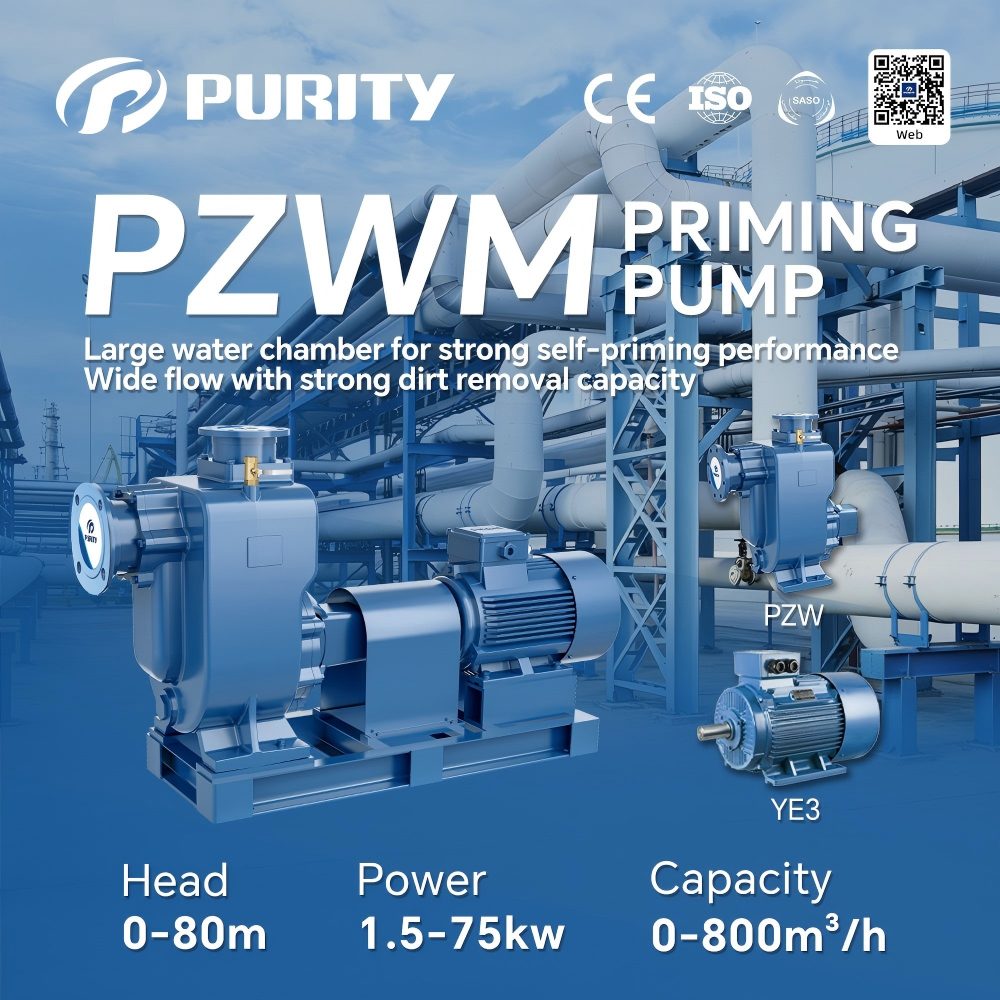
For example, Purity Pump’s PZWM series sewage pump is designed with practical installation and long-term reliability in mind. It uses a 304 stainless steel welded shaft to improve corrosion resistance, a high-efficiency copper winding motor to reduce temperature rise, and threaded inlet and outlet connections for easier installation.
Higher horsepower does not always mean better performance. Pump curves and actual operating conditions are more important.
Selecting a pump only according to lifting height while ignoring pipeline losses can result in insufficient flow.
A standard drainage pump cannot replace a dedicated sewage pump. Wastewater systems require pumps designed for solids handling.
If the previous pump had problems such as frequent clogging or insufficient drainage, replacing it with the same model may not solve the problem.
The system should be reevaluated based on:
· Flow requirements
· Head requirements
· Application conditions
A practical selection process includes:
Step 1: Determine required wastewater flow rate.
Step 2: Calculate total dynamic head (TDH).
Step 3: Confirm solids handling requirements.
Step 4: Check pipeline conditions.
Step 5: Review pump performance curves.
Step 6: Select a pump operating near its best efficiency point.
So, what size sewage pump do I need?
The answer depends on your specific wastewater system requirements.
A properly selected sewage pump should provide:
✔ Suitable flow capacity
✔ Sufficient head performance
✔ Reliable solids handling
✔ Efficient operation
✔ Long service life
Choosing the right supplier is also important for long-term system reliability.
As an experienced industrial sewage pump manufacturer, Purity Pump specializes in reliable wastewater solutions for residential, commercial, and industrial applications.
With more than 16 years of manufacturing experience, a 60,000㎡ production facility, and products exported to 140+ countries worldwide, Purity Pump provides high-quality sewage water pumps designed for efficient and stable operation.
The PZWM sewage pump series combines corrosion-resistant materials, energy-efficient motors, and user-friendly installation design to help customers reduce maintenance costs and improve system reliability.
Purity Pump continues to support global partners with dependable pump solutions and is seeking distributors worldwide.