PRODUCTS SEARCH
A sewage pump is a specially designed pump used to transfer wastewater containing solid particles, impurities, and other contaminants. Unlike standard water pumps, sewage pumps are built with stronger clog resistance, higher durability, and reliable performance in challenging environments.
A complete sewage pump system plays an important role in wastewater management by collecting, transporting, and discharging sewage from residential, commercial, and industrial facilities.
According to different designs, operating principles, and applications, sewage pumps can be divided into several types. The most common types include submersible sewage pumps, grinder sewage pumps, pedestal sewage pumps, and centrifugal sewage pumps.
Choosing the right sewage pump can improve system efficiency, reduce maintenance costs, and ensure long-term reliable operation.
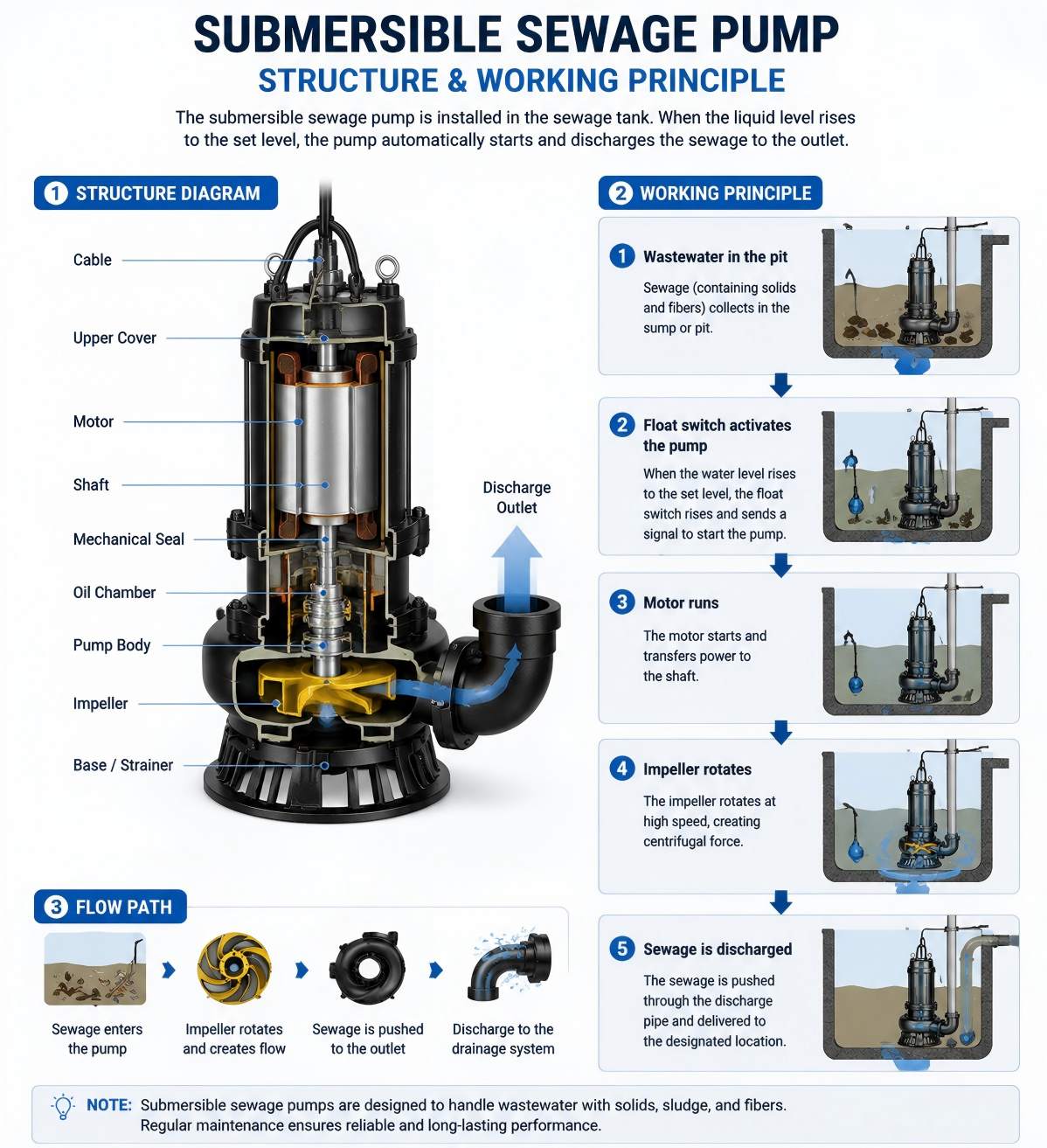
Picture|Working Principle of Submersible Sewage Pumps
The motor and pump body are sealed together, and the impeller generates centrifugal force to move sewage through pipelines.
Because the pump operates underwater, the surrounding wastewater helps cool the motor, reducing operating noise and improving reliability.
Many sewage submersible pumps are equipped with open impellers or anti-clog designs, allowing them to handle wastewater containing:
· Solid particles
· Fibers
· Organic waste
· Suspended materials
This reduces the risk of blockage and improves system stability.
Due to their compact structure, submersible sewage pumps are ideal for:
· Residential basements
· Sewage lifting stations
· Commercial buildings
· Municipal wastewater plants
· Industrial wastewater systems
A vortex cutting sewage pump is designed for wastewater containing difficult solids and fibrous materials. It uses a cutting mechanism to break large particles into smaller pieces before discharge.
The cutting blades help process:
· Long fibers
· Household waste
· Solid contaminants
making grinder pumps suitable for complex sewage conditions.
Because solids are reduced into smaller particles, grinder pumps are commonly used in pressure sewer systems where wastewater needs to be transported over long distances or through smaller pipelines.
Typical applications include:
· Residential sewage systems
· Commercial wastewater systems
· Pressure sewer networks
· Industrial wastewater treatment
A vertical sewage pump features a design where the motor is installed above the sewage basin while the pump and impeller remain submerged.
Compared with submersible sewage pumps, the motor is separated from wastewater, making inspection and maintenance easier.
· Easy maintenance and repair
· Longer motor service life
· Lower initial investment
vertical pumps are commonly used in:
· Residential wastewater applications
· Small commercial buildings
· Light-duty drainage systems
A centrifugal sewage pump uses a rotating impeller to convert mechanical energy into hydraulic energy, creating pressure to transport wastewater.
It is one of the most common pump types used in industrial wastewater applications.
· High flow capacity
· Reliable operation
· Simple structure
· Easy maintenance
Centrifugal sewage pumps are widely used in:
· Municipal wastewater treatment plants
· Manufacturing facilities
· Industrial processing systems
· Chemical wastewater applications
|
Pump Type |
Main Advantages |
Typical Applications |
|
Submersible Sewage Pump |
Compact, quiet, reliable, excellent solids handling |
Residential, commercial, municipal |
|
Vortex cutting Sewage Pump |
Strong clog resistance, handles tough solids |
Pressure sewer systems |
|
vertical Sewage Pump |
Easy maintenance, economical |
Small wastewater systems |
|
Centrifugal Sewage Pump |
High flow and efficiency |
Industrial wastewater applications |
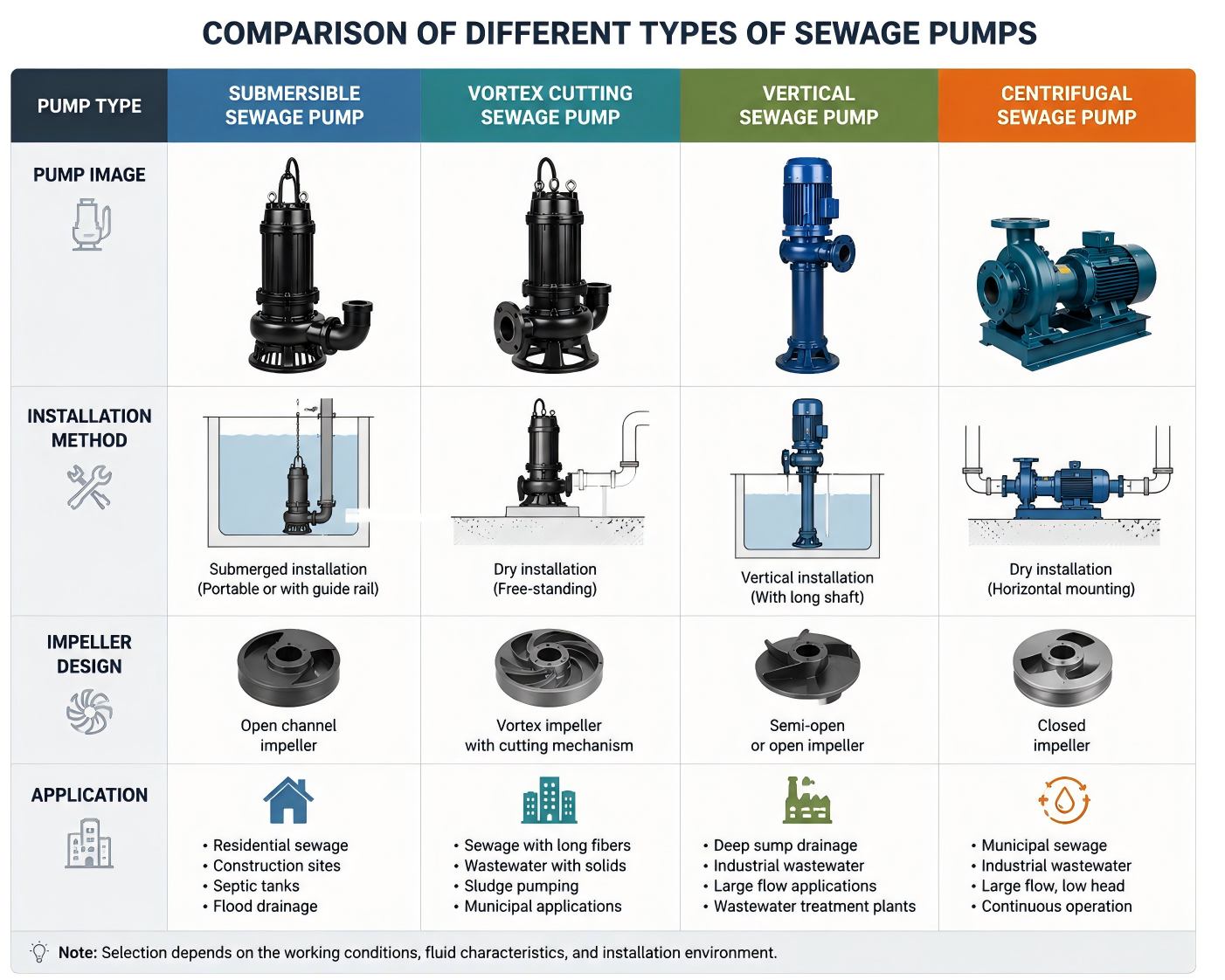
Picture|Comparison of Different Types of Sewage Pumps
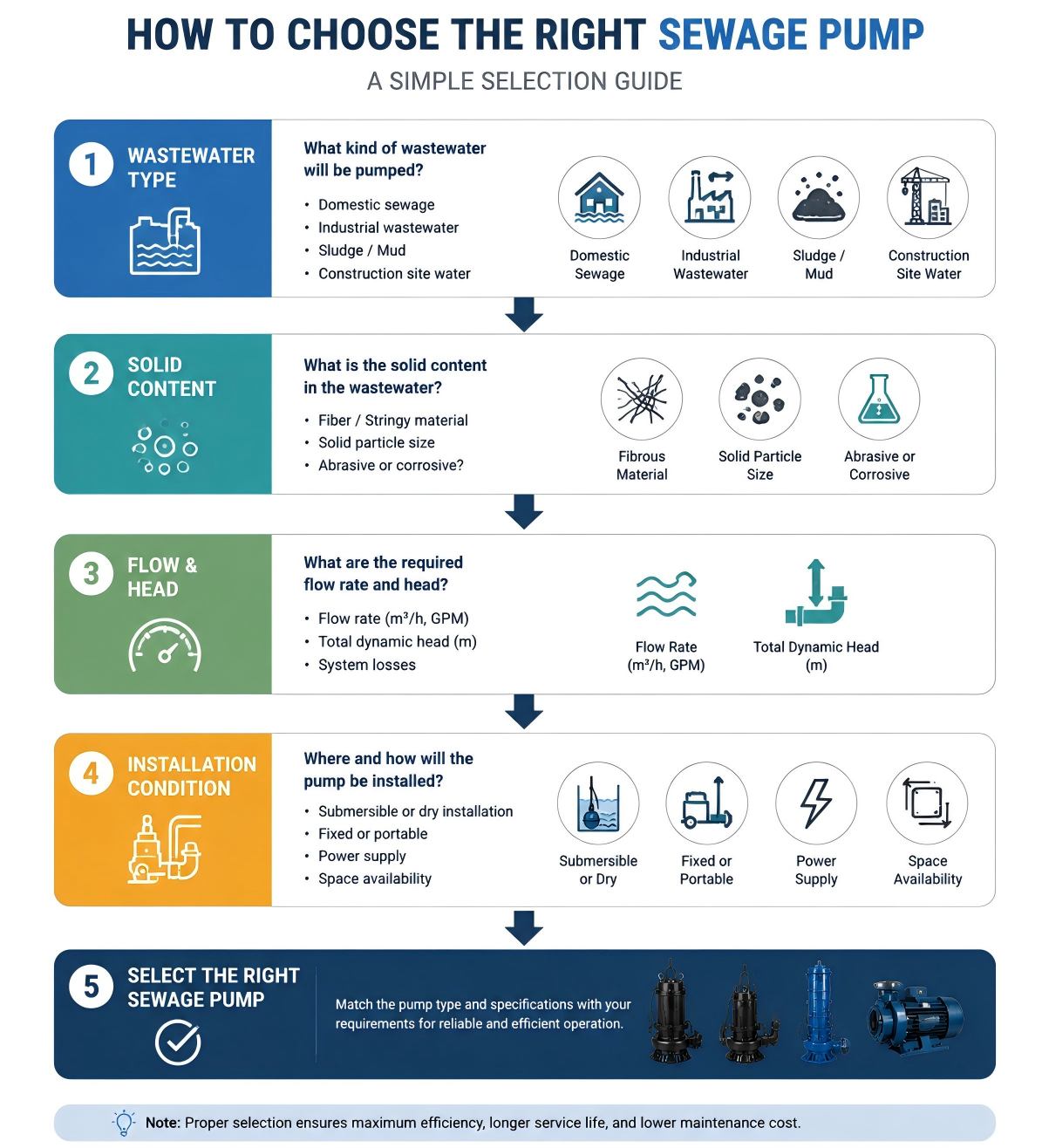
Before choosing a pump, consider:
· Solid particle size
· Fiber content
· Chemical properties
· Wastewater temperature
Different wastewater conditions require different pump designs.
A suitable sewage pump system should match the required:
· Flow rate
· Pump head
· Pipeline distance
Incorrect selection may lead to low efficiency or increased maintenance.
The installation location also affects pump selection:
· Underground sewage tanks → Submersible sewage pumps
· Limited installation space → Compact pump designs
· Long-distance transportation → Grinder pumps
For commercial and industrial applications, users should consider:
· Service life
· Maintenance frequency
· Energy consumption
· Long-term operating costs
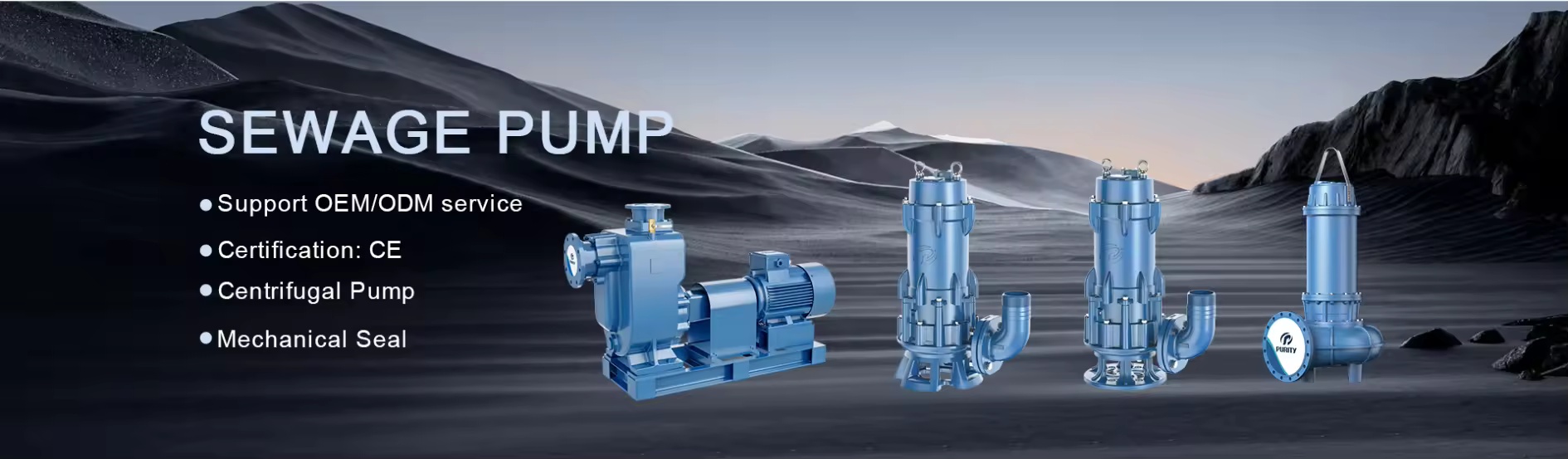
Picture|Purity Sewage Pump
With more than 16 years of manufacturing and export experience, Purity Pump provides reliable wastewater solutions for customers worldwide.
As a professional sewage pump manufacturer, Purity offers a complete range of products, including:
· Submersible sewage pumps
· Vortex cutting sewage pumps
· vertical sewage pumps
· Centrifugal sewage pumps
Designed with advanced hydraulic technology and strict quality control, Purity sewage pumps are suitable for:
· Municipal wastewater treatment
· Industrial wastewater transfer
· Commercial drainage systems
· Complex sewage environments
Certified with international standards including CE and ISO, Purity Pump is committed to delivering efficient and reliable pumping solutions worldwide.
We are also looking for global distributors and partners. Contact Purity Pump today to explore cooperation opportunities.
There are different types of sewage pumps designed for different wastewater applications.
Submersible sewage pumps are suitable for most residential, commercial, and municipal applications. Vortex cutting sewage pumps provide excellent performance in wastewater containing solids and fibers. Centrifugal sewage pumps are ideal for high-flow industrial applications, while pedestal pumps offer economical solutions for smaller systems.
Understanding the differences between sewage pump types helps users select the right solution, improve wastewater management efficiency, and achieve reliable long-term operation.