PRODUCTS SEARCH
Centrifugal pumps are essential in modern industry, widely used in HVAC systems, municipal water supply, fire protection, irrigation, and industrial processes. Among the many types available, the end suction centrifugal pump and the split case centrifugal pump are the two most commonly used solutions.
Understanding their differences is key to selecting the right pump for optimal efficiency, reliability, and long-term cost savings. At the same time, choosing a reliable manufacturer like Purity ensures consistent performance and global service support.
All centrifugal pumps operate on the same principle: a rotating impeller generates centrifugal force, increasing fluid velocity and converting it into pressure energy for fluid transport.
The real difference between a centrifugal end suction pump and a centrifugal split case pump lies in design, performance, and application scenarios—not working principle.
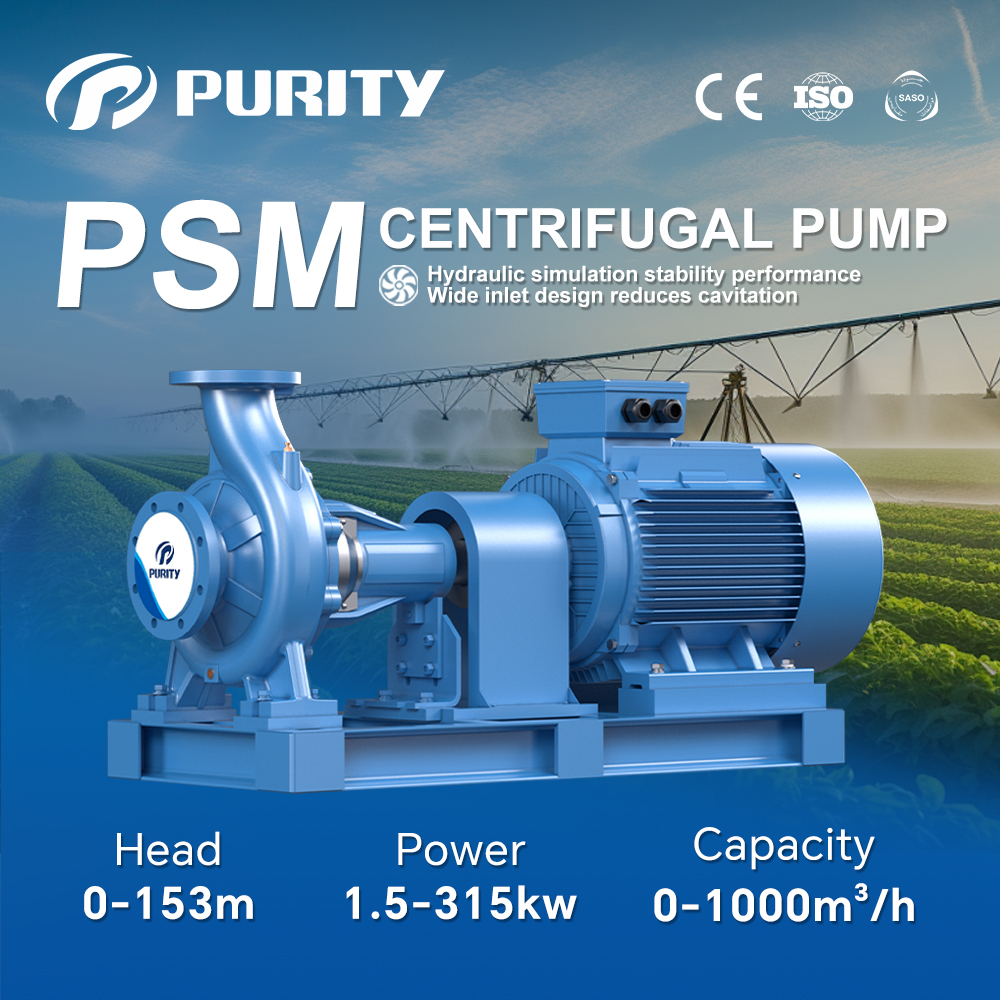
An end suction centrifugal pump features:
(1) Single-stage, single-suction impeller
(2) Compact and space-saving design
(3) Simple structure for easy installation
These pumps are widely used due to their cost-effectiveness and flexibility.
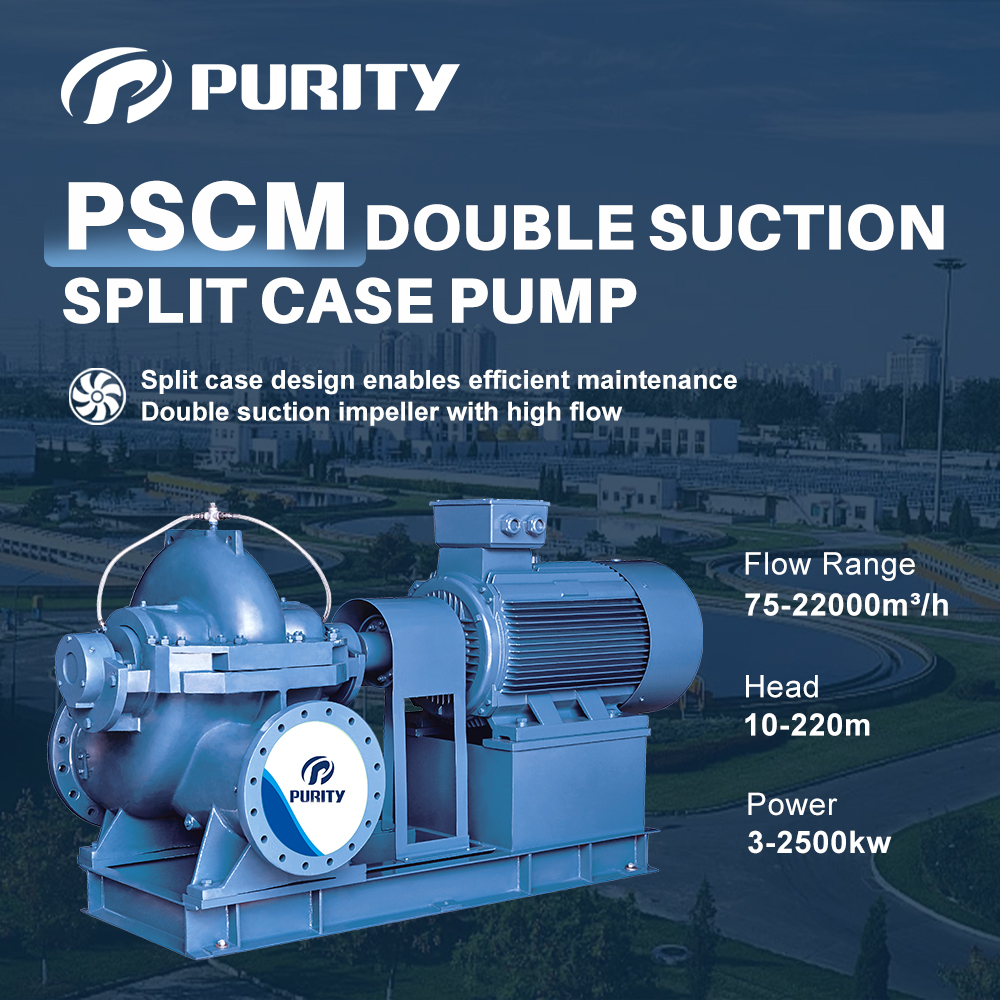
A split case centrifugal pump (or centrifugal split case pump) offers:
(1) Horizontally split casing
(2) Double-suction impeller for better balance
(3) Higher structural strength and stability
This design allows handling larger flow rates and higher pressures with greater efficiency.
Conclusion: Structure defines performance capability.
Best suited for:
(1) Low to medium flow rates
(2) Moderate pressure systems
(3) Limited installation space
Applications: HVAC, building water supply, irrigation.
Ideal for:
(1) High flow and high head applications
(2) Critical infrastructure systems
Applications: municipal water supply, fire protection, power plants, industrial systems.
Conclusion:
Small systems → End suction pump
Large systems → Split case pump
Split case centrifugal pumps provide:
(1) Higher efficiency
(2) Better stability
(3) Strong anti-cavitation performance
End suction centrifugal pumps:
(1) Moderate efficiency
(2) Performance drops under variable flow
Conclusion: Split case pumps are better for continuous, high-demand operations.
(1) Lower initial investment
(2) Simple maintenance
(3) Higher long-term energy consumption
(1) Higher upfront cost
(2) Lower energy consumption
(3) Longer lifespan and reduced downtime
Conclusion:
Short-term projects → End suction
Long-term savings → Split case
(1) End suction pumps: easy to install, quick maintenance
(2) Split case pumps: more complex, but allow top-cover maintenance without removing piping
This makes split case pumps ideal for critical systems requiring minimal disruption.
When selecting a pump, choosing the right manufacturer is just as important as choosing the right type. Purity stands out among global end suction centrifugal pump manufacturers with strong capabilities:
Purity offers a full lineup including:
(1) End suction centrifugal pumps
(2) Split case centrifugal pumps
(3) Fire pumps, multistage pumps, sewage pumps, and more
One-stop solution for diverse industries.
With comprehensive specifications, Purity pumps can meet:
(1) Different flow and head requirements
(2) Various industrial and commercial applications
Purity products are backed by 130+ certifications, including:
(1) CE
(2) ISO
(3) SASO
Ensuring compliance with international standards.
(1) 60,000 m² production facility
(2) Advanced CNC machining and testing systems
(3) Exported to 130+ countries worldwide
Proven global reliability and project experience.
Purity is actively expanding its global network and seeking partners worldwide, offering:
(1) Stable product supply
(2) Technical support
(3) Long-term cooperation opportunities

To choose between a centrifugal end suction pump and a centrifugal split case pump, consider:
(1) Flow rate
(2) Head pressure
(3) Installation space
(4) Budget vs lifecycle cost
(5) System reliability
(6) Energy efficiency
Both end suction centrifugal pumps and split case centrifugal pumps have unique advantages. End suction pumps are compact and cost-effective, while split case pumps deliver superior efficiency and long-term performance.
Final takeaway:
Choose end suction for simplicity.
Choose split case for performance.
Choose Purity for reliability.