PRODUCTS SEARCH
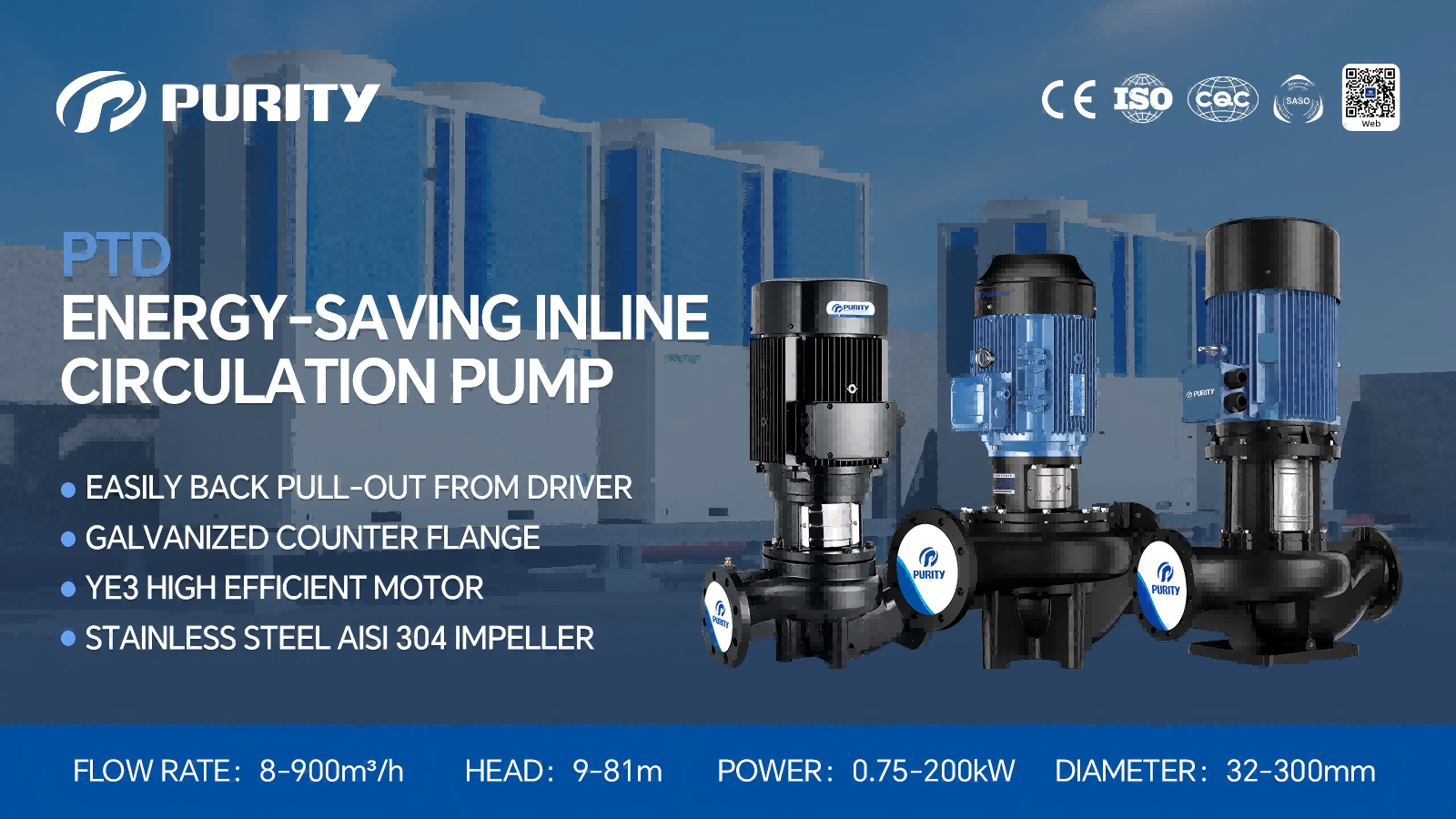
Vertical centrifugal pumps are available in several configurations, including vertical inline pumps and vertical multistage pumps. The right type depends on factors such as required flow rate, pump head, liquid characteristics, operating conditions, and available installation space.
A vertical centrifugal pump uses a rotating impeller to convert mechanical energy from the motor into fluid velocity and pressure. The motor and pump shaft are arranged vertically, allowing the equipment to occupy less floor space than many horizontal pump configurations.
Key characteristics of vertical centrifugal pumps:
|
Feature |
Description |
|
Shaft arrangement |
Vertical |
|
Pump principle |
Centrifugal force |
|
Main components |
Motor, shaft, impeller, casing and mechanical seal |
|
Main advantages |
Compact installation and efficient fluid transfer |
|
Common types |
Vertical inline and vertical multistage pumps |
|
Typical applications |
Water supply, HVAC, water treatment, boosting and industrial processes |
|
Key selection factors |
Flow, head, liquid properties, temperature and installation conditions |
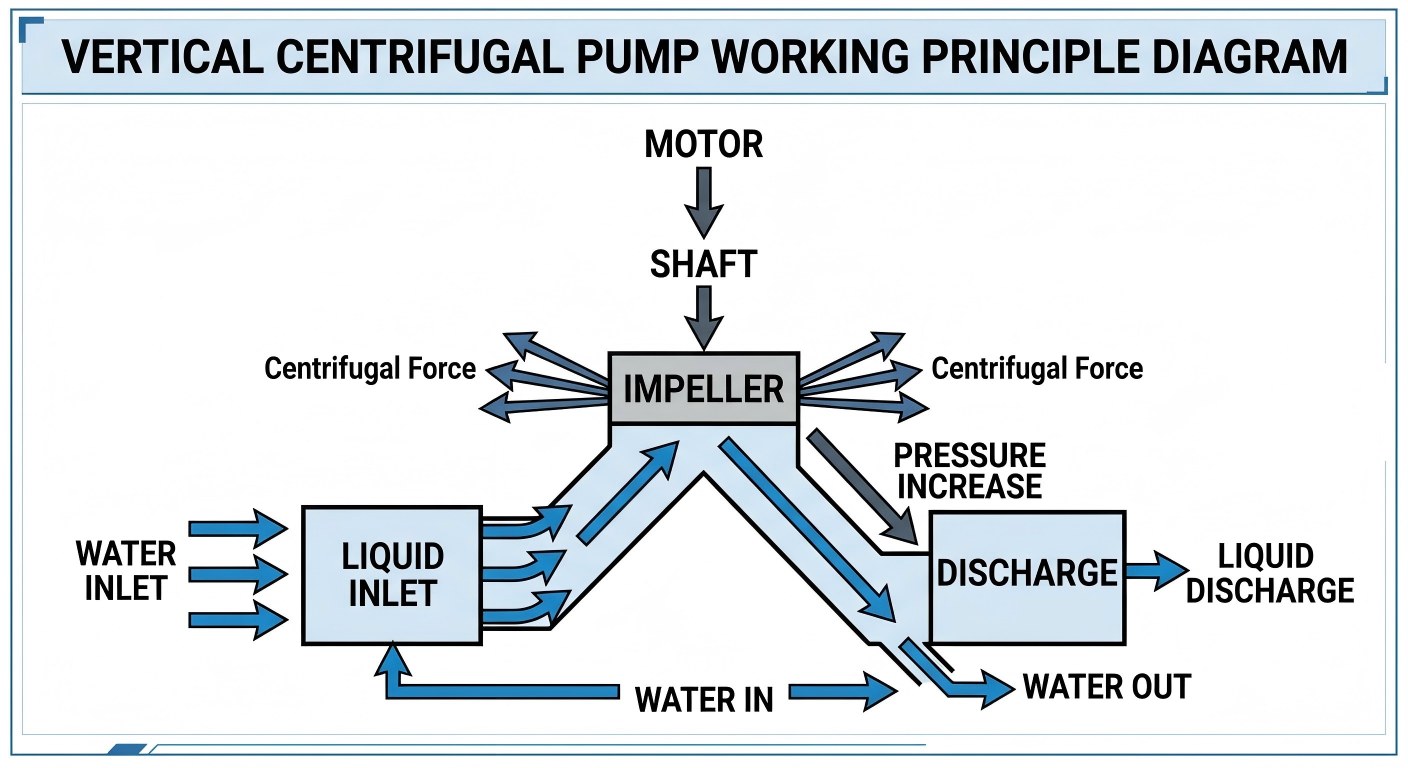
When the motor starts, it rotates the pump shaft and impeller. Liquid enters the pump through the suction inlet and flows toward the rotating impeller. As the impeller rotates, centrifugal force accelerates the liquid outward from the impeller eye.
The liquid's velocity is then converted into pressure as it passes through the pump casing or diffuser. The pressurized liquid is discharged into the piping system.
In many vertical pump designs, the motor is directly coupled to the pump shaft. This eliminates the need for additional transmission components and can simplify the overall structure.
Motor → Shaft → Impeller → Fluid Velocity → Pressure → Discharge
Actual hydraulic performance depends on pump design, operating point, system resistance, liquid properties, and installation conditions.
Although construction varies by pump type, a typical vertical centrifugal pump includes several major components:
The motor provides the mechanical energy required to rotate the pump shaft and impeller. Motor power should be selected according to the required flow, head, liquid properties, and operating conditions.
The shaft transfers rotational energy from the motor to the impeller. Proper shaft design and alignment are important for reliable operation and vibration control.
The impeller transfers energy to the liquid. Its geometry has a major influence on flow rate, pressure, efficiency, and operating range.
The casing guides the liquid through the pump and helps convert velocity into pressure. Depending on the pump design, the casing may incorporate volute or diffuser passages.
The mechanical seal helps prevent liquid from leaking along the rotating shaft. Seal material and design should be selected according to the liquid, temperature, pressure, and operating conditions.
Bearings support rotating components and help maintain stable shaft operation. Bearing configuration varies according to pump construction and application.
Vertical centrifugal pumps can provide several advantages when their configuration matches the requirements of the system.
One of the main benefits is the reduced floor-space requirement. By arranging the motor and shaft vertically, many vertical pump designs can fit into areas where a conventional horizontal pump would require more floor space.
This makes vertical pumps useful in:
· High-rise buildings
· Compact pump rooms
· HVAC plants
· Industrial facilities
· Water treatment systems
Modern hydraulic designs can provide efficient operation over an appropriate operating range. Pump efficiency depends on factors such as impeller geometry, motor efficiency, operating point, and system design.
Operating a pump close to its Best Efficiency Point (BEP) can help reduce unnecessary energy consumption and mechanical stress.
Many vertical centrifugal pumps are designed for continuous-duty applications. With appropriate sizing, installation, lubrication, cooling, and maintenance, they can operate reliably in demanding water and industrial systems.
Vertical configurations can be integrated into different piping arrangements. In particular, vertical inline pumps can be installed directly into pipelines, which can simplify system layout and reduce installation space.
Depending on the pump construction and materials, vertical centrifugal pumps can be designed for applications involving clean water, treated water, cooling water, industrial liquids, and other compatible fluids.
Pump materials and seals should always be selected according to the actual liquid characteristics.
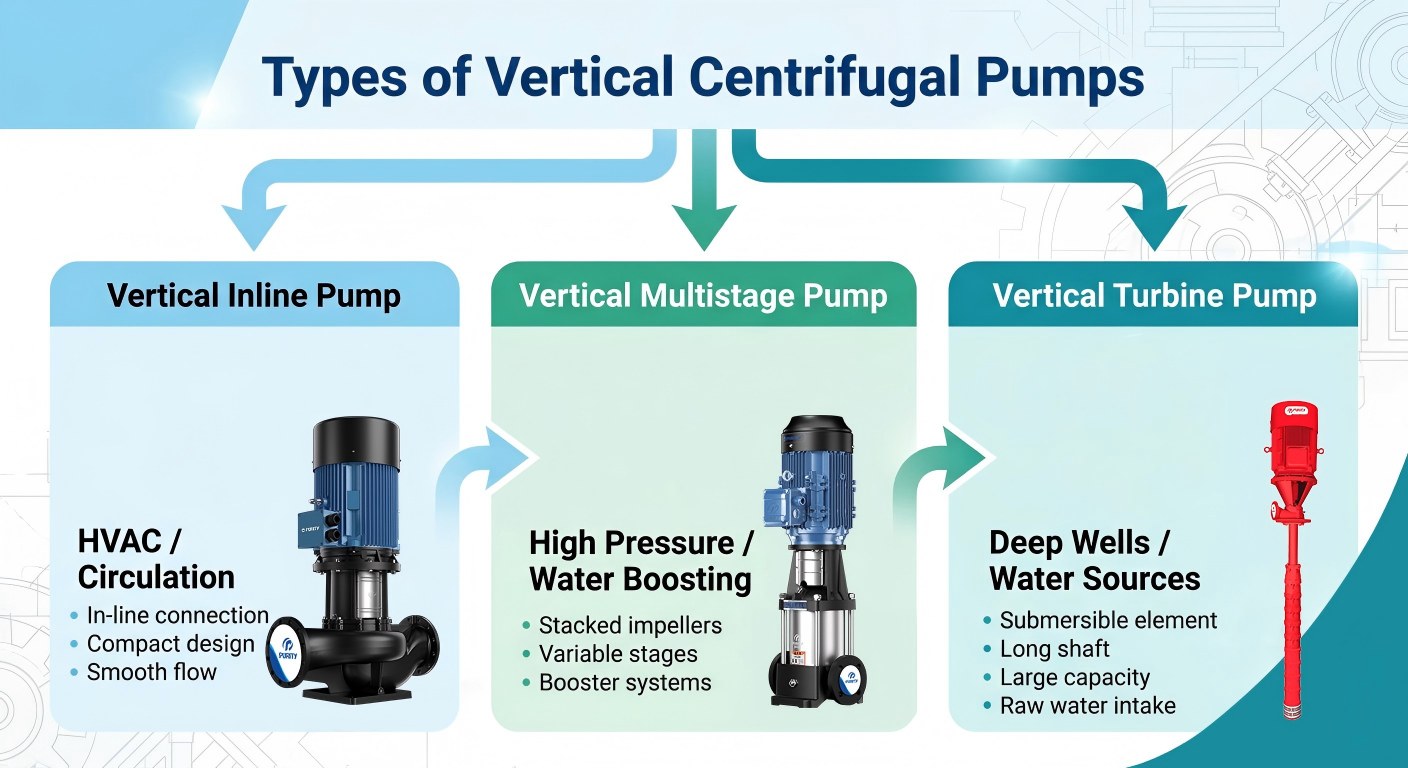
Vertical centrifugal pumps are available in different configurations. The two most common types used in water and building-service applications are vertical inline pumps and vertical multistage pumps.
A vertical inline centrifugal pump has its suction and discharge connections arranged along the same pipeline axis. This allows the pump to be installed directly into the piping system.
Vertical inline pumps are commonly used for:
· HVAC water circulation
· Chilled-water systems
· Building services
· Industrial cooling
· Water circulation
· Pressure boosting
Their compact configuration makes them particularly useful where pump-room space is limited.
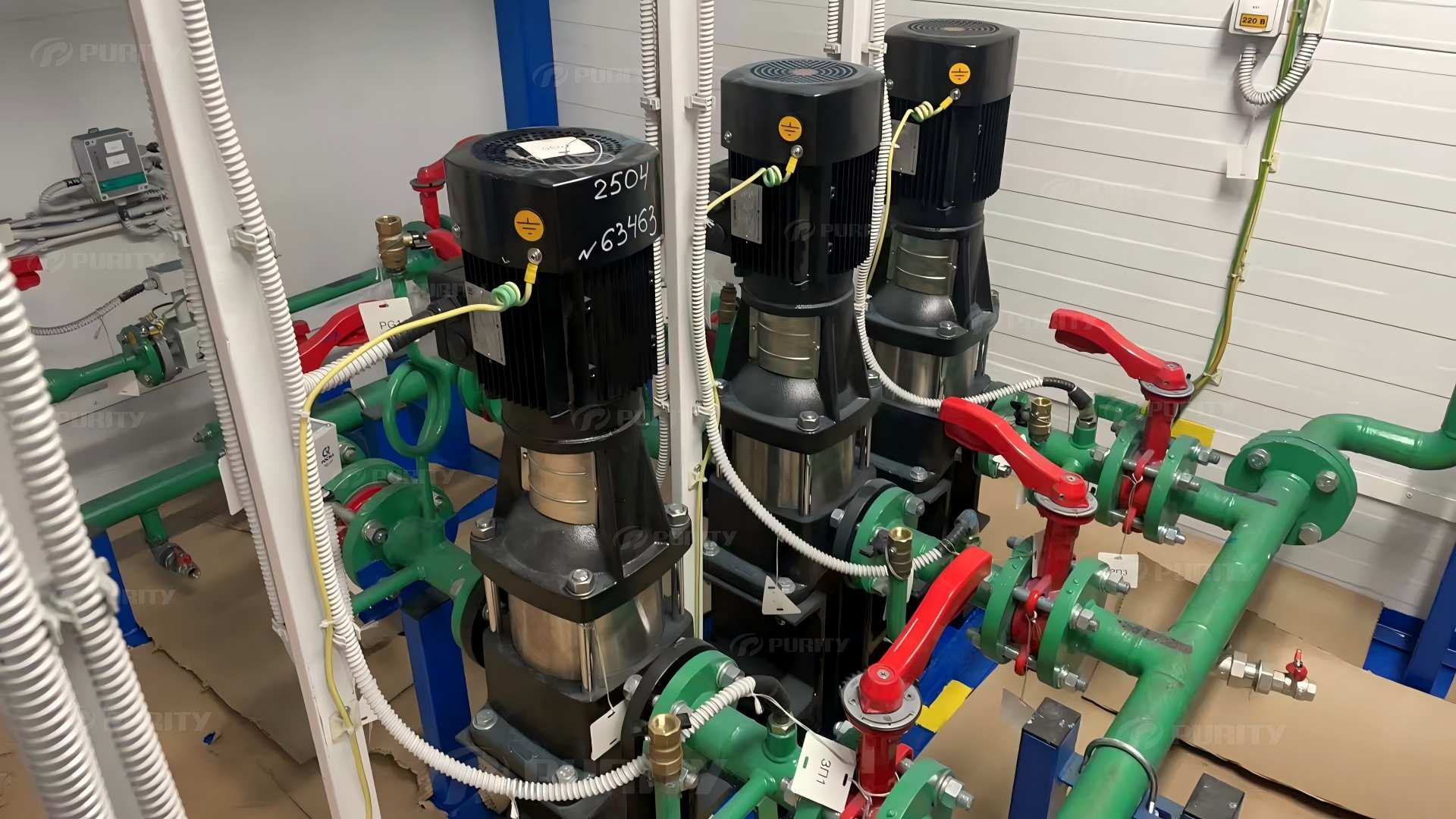
A vertical multistage centrifugal pump uses multiple impellers arranged in series. Each stage adds energy to the liquid, allowing the pump to generate higher pressure than a comparable single-stage design.
Typical applications include:
· High-rise building water supply
· Pressure boosting
· Reverse osmosis systems
· Water treatment
· Boiler feed applications
· Industrial process water
· High-pressure water systems
For example, Purity's PVT/S vertical multistage pump is designed for applications requiring compact installation and stable high-pressure water supply.
Vertical turbine pumps are another type of vertical pump used in applications where water must be lifted from deep sources such as wells, reservoirs, or tanks.
Their long vertical shaft configuration allows the hydraulic components to be positioned below the water level.
The appropriate pump type depends on the water source, required flow, head, installation depth, and system configuration.
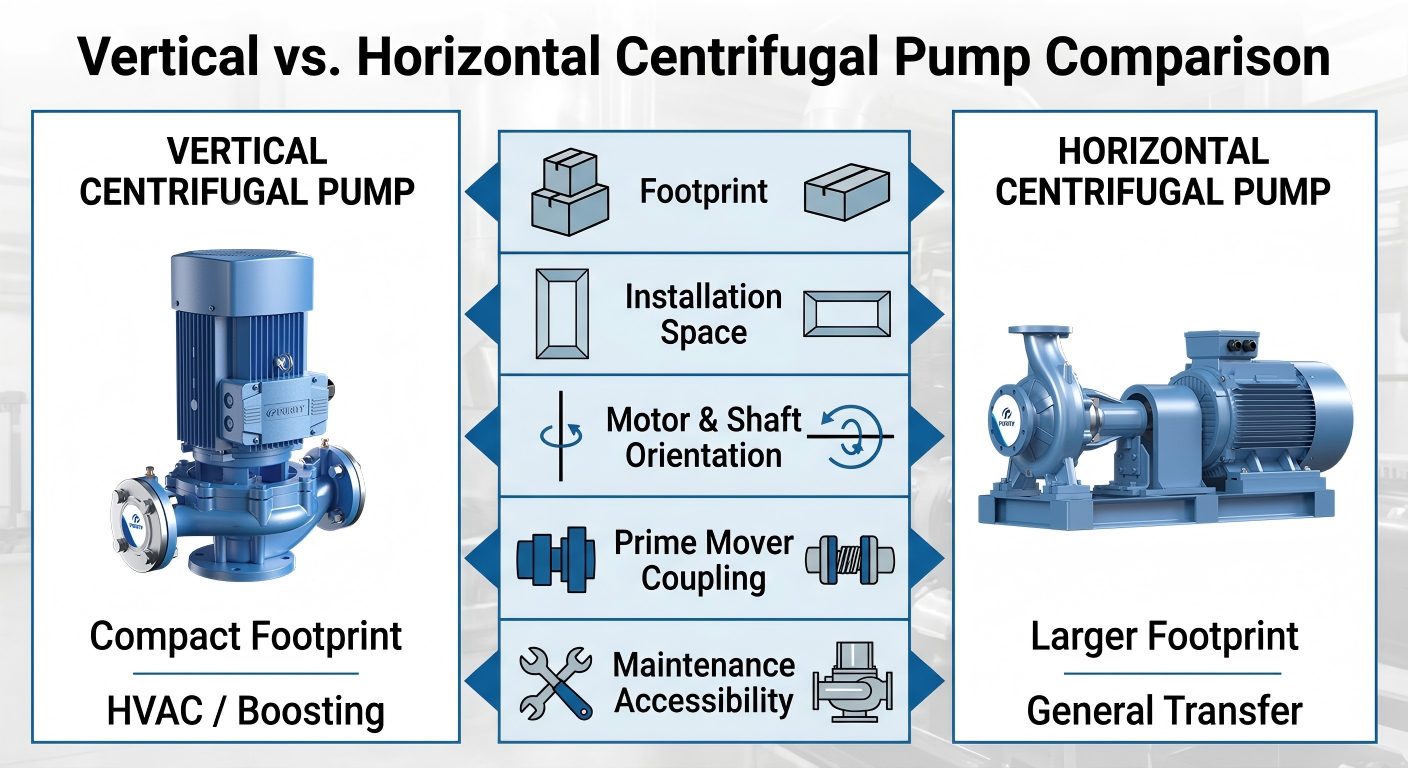
|
Feature |
Vertical Centrifugal Pump |
Horizontal Centrifugal Pump |
|
Shaft orientation |
Vertical |
Horizontal |
|
Floor-space requirement |
Generally lower |
Generally higher |
|
Installation |
Compact vertical arrangement |
Requires more horizontal space |
|
Inline configuration |
Common in inline designs |
Depends on pump type |
|
Typical applications |
HVAC, boosting, water treatment, high-rise buildings |
General water transfer, industrial processes and irrigation |
|
Maintenance access |
Depends on design |
Often convenient for many common designs |
|
High-pressure applications |
Suitable for selected multistage designs |
Also available in multistage designs |
|
Selection priority |
Space, flow, head and application |
Flow, head, application and installation |
Neither configuration is universally better. The right choice depends on flow rate, head, liquid properties, installation space, maintenance requirements, and total system design.
Vertical centrifugal pumps are widely used in water and industrial systems.
Vertical multistage pumps are commonly used to increase water pressure in high-rise buildings, commercial buildings, and other facilities where available water pressure is insufficient.
Vertical inline pumps are widely used for circulating chilled water, cooling water, and heating water in HVAC systems.
Vertical centrifugal pumps can be used for:
· Filtration systems
· Reverse osmosis
· Water transfer
· Clean-water circulation
· Pressure boosting
The pump material and seal configuration should be selected according to the treatment process and liquid characteristics.
Industrial facilities may use vertical pumps for:
· Process-water circulation
· Cooling systems
· General water transfer
· Pressure boosting
· Equipment cooling
Selected vertical multistage pump designs can be used in high-pressure water applications, including boiler feed and other industrial water systems, provided that the pump is specifically designed for the required temperature and pressure.
Selecting a vertical centrifugal pump based only on motor power or pipe size can result in poor performance. The pump should be selected according to the complete operating conditions.
Flow rate describes how much liquid the pump needs to move over a given period.
Common units include:
· m³/h
· L/min
· GPM
The required flow should be determined from the actual system demand rather than simply selecting the largest available pump.
Pump head represents the energy required to move the liquid through the system.
The total dynamic head should consider:
· Static elevation
· Pipe friction losses
· Fittings and valves
· Equipment pressure losses
· Required discharge pressure
Selecting a pump with insufficient head can result in inadequate system pressure, while excessive head can increase energy consumption and operating costs.
The liquid being pumped affects pump material and configuration.
Important factors include:
· Temperature
· Viscosity
· Corrosiveness
· Solid content
· Chemical compatibility
For corrosive or aggressive liquids, stainless steel or other compatible materials may be required.
Vertical pumps are often preferred where floor space is limited.
Before selecting the pump, check:
· Available floor area
· Installation height
· Pipeline arrangement
· Motor clearance
· Maintenance access
Motor selection should consider:
· Power
· Voltage
· Frequency
· Speed
· Protection rating
· Duty cycle
A Variable Frequency Drive (VFD) can be used in suitable systems to adjust pump speed according to changing demand. Proper control can help avoid unnecessary throttling and reduce energy consumption.
Regular maintenance helps maintain hydraulic performance and extend equipment service life.
A typical maintenance program should include:
· Checking for abnormal vibration and noise
· Inspecting mechanical seals for leakage
· Checking motor temperature
· Inspecting bearings where applicable
· Checking electrical connections
· Inspecting valves and piping
· Monitoring operating pressure and flow
· Checking pump alignment where applicable
Maintenance intervals should follow the manufacturer's instructions and the actual operating environment.
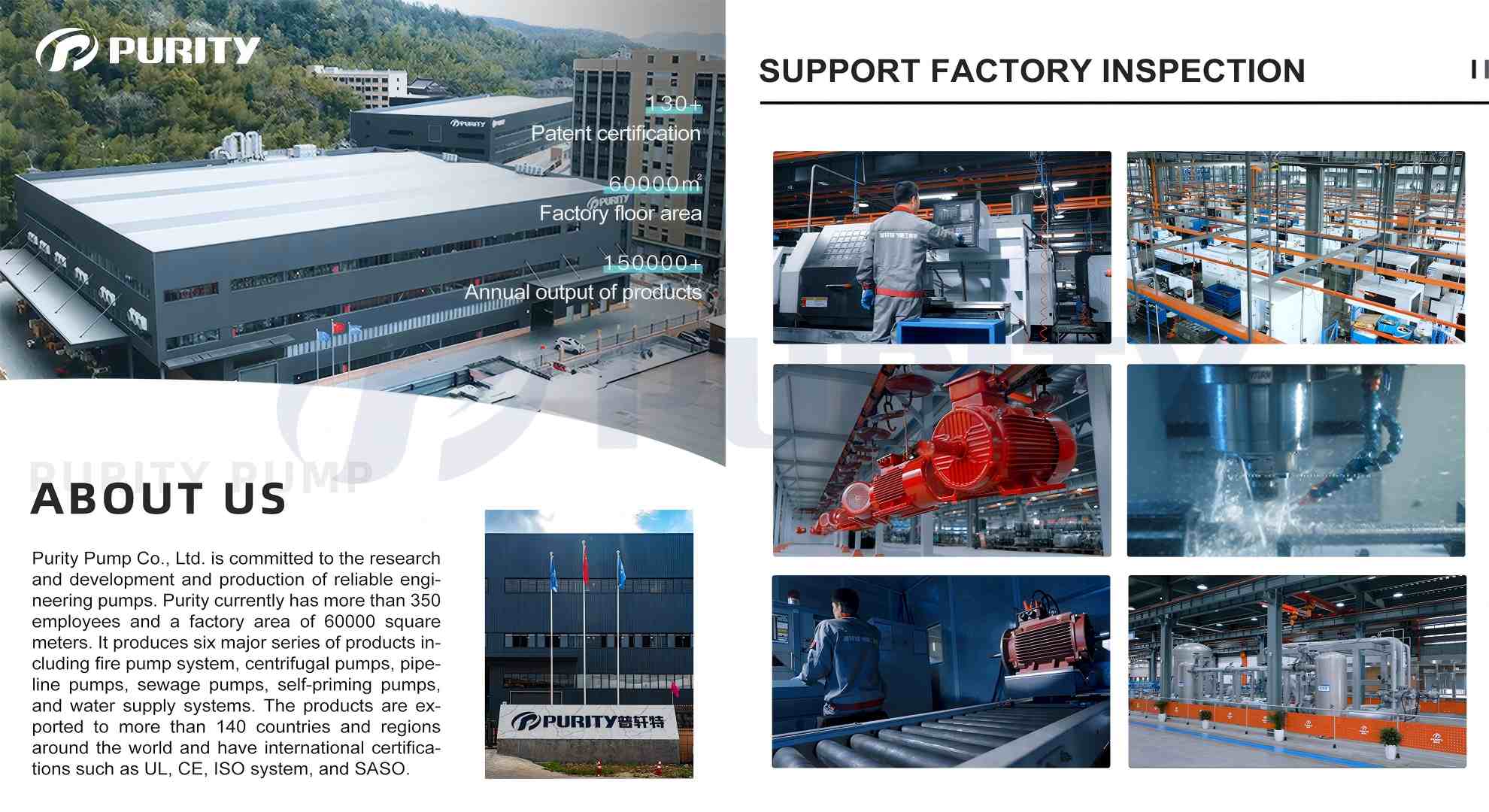
Founded in 2010, Purity has more than 16 years of pump manufacturing and sales experience, supporting customers across international markets.
Purity operates an approximately 60,000 m² production facility, supporting pump manufacturing, testing, quality control, and delivery.
Purity has an annual production capacity of 150,000+ pumps, supporting both standard products and project-based requirements.
Purity pump products are supplied to customers and partners in 140+ countries, providing experience across different market requirements and operating conditions.
Purity products and manufacturing systems include internationally recognized certifications such as CE, UL, ISO, and SASO, depending on the specific product and market requirements.
Purity provides different vertical pump solutions, including:
· Vertical multistage pumps
· Vertical inline pumps
· Vertical centrifugal water pumps
· Pressure boosting solutions
Customers can select the appropriate configuration according to required flow, head, liquid characteristics, installation conditions, and project requirements.
Vertical centrifugal pumps are used to transfer and circulate liquids in applications such as water supply, HVAC, pressure boosting, water treatment, industrial processes, and cooling systems.
A motor rotates the pump shaft and impeller. The rotating impeller transfers energy to the liquid, increasing its velocity. The pump casing or diffuser then converts part of this velocity into pressure for discharge into the system.
The main difference is the shaft orientation. Vertical centrifugal pumps use a vertical shaft and motor arrangement, while horizontal centrifugal pumps use a horizontal shaft arrangement. Vertical designs can reduce floor-space requirements, while horizontal pumps can provide convenient access for certain maintenance tasks.
A vertical inline centrifugal pump has suction and discharge connections arranged along the same pipeline axis. It can be installed directly into a pipeline and is commonly used for HVAC circulation, building services, and industrial water circulation.
Vertical multistage pumps are designed for applications requiring higher pressure. Common uses include high-rise building water supply, pressure boosting, reverse osmosis, water treatment, and industrial water systems.
Yes. Vertical multistage centrifugal pumps are commonly used in high-rise buildings because they can provide the pressure required to deliver water to higher elevations while maintaining a compact installation footprint.
Start with the required flow rate and total head. Then evaluate liquid properties, temperature, installation space, motor requirements, operating conditions, and control requirements. A pump manufacturer can help verify the final selection against the system curve and operating point.
For accurate pump selection, provide:
· Required flow rate
· Required head or pressure
· Liquid type
· Liquid temperature
· Power supply
· Inlet and outlet size
· Operating hours
· Installation conditions
· Any special material or certification requirements
A vertical centrifugal pump is a compact and versatile solution for transferring liquids in water supply, HVAC, water treatment, pressure boosting, and industrial applications. Its vertically arranged motor and shaft can reduce floor-space requirements, while configurations such as vertical inline and vertical multistage pumps provide solutions for different flow and pressure requirements.
Choosing the right pump requires more than comparing motor power or pipe size. Flow rate, total head, liquid properties, operating conditions, installation space, motor requirements, and system demand should all be considered together.
With 16+ years of pump manufacturing experience, a 60,000 m² production facility, 150,000+ pumps annual production capacity, and experience serving customers in 140+ countries, Purity provides vertical pump solutions for a wide range of water and industrial applications.
Looking for the right vertical centrifugal pump for your project? Contact Purity to discuss your flow, head, application, and installation requirements.