PRODUCTS SEARCH
The average lifespan of a sewage pump is a key concern for homeowners, contractors, and industrial users relying on stable wastewater management systems. In general, most sewage pumps last between 5 to 10 years, although high-quality systems can operate for 10 to 15 years or more when properly maintained. The actual lifespan depends on multiple factors such as installation quality, operating conditions, and maintenance practices.
In this article, we will explore how long a sewage pump system typically lasts, what affects its durability, and how to extend its service life effectively.
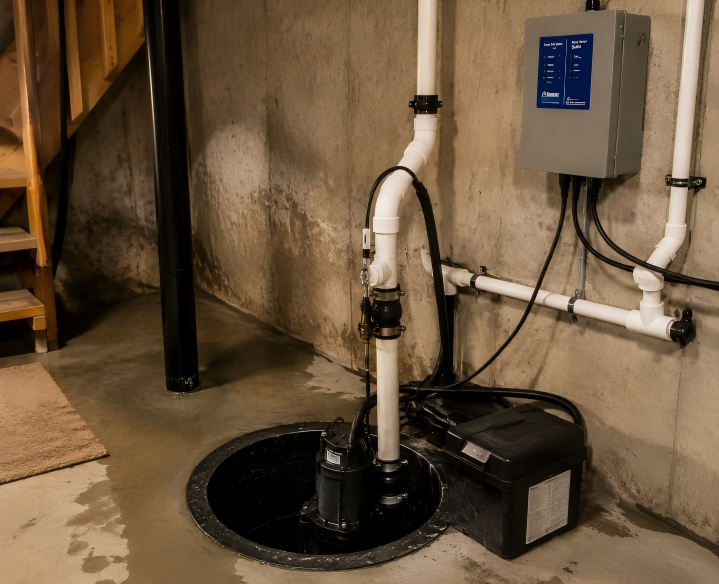
On average, a sewage pump system operates within the following ranges:
· Residential sewage pump: 5–7 years
· Standard household sewage pump system: 7–10 years
· High-quality or well-maintained systems: 10–15+ years
A submersible sewage pump, commonly used in septic tanks and residential wastewater systems, often falls within the higher end of this range due to its efficient cooling and enclosed operation design.
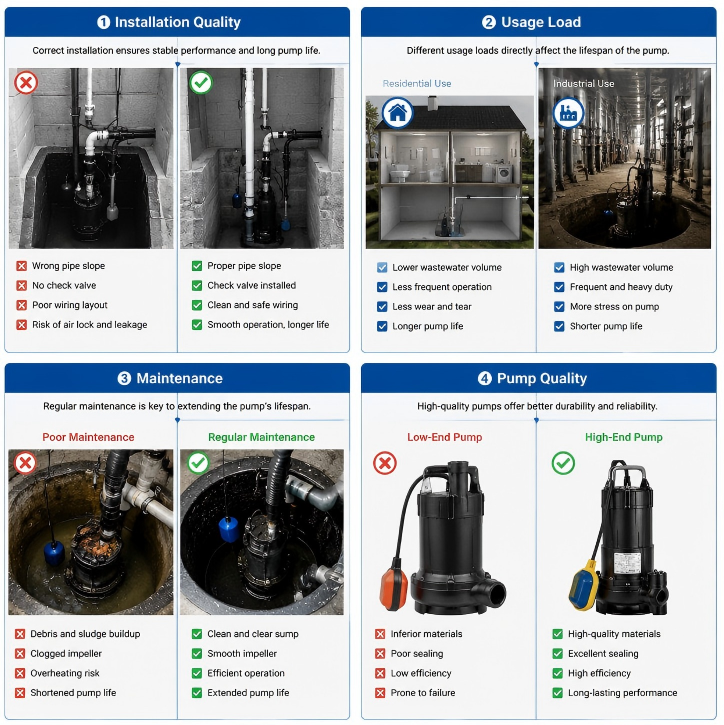
The lifespan of a sewage water pump is not fixed. It is determined by four major factors:
High-performance sewage pumps are built with stronger impellers, corrosion-resistant materials, and better clog resistance. Low-cost pumps tend to wear out faster and fail earlier under heavy loads.
Proper installation is critical. A correctly installed sewage pump system ensures stable flow, prevents air lock, and avoids premature mechanical stress. Poor installation may cause frequent breakdowns or even total system failure.
The more frequently a pump runs, the shorter its lifespan:
· Residential use = lower load = longer life
· Commercial use = high load = faster wear
· Waste containing solids, grease, or chemicals = accelerated damage
Continuous cycling or overload conditions significantly reduce the durability of any sewage pump system.
Regular maintenance has the biggest impact on lifespan. Cleaning, inspections, and early repairs can significantly extend performance, while neglect can lead to early failure.
Most sewage pumps for sale are designed for solid handling, but they still fail due to real-world conditions such as:
· Blockages from wipes, grease, or solid waste
· Electrical issues such as float switch failure
· Mechanical wear of impellers and seals
· Continuous overloading or dry running
· Incorrect system design or installation errors
These issues often lead to reduced efficiency or complete system breakdown.
To maximize the life of a submersible sewage pump, users should follow these key practices:
· Schedule professional inspections every 1–3 years
· Avoid flushing non-biodegradable materials
· Prevent pump dry running or continuous cycling
· Clean inlet and system components regularly
· Repair small issues before they become major failures
Even with proper care, every sewage pump system eventually needs replacement. It is recommended to replace the pump when:
· It is older than 7–10 years
· Repairs become frequent and costly
· The pump fails to start consistently
· The system experiences repeated backups or overflow
· Motor or electrical components are damaged
In most cases, replacing the unit is more cost-effective than repeated repairs.
For users seeking durable and efficient solutions, Purity Pump provides a full range of high-performance sewage pumps, including:
· Submersible sewage pumps
· Cutting-type sewage pumps
· Non-clogging sewage water pumps for industrial and residential use
With over 16+ years of manufacturing experience, a 60,000 m² factory, and exports to 130+ countries, Purity Pump has built a strong global reputation for reliability and engineering quality. Their products are designed to meet demanding wastewater conditions while ensuring long service life and stable performance.

The average lifespan of a sewage pump system is typically 5 to 10 years, but can extend beyond 10–15 years with proper installation, suitable usage, and consistent maintenance. The most important factor influencing performance is not just the product itself, but how it is operated and maintained over time.
Choosing a high-quality sewage pump, combined with proper care and professional servicing, ensures long-term reliability and reduced maintenance costs. For users seeking dependable wastewater solutions, Purity sewage pumps offer a trusted option backed by global engineering experience.